Call for Artists & Designers: Clean Air Living Map (CALM)
A research-creation project by York University and OCAD University
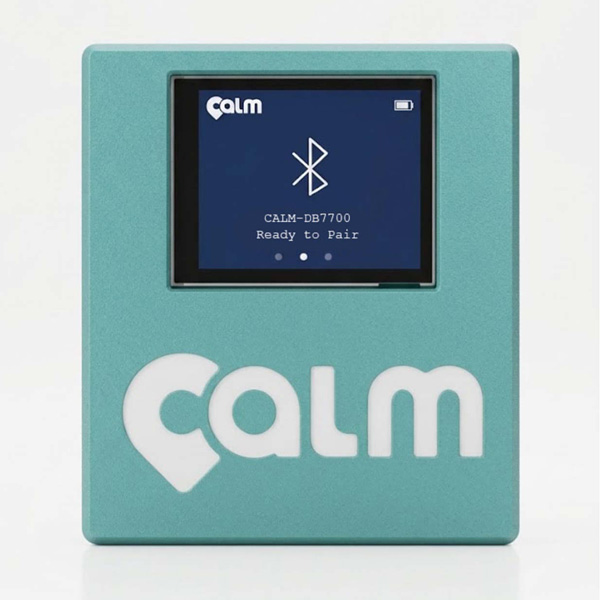
The Clean Air Living Map (CALM) sensing platform, product image. Image courtesy of Sabrina Huffman, © 2026.
Four paid commissions exploring air pollution through art, technology, and citizen science
Submission Deadline: September 4, 2026, 11:59pm ET
Clean Air Living Map (CALM) invites artists, designers, and collectives to participate in a research-creation project exploring air pollution through art, technology, and citizen science. Based at York University and OCAD University, CALM brings together art, design, science, and engineering to make invisible air pollution visible through portable sensing technologies and public-facing creative works.
Four projects will be commissioned. Selected artists, designers, and collectives receive a $1,000 CAD professional creative fee per project, plus up to $1,000 CAD for approved materials, fabrication, and production costs.
CALM provides the environmental sensing technology, technical expertise, and training. Selected participants use their art or design practice to customize, enhance, or integrate the CALM air-quality sensing platform into an original creative work.
The resulting artwork, object, wearable, installation, or design project will be reproduced and/or deployed, where appropriate, with up to 10 volunteer citizen scientists. These participants will use the works to crowdsource air-quality data through art and design.
Project Requirements
Selected artists, designers, and collectives will:
- Participate in an interview and onboarding process.
- Receive training in the CALM sensing platform.
- Develop an original creative work incorporating environmental sensing.
- Participate in an initial workshop and approximately weekly development sessions with the CALM research team.
- Develop a work that can be reproduced and/or deployed, where appropriate, with up to 10 citizen scientists.
- Lead a team of citizen scientists during the public deployment, with support from the CALM research team.
- Participate in a public exhibition and project documentation and dissemination activities.
The project begins September 15, 2026. Approximately one month is dedicated to developing the creative work.
The citizen-science deployment follows over approximately two weeks in October/November 2026. Completed works will be presented as part of a public exhibition in early 2027. Applicants must be available to participate in in-person activities in the Greater Toronto Area (GTA).
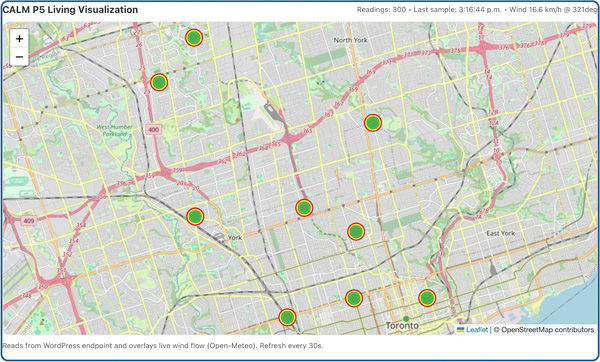
The real-time Clean Air Living Map (CALM). Image courtesy of Mark-David Hosale, © 2026.
Eligibility
The call is open to artists, designers, and collectives working across a wide range of creative practices and at any career stage.
Applicants should:
- Be comfortable working with technology and interested in translating air-quality data into creative work.
- Be curious and passionate about air quality and climate justice.
- Be ready to lead citizen scientists from the general public in collecting air-quality data through crowdsourcing, art, and design.
CALM welcomes a wide variety of creative approaches, project types, and forms of artistic and design practice.
Compensation
Four projects will be selected. Each selected artist, designer, or collective receives:
- $1,000 CAD professional creative fee per project
- Up to $1,000 CAD for approved materials, fabrication, and production costs
The materials and production budget includes costs associated with reproducing the work for use by citizen scientists.
CALM provides the environmental sensing technology, technical expertise, and training required to work with the CALM platform.
Selection Process
Four projects will be selected through a short interview process.
Selection is based on the applicant’s artistic or design practice, openness to collaboration in an interdisciplinary setting, and interest in environmental issues, technology, and research-creation.
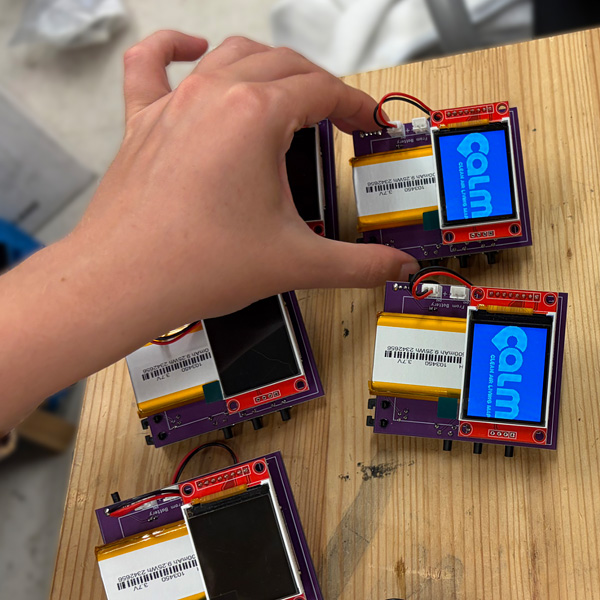
Raw circuit boards for the Clean Air Living Map (CALM) circuit platform. Image courtesy of Mark-David Hosale, © 2026.
Copyright & Documentation
Artists, designers, and collectives retain copyright in their creative work.
Selected participants allow CALM and York University to document and share the work through project-related exhibitions, publications, presentations, websites, social media, educational materials, and other research and knowledge-mobilization activities.
The project includes photography, audio and/or video documentation of the creative process, completed works, exhibitions, and public activities. Artists, designers, and collectives will be credited wherever reasonably practicable.
Submission Requirements
Applicants should provide:
- A short statement of interest, maximum 500 words. Supporting media is welcome.
- Resume or CV.
- Portfolio or examples of work.
- Contact information.
How to Submit
Send application materials to: info@cleanairlivingmap.ca
For additional information or questions, please contact:
Mark-David Hosale at info@cleanairlivingmap.ca
Or, visit cleanairlivingmap.ca.
Submission Deadline: September 4, 2026, 11:59pm ET
Clean Air Living Map (CALM)
A collaboration between the Electronic Additive Manufacturing Lab (York), the nD::StudioLab (York), and DESIGNwith (OCADU)
York University / OCAD University
Toronto, Ontario
cleanairlivingmap.ca
info@cleanairlivingmap.ca
Facebook | Instagram | Linktree
York University: Facebook | Instagram
OCAD University: Facebook | Instagram
DESIGNwith: Instagram
Accessibility:
CALM is committed to supporting accessible participation. In-person project activities will take place at locations in the Greater Toronto Area. Accessibility needs can be discussed with selected participants, and reasonable accommodations will be made where possible. For accessibility questions related to the application or project, please contact info@cleanairlivingmap.ca.
Funded by the SensingChange: Black Carbon Airpollution Detection And Critical Artworks project which draws upon research supported by the Government of Canada’s New Frontiers in Research Fund – Exploration (NFRF-E), NFRFE-2023-00830.
Related Content
Call for Expressions of Interest: James Stevenson Park Legacy Project, Peterborough
Request For Proposals: 2027 Floating Public Art, Waterfront Toronto
Call for Applications: PhD Programme 2026, Transart Institute for Creative Research