vert soleil green sun at AXENÉO7, Gatineau
By Michael Davidge
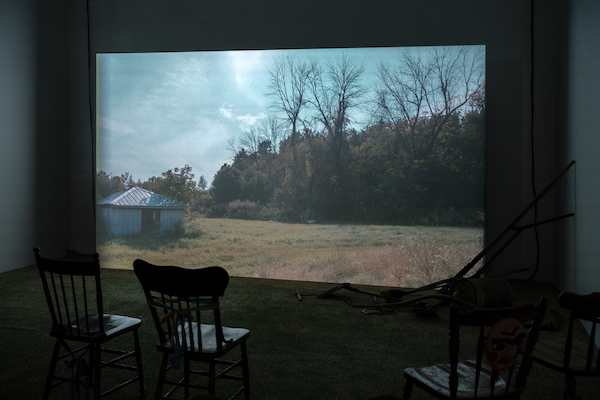
Kinga Michalska & Sarah Chouinard-Poirier, Pologne-en-Québec / Wesele [The Wedding], 2025, installation view (courtesy of AXENÉO7; photo: Emma Jacques)
I am compelled to begin my review of vert soleil green sun with a spoiler alert, because the less I tell you about it, the more you will enjoy it. I entered the exhibition somewhat uninformed, and the more I immersed myself in it, the more I was surprised and delighted. I would encourage you to budget at least two hours for a visit to AXENÉO7 to take it all in, though you may want to linger longer.
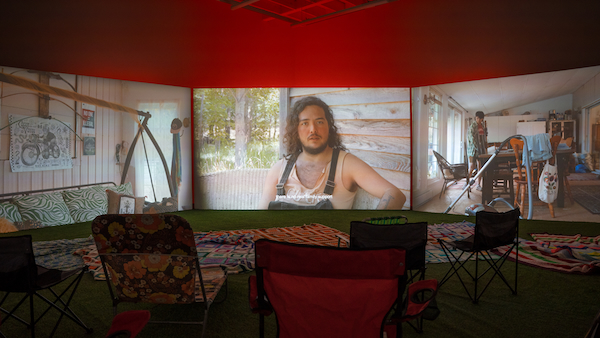
Kinga Michalska & Sarah Chouinard-Poirier, Pologne-en-Québec, 2025, installation view (courtesy of AXENÉO7; photo: Emma Jacques)
The artworks on view are products of what AXENÉO7 has termed Autoresidencies, the centre’s method of providing support to artists that was developed during the COVID-19 pandemic. The first two galleries present a major video installation by Kinga Michalska and Sarah Chouinard-Poirier entitled Pologne-en-Québec. In one room, a projection with a running time of 29 minutes depicts an adaptation of Wesele [The Wedding] a 1901 play by the modernist Polish playwright Stanisław Wyspiański. As your eyes become accustomed to the darkened space, you’ll notice that it is filled with items from the video – a set table, a half-eaten cake, the chairs you are sitting on, and various other implements – that fully immerse you in the world of the dramatic action. In the second room, a massive three-channel video projection (49 minutes long) provides a documentary-style account of the communal group of trans and queer anarchists involved in the adaptation of the play (produced during the pandemic) presented in the first gallery. The line between reality and fiction blurs as the performers reveal amplified versions of themselves. Again, elements in the video appear in the environment created for its viewing, loosening the boundaries between the two.
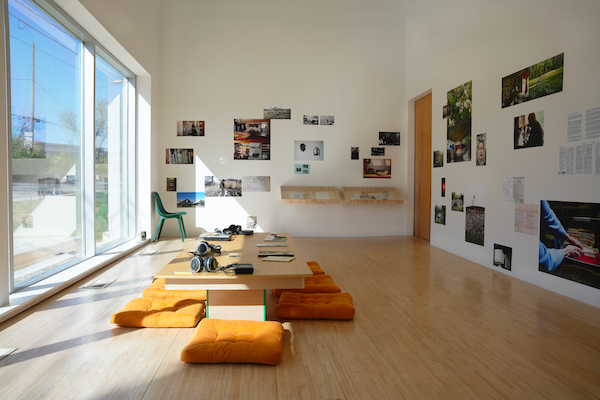
AM Trépanier, soif de communauté / hungry for community, 2025, installation view (courtesy of AXENÉO7; photo: Emma Jacques)
In a third gallery, a project by AM Trépanier, soif de communauté / hungry for community, presents oral, visual, and archival documentation of rural communes created by women, trans, and non-binary people in the area. At least one still from Pologne-en-Québec appears in this material, mingling fact with fantasy. The oral histories are also presented in a fanciful manner on audio cassette players resting on a low table with funky cushions, connecting again with the work presented in the other galleries. Both projects engagingly explore the pleasures and pitfalls of interpersonal dynamics and the lure of nostalgia.
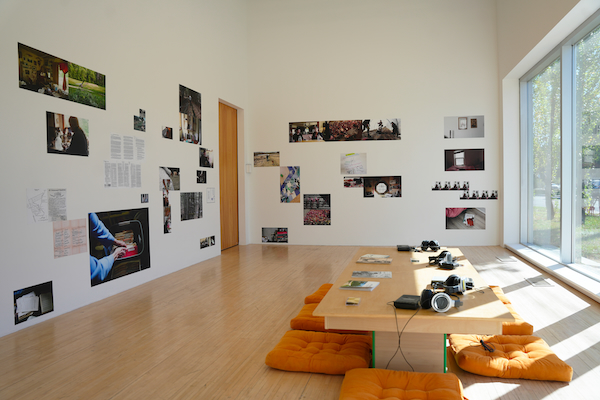
AM Trépanier, soif de communauté / hungry for community, 2025, installation view (courtesy of AXENÉO7; photo: Emma Jacques)
Pologne-en-Québec is undoubtedly the best work of art about the pandemic that I have seen yet, tapping into the insecurities, fears, and sense of potentiality that existed during the suspended time of the lockdowns. The group in the video choose to provide safe haven for trans and queer folks from Poland who were being persecuted at that time and so find inspiration for their play. By supporting such projects, artist-run centres are, by extension, intentional communities, providing a space for alternative visions of being, living, and coming together – in this case, in more ways than one. The group spontaneously embraces the production of half-sour pickles as a side hustle; however, as a public institution with accountability, the centre does have to post a content warning related to the fact that the brand of pickle being produced is named “Dilldo.”
vert soleil green sun continues until November 29.
Centre d’artistes AXENÉO7: https://axeneo7.qc.ca/en
The gallery is accessible.
Michael Davidge is an artist, writer, and arts worker who lives in Ottawa. His writing on art and culture has appeared in Border Crossings, BlackFlash, and C Magazine, among other publications.