Nicolas Ranellucci at Centre Clark, Montreal
By Cries Seeds
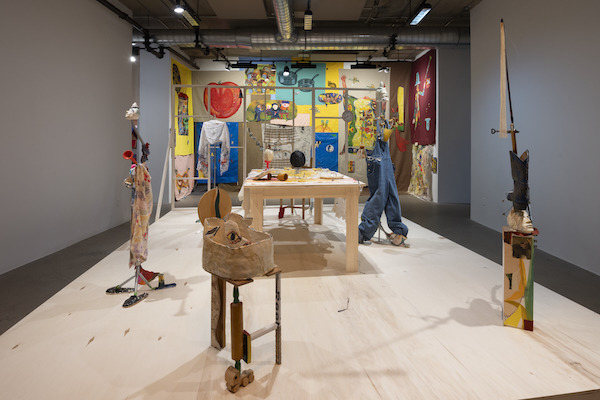
Nicolas Ranellucci, Charivari, 2026, installation view (photo: Paul Litherland)
Enter. A family sits in their home eating dinner. An audience observes. Outside the window are cries of resistance. Inside Charivari, Nicolas Ranellucci’s Master’s thesis show at Centre Clark, the artist uses storytelling to personalize his concepts, creating a somatic experience of status quo disruption through his imagination and world building. Charivari is an engaging exhibition where visitors become participants with their presence alone.
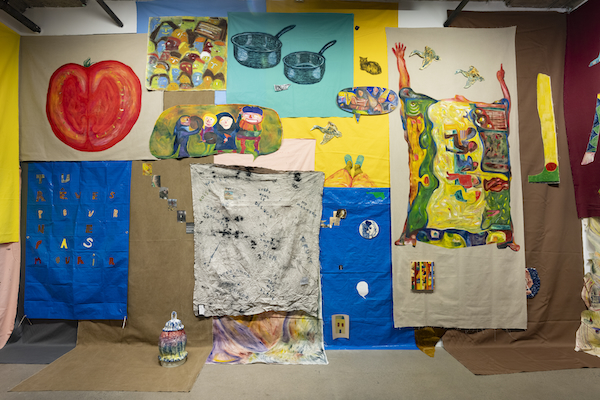
Nicolas Ranellucci, Charivari, 2026, installation view (photo: Paul Litherland)
At the entrance, humble zines rest on two-by-fours. They are titled Charivari: Dispositif Pour Corps, Bruit et Cuisine (Device for Body, Noise and Kitchen). A poetic play lies within. Made with folded paper, zines have historically been used as accessible forms of information distribution – oftentimes with a political focus. The installation coaxes out the imagination with the help of this two-act zine. Before the viewer is a performance: theater played by sculptures, ceramics, paintings, textiles, found objects, tarp, collage and perhaps the viewers themselves.
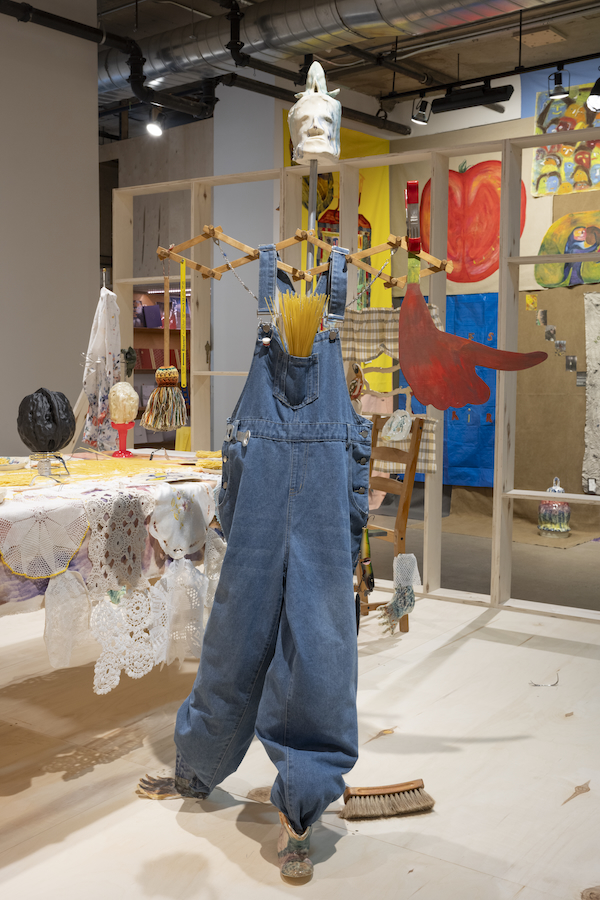
Nicolas Ranellucci, Charivari, 2026, installation view (photo: Paul Litherland)
To the left is a charivari, banging on pots and pans, singing, ringing bells, laughing, and crying out chants. A charivari is a European folk custom where a mock parade is formed to express discontent, disrupting a social order with noise and sometimes more violent means. Ranellucci depicts it in an equally clamorous art style using assorted found materials with bright and unconventional surfaces for paintings and collages that reflect the unruliness of the crowd outside. The visual resonates with the joy found in resistance.
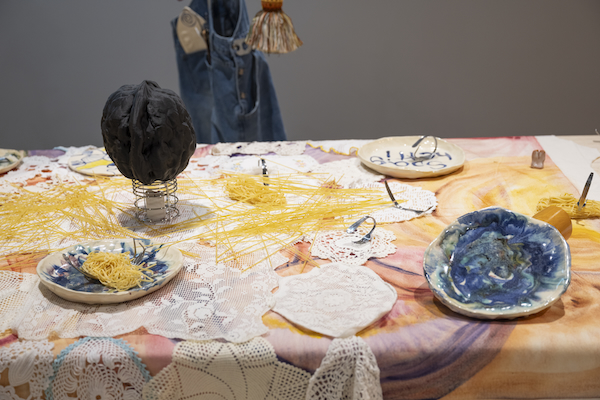
Nicolas Ranellucci, Charivari, 2026, installation view (photo: Paul Litherland)
At the center of the exhibition, the set forms a wall, a window, a kitchen that holds a family of four. The characters are also made using found materials, objects taking form like a riot does in organized chaos. Literally and figuratively, Ranellucci paints the picture of a family lulled into mundane routine. At the dinner table, with the crowd outside, they can no longer ignore the chants for change. That is, except the father, the stern-faced patriarch. While the mother encourages the children to question the status quo, the patriarch is the least cooperative – counterrevolutionary in his attempts to quash excitement, out of fear of losing comfort in his allotted privilege. If freedom is the privilege of some over others, it is no freedom at all. “Stay here with me,” he says, while the mother blows a trumpet outside the window. She, along with the children, prepares to join the march.
Nicolas Ranellucci, Charivari, 2026, installation view (photo: Paul Litherland)
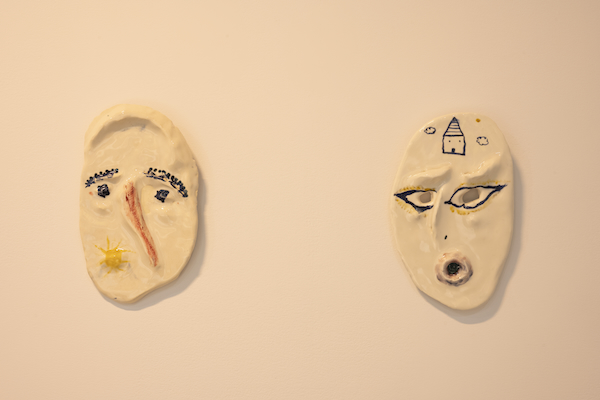
In their exhibition text, Centre Clark’s Sayaka Araniva-Yanez writes: “We must see and hear the storms of the century, what defies tangibility and what incites us to revolt.” Such a circumstance raises the question: who does our silence benefit? On the right-hand wall there is already an audience depicted with ceramic portraits. They rush the house and the father has no choice but to join the raucous outside. Gaining a perspective both from inside and outside the house makes one feel like they’re part of the scene. Walking around the gallery, we find ourselves either in the house or joining in on the charivari. The question remains: which part will you play?
Nicolas Ranellucci: Charivari continues until April 25.
Centre Clark: https://centreclark.com/en/
The gallery is partially accessible.
Cries Seeds is an artist and activist from British Columbia.