STIM CINEMA
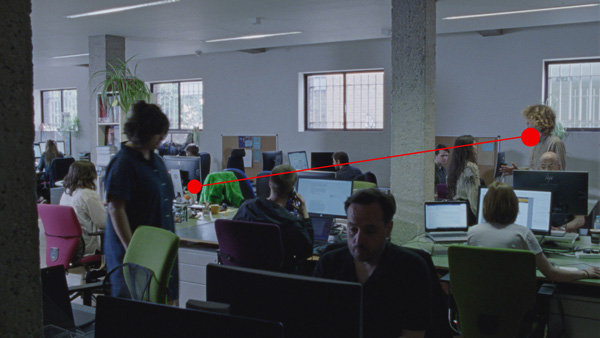
The Neurocultures Collective and Steven Eastwood, STIM CINEMA (still), 2023. Three channel video installation, Super 16mm digital transfer to 4K. 17:43 loop. Courtesy the artists.
STIM CINEMA
A moving image installation by the Neurocultures Collective and Steven Eastwood
Curated by Christine Shaw
October 1, 2025 – February 28, 2026
The Blackwood, University of Toronto Mississauga
STIM CINEMA is an exhibition and moving image installation that explores neurodivergent perception, agency, and communication in an era increasingly defined by misinformation, polarization, and systemic distrust.
Curated by Christine Shaw, the exhibition features work by The Neurocultures Collective (Georgia Bradburn, Benjamin Brown, Sam Shown-Ahearn, Robin Elliot-Knowles, Lucy Walker), a group of neurodivergent artists in collaboration with artist-filmmaker Steven Eastwood.
At its core, the project asks: What does it mean to trust one’s own perception when dominant narratives privilege certain ways of sensing, knowing, and being? How do neurodivergent experiences of movement, repetition, and sensory engagement challenge dystopian conditions of control, standardization, and hypersynchronization?
Comprised of tactile zoetropes, a three-screen film installation, and a studio featuring the collective’s collaborative process, STIM CINEMA critically intervenes in the dystopian conditions where difference is pathologized, sensory processing is disciplined, and trust in institutions is eroded. Instead of reinforcing logics of neurotypicality, this project explores other linguistic and embodied possibilities for being in relation—where trust is built through sensory connection, shared experience, and an ethics of care.
Read the full exhibition description on the Blackwood’s website.
Accessibility
This exhibition has been designed with a commitment to accessibility and neurodiverse inclusion. Visitors are invited to make use of stim tools, including tactile objects, fidget items, weighted blankets, and textured seating that support sensory regulation and embodied engagement with the space. The gallery has been calibrated with soft lighting and a visually calm layout. The zoetrope plinths vary in height to enhance accessibility for all visitors, including wheelchair users and children. The free-standing projection wall has been safely built with a soft lean to elicit trust in the work and trust in the gallery.
The exhibition also offers multiple points of access to the artwork. Core content is presented in layered formats, including audio descriptions and a large-print guide.
Staff are trained in disability and neurodiversity awareness and are available to support your visit. If you have specific access needs, we encourage you to reach out in advance or speak to a team member on site.
The Blackwood acknowledges that accessibility is an ongoing process. We welcome feedback and dialogue to continue to make our spaces more inclusive and responsive.
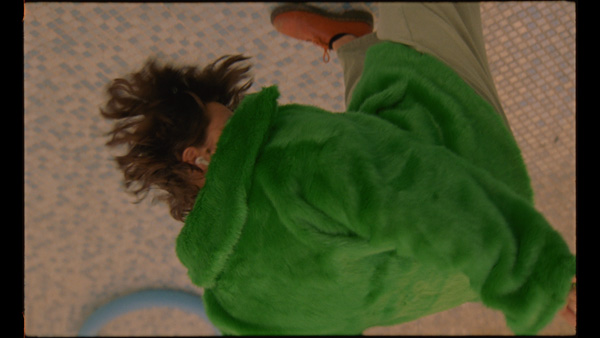
The Neurocultures Collective and Steven Eastwood, STIM CINEMA (still), 2023. Three channel video installation, Super 16mm digital transfer to 4K. 17:43 loop. Courtesy the artists.
Programs
Responsive programming runs alongside STIM CINEMA including screenings, workshops, campus walks, performances, and a 4-day interdisciplinary seminar series.
All programs are free and open to the public.
Reader-in-Residence
Throughout Fall 2025 a lunchtime Reader-in-Residence series on UTM campus will offer group readings, discussions, and embodied activities led by guest contributors whose ethical, political, and social commitments complement the exhibition. Centring the practices of UofT faculty and graduate students, these sessions offer multimodal responses to neurodiverse cultures, aesthetics, and modes of perception. Each session will be held in the exhibition’s Co-Creation Studio, located in the e|gallery, CCT Building lower level.
Reader-in-Residence: Andi Gilker
October 15, 12 – 1:30pm
Reader-in-Residence: Anne McGuire
November 5, 12 – 1:30pm
Reader-in-Residence: Julia Gruson-Wood
November 19, 12 – 1:30pm
Autism Through Cinema
Film Screening
January 2026
In January 2026, a film program presented in Toronto will explore the rich and multifaceted nature of an autistic apprehension of the world by looking with autism rather than at it. Bringing together a diverse selection of short films from documentary to animation, and genre-twisting fiction to experimental filmmaking, this program asks how cinematic language can be challenged and changed by autistic perspectives.
Oughtism… I would prefer not to
Multimodal Seminar Series
February 5 – 8, 2026
Blackwood Gallery, CDRS, e-gallery, MiST Theatre (UTM)
Organized and hosted by Christine Shaw
In Winter 2026, the 4-day seminar Oughtism… I would prefer not to will deepen interdisciplinary conversations of neurodiversity, disability, creative practice, and collaborative methodologies. Awarded the prestigious 2025 UTM-JHI Annual Seminar, Oughtism will explore autistic politics and perception, distantism, the empathy epidemic, choreographies of neurodiversity, Protactility, and other modalities that refuse neurotypical logics.
Acknowledgments
The Blackwood gratefully acknowledges the support of the University of Toronto Mississauga, Canada Council for the Arts, the Ontario Arts Council, Jackman Humanities Institute, and the Hazel McCallion Arts, Culture and Heritage Fund at the Mississauga Foundation.
Support for programming and research is provided by Jackman Humanities Institute Program for the Arts and JHI/UTM Annual Seminar Series, the Office of the Vice-Principal and Academic Dean Strategic Priorities Funding (UTM), Department of Visual Studies, and the Cinema Studies Institute at the University of Toronto.

The Blackwood
University of Toronto Mississauga
3359 Mississauga Road
Mississauga, ON L5L 1C6
blackwood.gallery@utoronto.ca
(905) 828-3789
Gallery Hours: Monday – Saturday, 12 – 5pm
Image descriptions:
1) An open-plan office space with multiple people engaged in various activities, such as working at computers, talking on the phone and in conversation with each other. A red line with dots at both ends cuts horizontally across the image, representing the gaze of an eye-tracking test participant.
2) An individual wearing a bright green, furry coat and earbuds, leaning forward in motion with tousled hair against a tiled blue-and-white surface.


Related Content