Michelle Wilson – Remnants, Outlaws, and Wallows: Practices for Understanding Bison
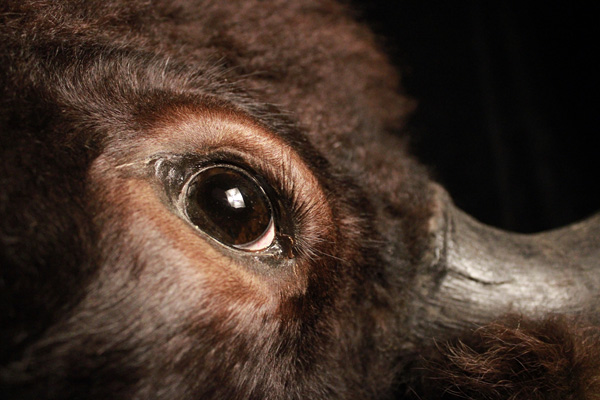
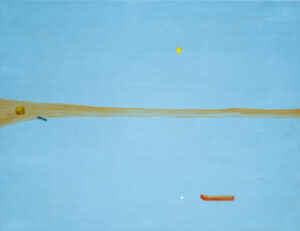
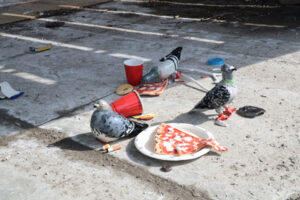
Michelle Wilson, Reclamation (performance documentation), 2019. Image courtesy of the artist.
Remnants, Outlaws, and Wallows: Practices for Understanding Bison
Michelle Wilson
August 5 – September 11, 2021
Bison were never meant to survive colonial expansion. In the United States, there was an unwritten yet well-known military campaign to eradicate the bison, the life source of many Indigenous nations resisting governmental subjugation. In Canada, their depletion was insidious because the Government planned their obsolescence. Canada’s politicians may have conceded that they could save some bison as living specimens of a lost species, but the rest would fall before the advancing tide of white settlement. With the bison would go the multiple First Nations living in concert with them.
The bison’s near-extinction was a tool of assimilation; the famine that resulted from their loss drove many to sign treaties and accept reserves. The attempted erasure of bison and Indigenous peoples resonate with one another because, as theorist Aph Ko points out, the logic and systems of white supremacy have labeled both as animal in relation to the white human. And so, both have been treated as a wild other to be conquered and brought into proper relation to white human society. It was at the tipping point of bison extinction that the Canadian Government swooped in to save them. Settlers have been in the business of corralling, culling, and mythologizing the bison ever since.
This relationship with bison, established by settlers, has been inherited by today’s generation. There are ways of knowing bison that we have inherited as well. These ways position them as artifacts, as population numbers and data.
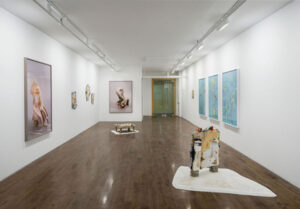
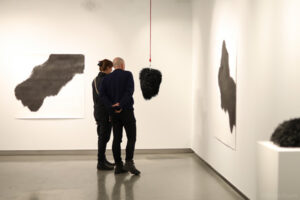
The works in this exhibition reflect Wilson’s process of confronting and attempting to unlearn reductive and isolating taxonomical perspectives that arise from colonialism’s continuing legacy. They suggest ways of knowing through relationships and manifest what happens when we critically reconsider received facts with care, attention, and time. While bison are the centre of this exhibition, the inter-media and interdisciplinary works within it enact an enmeshed way of knowing the world; through the human and more-than-human beings that form it and are formed by it. Here, looping tendrils criss-cross and lead us toward understanding.
Wilson proposes that knowing, as presented in this exhibition, is meant to be understood and experienced through relationships, and therefore it is an ongoing and forever changing creative investigation—one without an endpoint.
About the artist
Michelle Wilson is an artist and mother currently residing as an uninvited guest on Treaty Six territory in London, Ontario. In her current work, she makes palpable the presence and absence of bison and their inseparability from the land and its people. In the Euro-American archive, bison bodies have been used to convey colonial knowledge systems, and their story of survival has been used to perpetuate myths of “settler saviours”. This is the legacy that Wilson, as a feminist of settler descent studying in colonial institutions, has inherited and is confronting.
She is currently a Ph.D. candidate in Art and Visual Culture at Western University. Remnants, Outlaws, and Wallows: Practices for Understanding Bison is her graduate thesis exhibition.
McIntosh Gallery is open by appointment until further notice. Please book your visit in advance online. For more information about gallery programming or planning your next visit, please contact mcintoshgallery@uwo.ca.
McIntosh Gallery
Western University
1151 Richmond Street N.
London, ON
N6A 3K7
mcintoshgallery.ca
Facebook / Twitter / Instagram: @McIntoshGallery
Free admission to all exhibitions.
We regret that McIntosh Gallery is not wheelchair accessible



Related Content