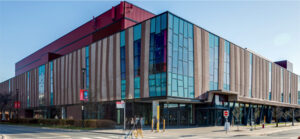
2027 Interdisciplinary Graduate Program in Digital Arts & Humanities, UBC Okanagan
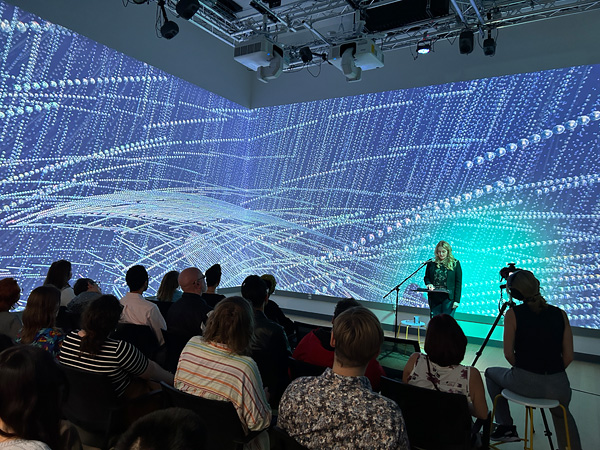
Dr. Megan Smith presenting her project, ‘All the Stars We Cannot See’ in the Critical Futures Studio at UBC Okanagan.
Call for Applications: Interdisciplinary Graduate Program in Digital Arts & Humanities
UBC Okanagan, Faculty of Creative and Critical Studies
Earn an Interdisciplinary MA or PhD in Digital Arts & Humanities at UBC’s Okanagan campus.
This program, brings together the Humanities, Social Sciences, and Creative Arts through computing technologies and makerspace methods, through Digital Arts & Humanities, we make things, engage with communities, and blur the line between historical focus and making focus.
Digital Arts & Humanities sits at the intersection of culture and technology, using digital tools to explore questions central to the arts and humanities while applying creative and critical frameworks to emerging technologies. Combining art, design, and science, the program creates meaningful experiences and opportunities to make, share, and engage with communities through technology.
With research areas spanning Creative Writing, Cultural Studies, Data Visualization, Digital Media, Indigenous Media Arts, Media Studies, and Visual Arts, students gain research, teaching, making, and analytical skills that prepare them for careers in education, consulting, government, industry, and beyond—or to pursue academic and alternative academic paths.
Find out more about the program and professors; learn about the labs and centres that form our community and how you can become part of them.
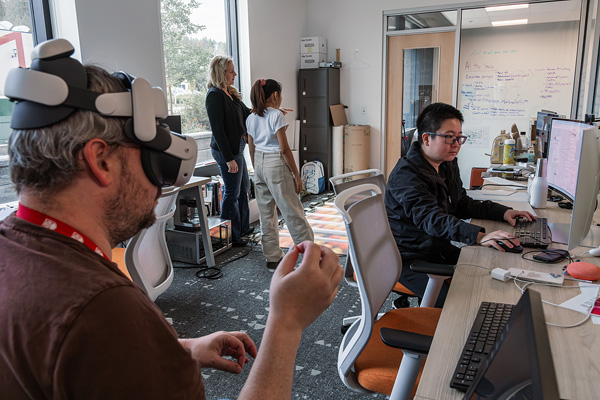
DAHU graduate students working on their projects in a research lab at UBC Okanagan.
Submission Requirements
- Online application and application fee
- Unofficial transcripts for all post-secondary institutions attended are required for the application package, however, if admitted, students are required to submit official transcripts to the College of Graduate Studies.
- Statement of Intent
- English language test (for non-native speakers of English)
- CV or resumé
- Two letters of reference (applicants may submit the online application form at any time during the call for applications – doing so triggers the invitation to referees – and continue to upload supporting documents until the deadline.)
- Please provide one example of your scholarly writing, such as a term paper or a substantial scholarly paper AND/OR submit electronic portfolio of artistic work (3-5 samples of artistic production and/or links to digital work).
How to Submit
Applying takes time. Students are advised to start the application process two months in advance of the application deadline.
Visit gradstudies.ok.ubc.ca/how-to-apply to find out more about applying to UBC Okanagan.
Submission Deadline: January 15, 2027
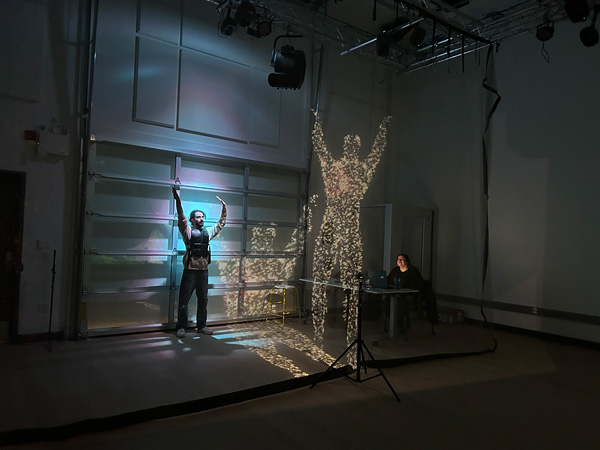
Carla Mather presenting her MA thesis work, ‘Humanizing Data: A Digital Art & Humanities Exploration of Empathy, Biometrics, and Immersive Technologies.’
About the Faculty of Creative and Critical Studies
The Faculty of Creative and Critical Studies at UBC Okanagan is a community engaged faculty whose work combines traditional scholarly and hands-on skills with contemporary technologies. We offer the study of historical and contemporary creativity in various forms, and are a meeting place for passionate thinkers, researchers, makers, and artists committed to a university experience that builds connections between global, local, settler, and indigenous communities.
UBC Okanagan is situated on the traditional, ancestral and unceded territory of the Syilx Okanagan Nation and their peoples.

UBC Okanagan
Faculty of Creative and Critical Studies
1148 Research Road
Kelowna, BC V1V 1V7
www.fccs.ok.ubc.ca
Facebook @IGSDAHU
Instagram @dahu.igs and @fccs.ubco
Accessibility: For more information, please visit the website.
Image Descriptions:
1. A photograph of a person presenting to an audience surrounded by digital projections of flowing data and light across the walls.
2. A photograph of one person wearing a virtual reality headset while other students work on digital technology projects
3. A photograph of a person raising their arms as motion-tracking technology creates a large projected figure that mirrors their movements.
Related Content

Call for Applications: Visual Arts Residency – Embodied Making: Performance Art, Images & Objects