2026 Graduate Programs in Art and Architectural History & Fine Art at the University of Manitoba

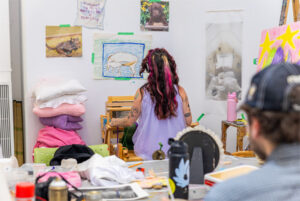
The award-winning ARTlab anchors the School of Art at UM’s Fort Garry campus.
Call for Applications
Master of Arts in Art and Architectural History (MAAH)
Master of Fine Art (MFA)
University of Manitoba | School of Art, Winnipeg
The School of Art at the University of Manitoba (UM) invites applications to its 2026 graduate programs in Art and Architectural History and Fine Art. Designed for artists, scholars, and researchers seeking depth, rigor, and sustained inquiry, these programs support advanced studio practice and critical research in an environment that values ambition, focus, and long-term development.
As part of a U15 research university, UM offers strong interdisciplinary resources, dedicated facilities, and a research-driven graduate culture—situated in one of Canada’s most affordable and culturally active cities. This combination allows students to concentrate on what matters most: developing ambitious work, ideas, and research trajectories.
Master of Arts in Art and Architectural History (MAAH)
The MAAH is a two-year, research-intensive, course- and thesis-based program examining Western traditions of art and architecture alongside Indigenous, Métis, and Inuit art and architecture, from the medieval period to the present. Areas of study include new and digital media, moving image studies, and critical theory.
Students engage deeply with historical and contemporary debates, developing rigorous research and writing practices that prepare them for doctoral study and for professional careers in galleries, museums, education, publishing, and the broader arts and cultural sector.
The MFA is a two-year, studio-based program grounded in original research. Students pursue medium-specific or interdisciplinary practices supported by seminars, critiques, and regular studio visits with local, national, and international artists and curators.
The program culminates in a professional thesis exhibition in the School of Art Gallery, accompanied by a hardcover catalogue—supporting the transition from graduate study to professional artistic practice.
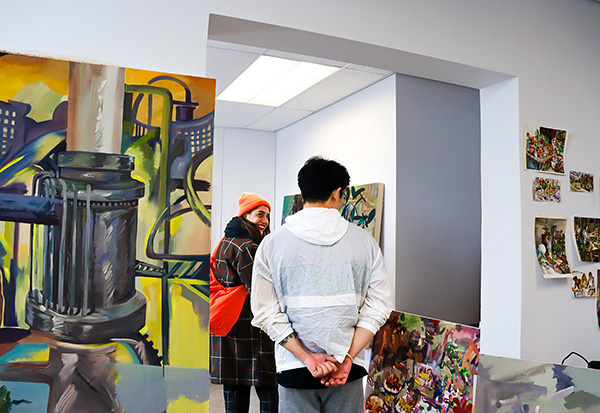
Private graduate studio. Shown: Studio of MFA student Xianghui Guan (MFA ’25).
Research & Studio Facilities | Private Graduate Studios
The School of Art spans more than 151,000 sq ft across the UM Fort Garry campus, anchored by the award-winning ARTlab (Art Research Technology Lab) and Taché Hall. These facilities are designed to support ambitious, research-driven work across a wide range of media, including:
- Printmaking, papermaking, and photography (analogue and digital)
- Painting, drawing, and design studios with generous natural light
- MAC labs, private editing suites, and large-format digital print services
- Sound stage, motion capture, recording booth, and microscopy lab
- Ceramics and expansive sculpture fabrication facilities at satellite sites
Many facilities are accessible for extended hours. In addition to shared research and production spaces, graduate students are assigned large, private, key-locked studios (approximately 377 sq. ft.), providing dedicated space for sustained, independent work. These studios support long-term research and production within a secure, professional studio environment.
Research is further supported by the University of Manitoba Architecture/Fine Arts Library, the School of Art Art History Resource Room, and UM Special Collections, which include rare books and archival materials dating back to the Renaissance.
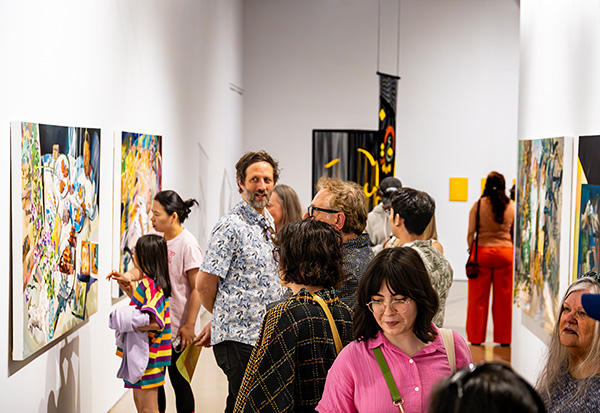
Annual MFA Thesis Exhibition in the School of Art Gallery. Shown: Work by Xianghui Guan (MFA ’25).
Mentorship & Community
Graduate students work closely with award-winning faculty who are practicing artists, designers, curators, and scholars with national and international recognition. Faculty achievements include Governor General’s Awards in Visual and Media Arts, Sobey Art Award nominations, and major research and creation grants from SSHRC and the Canada Council for the Arts. Their work is widely exhibited, published, and collected across Canada and internationally, bringing active, evolving practices directly into graduate support and teaching.
Mentorship at the School of Art is intentional, personal, and sustained. Through one-on-one support, seminars, critiques, studio visits, and ongoing dialogue, students refine research questions, develop methodologies, and push their creative and scholarly work further. Small cohorts and an open studio culture foster close working relationships and support experimentation, critical risk-taking, and the development of a distinct voice.
Program highlights include:
- A Visiting Speaker Series featuring Canadian and international artists, curators, historians, and critics
- Access to over 6,500 works across UM and School of Art collections
- Multiple exhibition venues supporting curatorial practice and professional development
- Strong interdisciplinary exchange with Architecture, Music, Indigenous Studies, Film, Theatre, and Classics
- Connections to Winnipeg’s galleries, artist-run centres, and cultural institutions
Funding & Affordability
Graduate students benefit from a competitive funding environment, including internal support, teaching and research assistantships, and eligibility for university-wide and external awards. Qualifying international students may also be considered for additional scholarship support.
Combined with Winnipeg’s comparatively low tuition and cost of living, this funding environment allows students to invest deeply in studio practice, research, writing, exhibitions, and professional development—supporting sustained focus and long-term ambition.
Winnipeg: An Affordable City for Sustained Artistic Practice
Winnipeg offers a rare balance of affordability, cultural infrastructure, and artistic community. The city is home to a dense network of galleries and artist-run centres, including Plug In ICA, Urban Shaman, Martha Street Studio, Platform Centre, Video Pool Media Arts Centre, aceartinc., C2 Centre for Craft, and the Winnipeg Art Gallery–Qaumajuq. Its accessibility and strong arts ecosystem support meaningful engagement beyond the university.
The University of Manitoba campuses are located on the original lands of the Anishinaabeg, Cree, Oji-Cree, Dakota, and Dene peoples, and on the homeland of the Métis Nation. As host of the National Centre for Truth and Reconciliation, UM is committed to advancing Indigenous research and scholarship and supporting Indigenous students and communities.
Fall 2026 Application Deadlines:
- Master of Fine Art (MFA): January 15, 2026
- Master of Arts in Art and Architectural History (MAAH): February 15, 2026

School of Art | University of Manitoba
313 ARTlab, 180 Dafoe Road
Winnipeg, MB R3T 2N2
umanitoba.ca/art
SoAGradPrograms@umanitoba.ca
1-204-474-9367
Related Content
Call for Applications: Visual Arts Thematic – Future Figurations Residency, Banff Centre
Call for Applications: Alchemy Artist Residency Summer 2026, Prince Edward County
Last(ing) Impressions: Pierre Lassonde School of Fine Arts Graduate Exhibition 2026