Toronto Biennial of Art at The Art Museum, Toronto
By Terence Dick
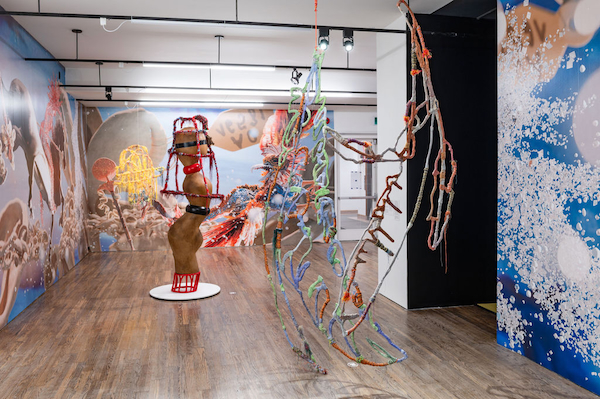
Julien Creuzet, installation view of various work at the Toronto Biennial of Art 2026 (photo: Rebecca Tisdelle-Macias)
I got off the streetcar and walked north onto the University of Toronto campus toward The Art Museum to see the Toronto Biennial’s central exhibition, but first I passed by the Lassonde Mining Building, which made me think about the Lassonde Art Trail, and then wonder about Pierre Lassonde and the relationship between the visual arts and resource extraction through history and at this moment in time, which got me thinking about landscapes and the material substances drawn from the earth that go into various mediums (such as graphite or clay or metal or pigments), and how each of those tell a story that weaves together art, science, history, industry, and the environment (which reminded me of Siobhan Angus’ revelatory book Camera Geologica). By the time I got to the University of Toronto Art Centre, I was primed for an exhibition that, amongst many other threads, weaves together a selection of works that shifts the landscape tradition away from vision-dominant vistas to substance-centred objects and processes highlighting a world in flux and the artists’ efforts to swim against the current.
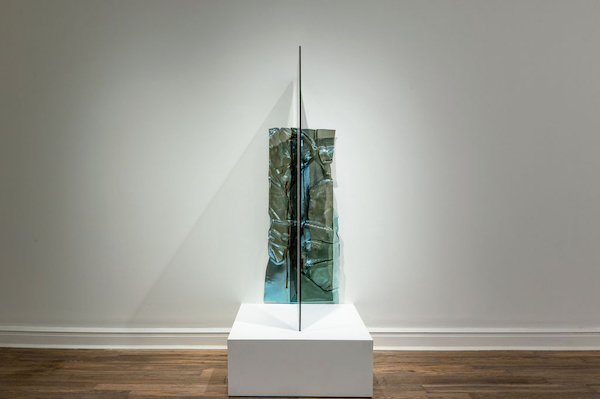
Charisse Pearlina Weston, mé-prendre (i saw it ooze in stiffly, saw it lurk along my sharp upper edges where hard and abrasive surfaces collapse the inside), 2025, installation view at the Toronto Biennial of Art 2026 (photo: Rebecca Tisdelle-Macias)
Curator Allison Glenn invokes multiple themes in her introductory text to the Biennial and explains that her title, Things Fall Apart, is meant to evoke the many different uses of that phrase, from W.B. Yeats to Chinua Achebe to The Roots, with the central motif of the “rupture” guiding visitors through the extensive range of the central exhibition, its extended footprint, parallel projects, and a curated gathering that happened earlier this month. For me, the title elicits the devastating conclusion of Achebe’s novel where (spoiler alert) the richly recounted life of the protagonist Okonkwo is reduced to a footnote in a district commissioner’s memoir of colonial Nigeria. That rupture in perspective haunts many of the works in the Art Centre’s contribution to the overall exhibition, but it is exorcised by gamut of artists bringing their concerns and visions to the table.
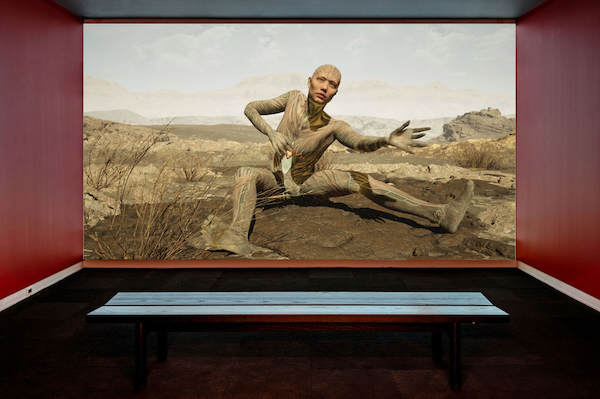
Lindsay Katsitsakatste Delaronde, Soul-Hex, 2026, installation view at the Toronto Biennial of Art 2026 (photo: Rebecca Tisdelle-Macias)
While some group exhibitions cohere around a unifying and dominant direction, others (and biennials are perfectly suited to this strategy) expand from a shared starting point to map different possible paths. Mine, on this particular Saturday afternoon, leads from Julien Creuzet’s immersive opening gambit combining hallucinatory wallpaper and suspended sculptures at the Art Centre’s entrance to Rebecca Belmore’s recycled plastic water bottle-draped jackets that were worn in a procession at the Biennial’s opening, past Chiedza Pasipanodya’s series of sculptures that link ancestry to the contemporary experience of displacement, to pause in front of Charisse Pearlina Weston’s minimalist modification of surveillance glass that transforms cold blue crystal in an act of resistance to the policing gaze.
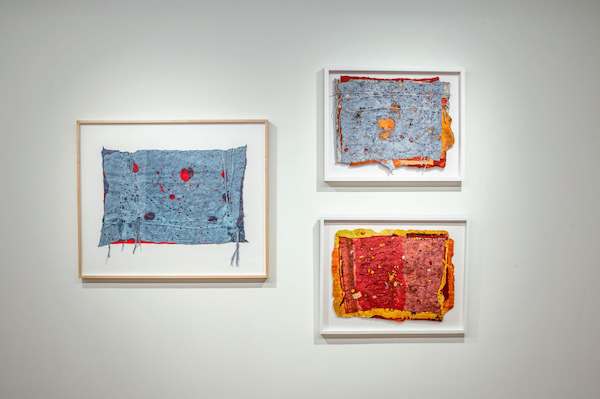
Carole Harris, installation view of various work at the Toronto Biennial of Art 2026 (photo: Rebecca Tisdelle-Macias)
The two anchoring points for my journey were Lindsay Katsitsakatste Delaronde’s entrancing computer-generated video and Carole Harris’ gorgeous fabric constructions. The former blends the ancient and the futuristic through old tech and new historicism, depicting Indigenous cosmologies and land stewardship through augmented reality and motion capture technology. A mythic figure infuses the soil with fresh elements as they dance a ceremonial prayer. Like all duets, the connection between being and earth relies on a mutuality maintained over generations.
Harris takes a different tack and generates abstract orders from the inherent qualities of her materials. She too works with the earth, but emphasizes discovery and wonder in her combinations of colour, shape, and textures. The evidence of her hand in creation revives the hope that was trampled by the machinery I imagine lies hidden in the mining building. Even when she applies destructive gestures – fraying, ripping, cutting – she carries it through to the promise that, while things do fall apart, there are people in the world who keep putting us back together.
Toronto Biennial of Art 2026 continues until December 20.
Toronto Biennial of Art: https://torontobiennial.org/
The exhibitions are accessible.
Terence Dick is an arts writer living in Toronto. He is the editor of Akimblog.