Olivia Johnston on Asylum

Olivia Johnston & Neeko Paluzzi, Garden of earthly delights, 2025, installation view of ASYLUM (photo: Rob Little)
I’ve been a working artist for fifteen years and an instructor for eight. I often use the history of art and photography as points of departure for my students. As an artist I’ve used my art practice as a way to unpack the experience of being in my body. And it feels like an unpacking. The cluttered attic of my mind is crammed with boxes of painful memories that have been carefully stowed away by a brain simply trying to protect me. As an adult I am picking my way through this attic, peering into boxes, opening them carefully, mindful of the child self who accompanies me and is terrified that the boxes will tip over and engulf her. What if these boxes were made into shrines, testaments to that sweet, sensitive child who still lives within me?

Olivia Johnston & Neeko Paluzzi, St. George and the Dragon (after Lewis Carroll), 2024, silver gelatin print
I’ve been told that meditation is a practice that can help regulate the intense ache of anxiety, depression, chronic pain, and chronic illness that I experience. But meditation involves entering into the body, and when the experience of being in your body has only ever been uncomfortable, it is a long road to peace. I’m far more familiar and practiced at dissociation, which I’ve heard described as the opposite of meditation: an escaping from the body rather than being with it. Taking photos has frequently been a dissociative rather than a meditative act for me, a form of escaping the (aching) body to go into the eye and only look, look, look for moments to preserve, moments proving that you exist. How strange to be talented at dissociating.
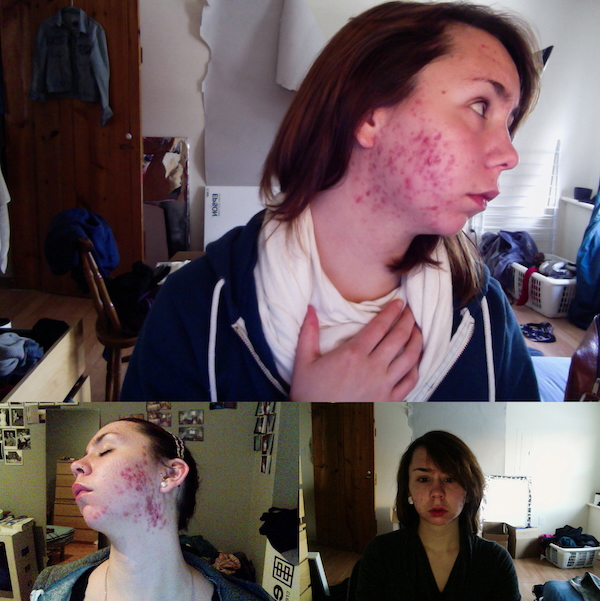
Olivia Johnston, TRAUMA (photo booth), 2011-2015, selection of images from the series
I remember first going to physiotherapy at age ten, the pain in my shoulders finally bad enough to warrant physical therapy. I received my first camera a couple of years earlier, filling rolls of film with pictures of my cats. When I was twenty, the skin on my face began to flare up into angry red welts, acne on steroids, greatly worsening the already tenuous relationship I had with my face. I used the photobooth app on my iMac to interrogate my face, to try and know the monster that had infected my skin.
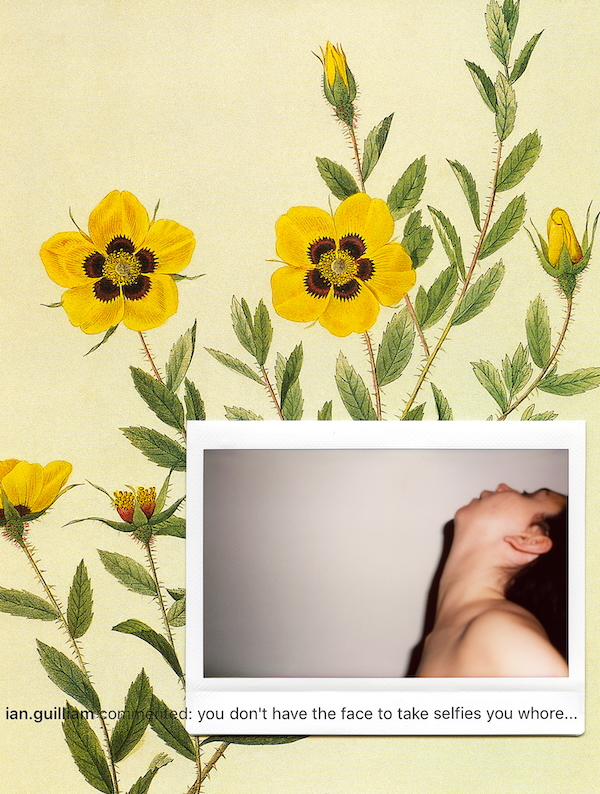
Olivia Johnston, scum bag, 2017, pigment print on cotton rag
Monstrosity took on another meaning when someone I knew began harassing me online. At first the messages were anonymous, but it eventually became clear that it was the then-partner of my best friend. They broke up shortly after, but the threats and strange messages continued for years. Strangely personal, sexually explicit, and usually insulting, I would receive these messages multiple times a day, immersing me in self-loathing, fear, and a deep mistrust of men. The vulnerability and openness I had exhibited via my art practice suddenly felt perilous, like I had created the weapon that was ultimately used against me. The virulent misogyny and sexual nature of his messages feel somehow aligned with a culture that prizes my young, white, female body, but despises my mind, my agency, my voice. I ultimately collaborated on an exhibition about this experience with his ex-partner, choosing to take ownership of his words rather than letting them fester. Why did he think my body was his to threaten? Was it something to be found in the way that I am? Do I come off as a victim?
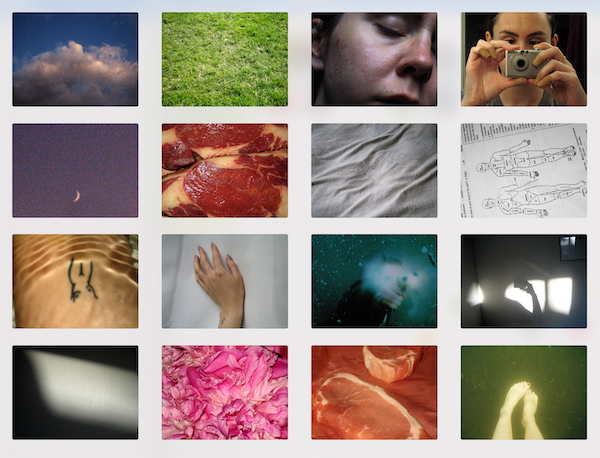
Olivia Johnston, Invalid, 2021, selection of images from the series
In 2020, on the day my city went into lockdown, I got a call from my doctor telling me that my tTG levels were high and it was likely I had celiac disease. The terrifying and isolating COVID-19 pandemic suddenly contained a different flavour of fear and isolation for me, foods becoming poisonous seemingly overnight. I took many photos during this time using an old Canon Powershot. This camera, practically ready for electronic waste disposal, was a touchstone of safety for me during the pandemic. It made strange and imperfect images that reminded me that I existed: this too shall pass.
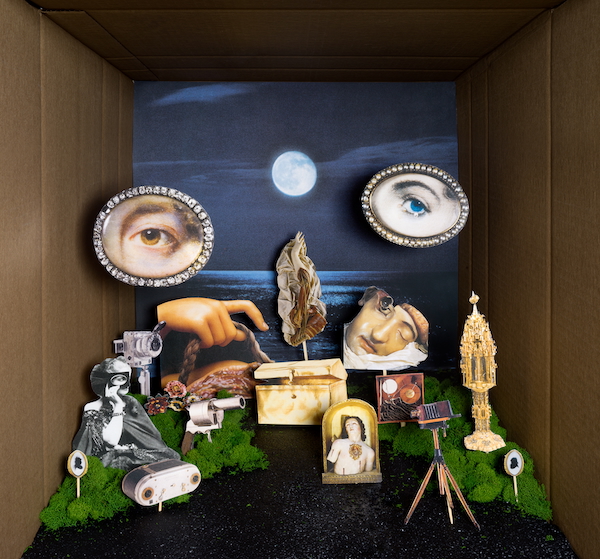
Olivia Johnston & Neeko Paluzzi, There is no substitute for the real thing, 2024, pigment ink on vinyl adhesive
ASYLUM is a collaborative exhibition of works by me and Neeko Paluzzi on display at the SPAO Centre Gallery in Ottawa until February 16. Neeko and I are not only great friends, we are both graduates of SPAO’s diploma program and are now leading its educational team. Our exhibition uses site-specific installation and photo-based mediums to explore trauma and illness, childhood, the emotional and physical weight of objects, the history of art, queerness, and the photographic image. The exhibition is a manifestation of the work of healing. It is an installation that explodes open and merges together the minds and memories of two people who are learning what it means to be human. It acknowledges the problematics of the photographic image itself, while honouring the images that live in our minds, hearts and bodies. This work evolves out of our own memories, but our viewers’ memories are here too, waiting to be remembered. ASYLUM speaks to that which is inherent to this human life: joy, love, grief, death, birth, beauty, ugliness. It need only be discovered within the cave, inside the diorama, behind the curtain of the stage, at the centre of the shrine.
How strange it is that we carry memories in the cells of our bodies. How strange that my body has in fact kept the score.
Olivia Johnston (she/her) is an artist, art historian, art educator, and DJ living and working on unceded Algonquin territory (Ottawa). In her practice, she investigates her own experiences of chronic illness and trauma, and examines the iconography of sacredness in contemporary life. Catholic aesthetics often serve as a visual framework in her work in order to explore questions about images, gender, the body, the self, beauty, illness, and art history.