Sara Porter on Hello Sunshine!
(photo: Dánil Røkke)
Sara Porter is a performer, writer, and educator whose newest multi-disciplinary solo show Hello Sunshine! premieres on August 13, 14, and 15 at Toronto’s SummerWorks festival. Akimblog recently spoke with her about bodies, invisible disability, and identifying as a disabled person.
I never really planned on being an artist. I was at university studying biochemistry and ended up doing some theater classes. I was the provincial champion in high jump, so I was a bit of a jock when I started dancing in my early twenties. I didn’t have the basic training, but I was a good student. For some reason, it’s not unusual in contemporary dance for there to be men who start in their early twenties, but women generally start as young girls doing ballet. I did try to do that and hated it. I didn’t know I was a queer girl back then, but the femme business just didn’t sit well with me. I went to England for a master’s degree in dance studies. Then I worked as a dance writer. I was a prof at York University for five years. Then I had a bunch of kids. About twelve years ago, I really committed to performing and creating work. At that point I was in my late forties,
The first memoir piece I did was about coming back to dancing after having my kids. Sarah does a Solo was about whether I could still perform. It was about mothering in a way. It was about creative process, and putting my body on stage, and whether my dancing was good enough to be performed in front of people. And I worked that out through the piece. The audience was watching me navigate my body.
The second memoir piece I made was called Getting to know your Fruit. That was about my queer body and the biology of queerness. I go on stage as myself, and then the dancing that happens is very much about the body that I am, the body that I have. I’m a mother. I’m just about to turn sixty. I’m a queer person – that affects your body. I have some injuries. I come from Nova Scotia, and I grew up in church, so there’s some amount of Protestantism that still exists in my body. The whole idea that trauma is stored in the body. Our histories are in our bodies. Sometimes I find myself doing physical things that remind me of my family or an old lover. Our bodies tell us things about ourselves if we listen.
(photo: Ömer Yükseker)
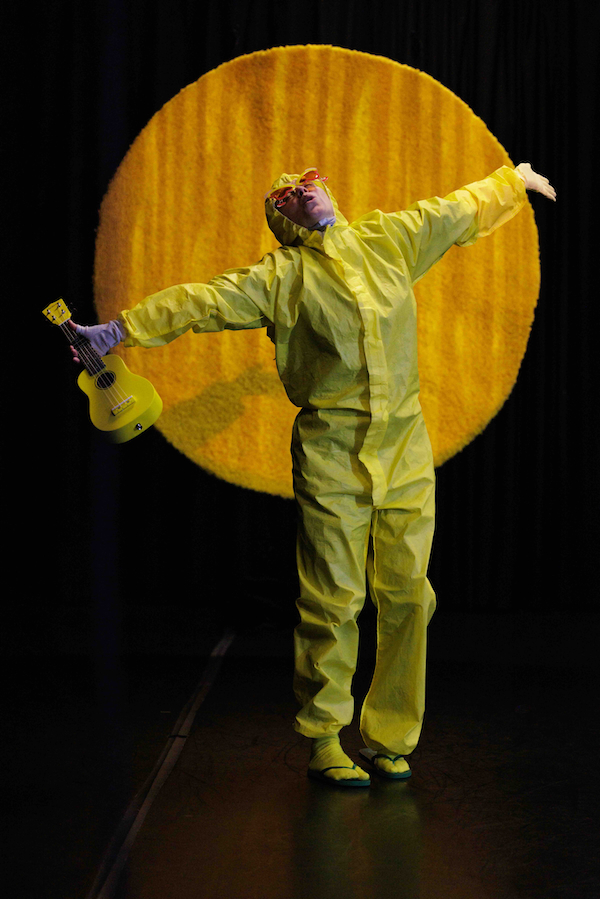
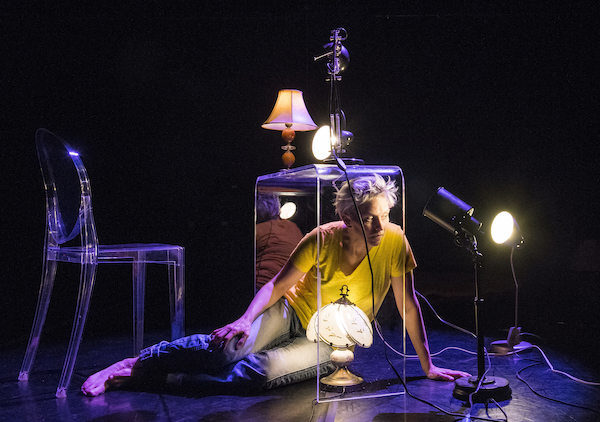
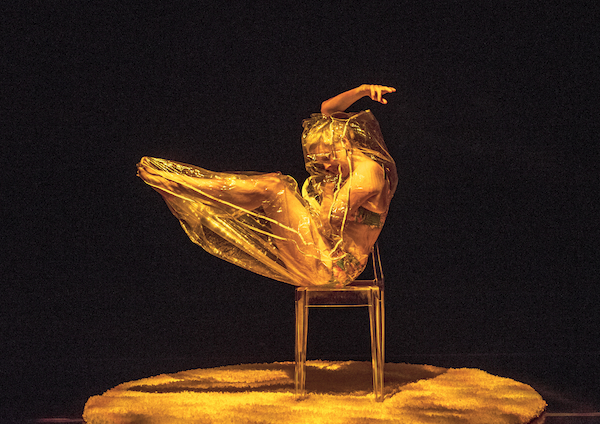
Hello Sunshine!, the third of my memoirs, is about my sun allergy. I was able to hide it for many years, or at least be discreet and not have to frontline with everybody. But it gets worse as I get older, and I just can’t hide it anymore. The challenge of invisible disability is you have to explain to people what’s wrong. I often liken it to telling people that somebody has died. You may have said it thirty-five times, but you have to deal with each person’s emotions when they hear it for the first time. There’s a scene called Some People Say, and I go through all the things that people say in response to me, some of which are challenging, some are supportive, some are just absurd. Friends would tell me, “You should make a show about that.” And I thought, what a bad idea. I’ve really struggled with the making of this show, just finding the right tone or voice. I’m reluctant to talk about it so publicly. That’s part of what the show is about: why is it so hard to talk about this kind of a thing?
I’ve lived with it since I was twenty-three. And to be perfectly frank, it’s been a fairly traumatic part of my life. I’ve been in the hospital a couple times. It’s hard to find medical help, because my version of this allergy is idiopathic, which is the term they use when they don’t know where it comes from and they don’t know how to solve it. A lot of doctors don’t really want to deal with me because they have nothing to offer. I would have this swollen face and my body would blow up and be all purple, and nobody knew what to do. It was pretty shitty for a really long time. Talking about it brings all of that up for me. So, it’s been difficult to talk about it. There’s a weird shame about sickness.
I have UV screens on my car, and I have some UV screens in my house. I need to drive to get places, but I can’t be outside. On certain days, we’re talking three seconds of light. It’s fairly extreme. I can walk somewhere for twenty minutes outside as long as it’s not a bright sunny day. It’s a worsening condition as I get older. Eventually, I went to my doctor and said, “Would you write me a letter so that I can get a disabled sticker for my car so I can park in those parking spots that are right beside the door?” That was a real threshold to get across: to walk up to the desk in Service Ontario and ask for a disability sticker when I’m a very fit person.
(photo: Ömer Yükseker)
I started wondering, what does this mean? Am I actually a disabled person? I started reading about disability studies and disability arts, and it spoke to me on so many levels about bodies that don’t fit, frames that we assume as normal, the whole normalized body. It made me think about my own particular path as a dancer, because I didn’t fit within the frames of contemporary dance training. As a queer girl, I hadn’t figured it out yet, but a lot of it was a gender-y thing around how women in dance were supposed to move, dress, and behave. I couldn’t fit that. So that whole sense of a normalized body and where the edges of that are made sense to me on many levels when I started reading disability studies and things about disability arts. It really fired up my imagination.
I remember my first day being in a disability arts workshop. It was somebody else’s play, in fact, and I was in a room with all these disabled artists and we were having conversations and doing some exercises, and it was like, what a relief. It was all about advocating for yourself and how hard that can be sometimes. It was like the early days when I was in queer rooms. I was like, wow, what a relief to be in a queer room where you don’t have to explain certain things. Being in those rooms more recently as a disabled person, I’m still getting used to that – how to use that terminology for myself and my practice.