Reflections: Kim Fullerton
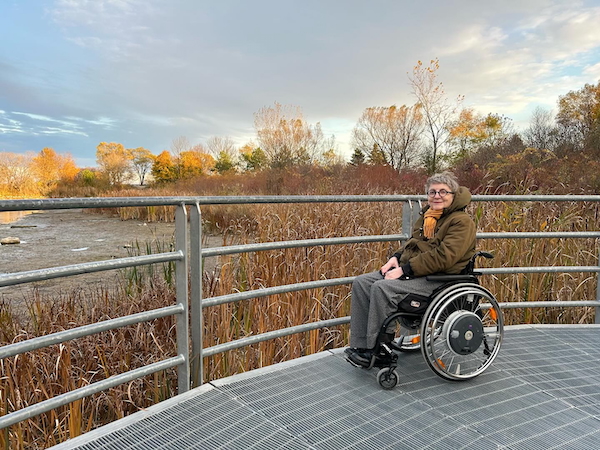
Akimbo has been celebrating its 25th anniversary this year with a monthly series that draws on our rich archive of clients, critics, and contributors to reflect on the accomplishments of the past and look toward future possibilities. For our final feature, we caught up with the founder and former owner of Akimbo, Kim Fullerton.
What are some of your professional highlights from the past twenty-five years?
Akimbo has always been about connections – the hundreds of people who started to sign up for our emails at the very beginning (1999) gave us such great feedback about how Akimbo made them feel connected to so many events, other people, and places nationally. Clients getting more bums in seats. Watching Akimbo grow organically out of a need for better communication systems in the arts was gratifying.
I started Akimbo in 1998 because I was looking for ways to promote the projects I was working on – in particular, a large exhibition of new works by Attila Richard Lukacs I was hired to organize by collector Salah Bachir. Most people in the press were just starting to use email, so that’s how I reached them. But there was still a lot of faxing going on as well. In those days my press contacts lists were several hundred people! At the same time, I started to email my press releases to art galleries and cultural organizations nation-wide, and soon they were asking me if I could promote their programs too. Akimbo was born. It was fun.
In the early 2000s I moved to a rural property north of Toronto and ran Akimbo on dialup, then satellite, then cellular. I’d joke about pressing “send” on a client’s email, then going do the dishes or out for a walk. It took that long! Working with technology was often harrowing in those years, but exciting too. In 2007, we were launching Akimblog on a new website along with a new opt-in email subscriber system while I was travelling across Canada by car. I remember sitting in a Fort Garry Hotel room in Winnipeg trying to get email out on a wifi system that kept dropping out because in those days hotel systems were in their infancy.
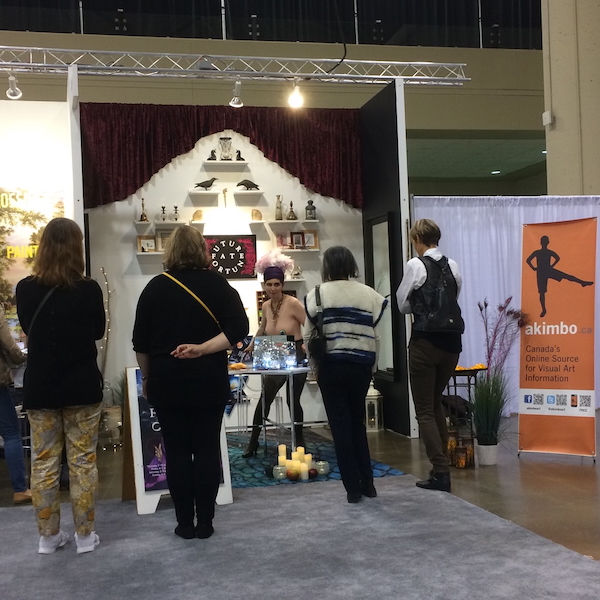
Jess Dobkin, Our Future, Our Fate, Our Fortune, 2017, performance
A highlight for sure was working with so many talented people over the years – our staff, technology wizards, arts professionals, students, artists. One of my favourite projects was commissioning performance artist Jess Dobkin to develop a project for our booth at Art Toronto in 2017. Titled Our Future, Our Fate, Our Fortune, oracle Dobkin invited fair-goers to consider the flip-side of the marketplace where “there is nothing to buy or sell; our currency is energy, our deals are celestial, our contracts are sacred.” There was nobody else like her at the fair and people loved her.
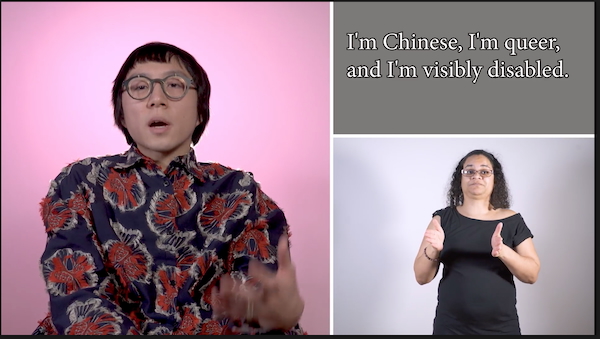
Kim Fullerton, 10×10 Photography Project, 2022, video still
It was a highlight to hand the reins of Akimbo over to Heather Kelly in 2021. It was time for me to go back to art making. It was pandemic times and I was taking online drawing classes and making a video for the 2022 10×10 Photography Project. Midi Onodera invited me to collaborate on a short video for her 2023 there is superstition project and I’ve been making animations and videos ever since.
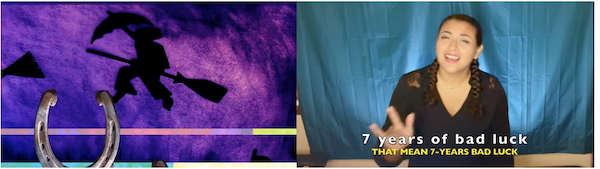
Midi Onodera & Kim Fullerton, (un)lucky horseshoes, 2023, video
Describe any upcoming projects that you’re particularly excited about.

L-R: Kim Fullerton, Marsha Ireland, David Bobier, Olivia Brouwer at the VibraFusion Lab making vibrotactile pillows
This past September I participated in a three-week residency at VibraFusionLab in Hamilton, learning from principals David Bobier and Jim Ruxton and deaf Oneida elder Marsha Ireland how to build vibrotactile elements into my work. Working with moving image, sound, and vibration together is new for me and seriously exciting.
What is your vision for the future?
100% accessibility in the cultural sector! After my injury in 2012, when I became paralyzed from the chest down and a wheelchair user, I started to open my eyes up to issues of accessibility in the art world. I sat on the board at Tangled Art & Disability for a few years and witnessed how much education, advocacy, and activism they were doing because it was so needed.
Disability and accessibility became buzz words in parts of the Canadian art world for a nanosecond. I’m still told I can’t attend something because the event/space is inaccessible. I’m asked to come in side doors or garage doors, or through kitchens. We are too often treated like second class citizens, as after-thoughts, as a group they’re not going to make an effort for.
I was just reading Jess Dobkin: Wetrospective, the book documenting the survey exhibition of hers at the Art Gallery of York University in 2021. Audio descriptions are included throughout its pages – textual descriptions of audio components that were also in the gallery spaces: “designed to enhance the accessibility and experience of sonic and other sensory features of the exhibition, alongside an ASL guided tour…” This is my vision of the future: artists, curators, gallerists, and a general cultural behemoth who integrate care right into projects, events, and buildings from their very inception.