Rachel Gray on Ghost Rooster Collective
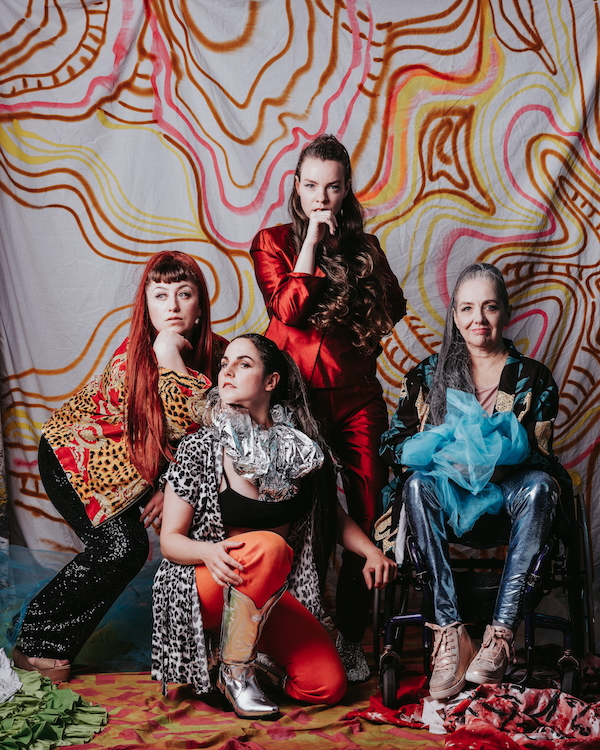
Ghost Rooster Collective (photo: Curtis Perry)
Rachel Gray is an interdisciplinary artist who works across different mediums including opera, film, painting, animation, set design, puppetry, and writing. She is the director of the short film Dreamscapes, which is screening across Canada this year. Akimblog spoke with her about the film, her collaborators in Ghost Rooster Collective, the meaning of healing, and making accessibility part of the creative process.
Ghost Rooster Collective is a group of Ottawa-based disabled artists working at the intersection of dance, film, and visual storytelling. The core members are Elizabeth Emond-Stevenson, Liz Winkelaar, Amelia Griffin, Jess Huggett, and me. We each bring different lived experiences and artistic strengths, but we’re all interested in how accessibility can shape the way we create. For us, access is a generative force that opens up new possibilities in performance, in collaboration, and in how stories are told.
I’ve been connected to disability arts for a long time. I grew up with learning disabilities, and that shaped how I saw myself and how I found ways to communicate. Art became a place where I could express things that didn’t quite fit into traditional forms. I was introduced to the disability community early in life, and that continues to be a huge part of how I live and make work. I believe that accessibility isn’t just something we add in at the end; it’s a creative spark. Thinking through access often leads to more thoughtful, more unexpected, and more dynamic work.
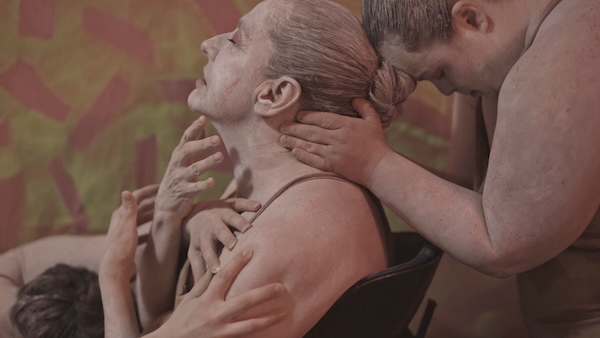
Still from Dreamscapes
Dreamscapes is a project that explores alternate states of being and invites people to sit with the complexity of that. Even though the story is rooted in disability experience, I think it speaks to something broader. It’s about resilience and imagination, and how important our connections to one another and to the earth are in surviving and finding our way. I hope the film opens something up for people and helps them see that there are many different ways to move through the world.
Being the director of Dreamscapes meant believing in the project, holding the big picture, thinking about what the story needed, what the film needed, and how to create an environment where everyone could thrive. It was about supporting the creative vision while making sure the process stayed grounded in care and collaboration. The look and feel of the video was developed in collaboration with Amelia Griffin, whose story is at its center. I created the costumes and backdrops, including masks and puppets, to help bring her internal world to life. A lot of that process was about listening. All the members of the collective wanted to understand how Amelia imagined things and then build something that felt true to her experience.
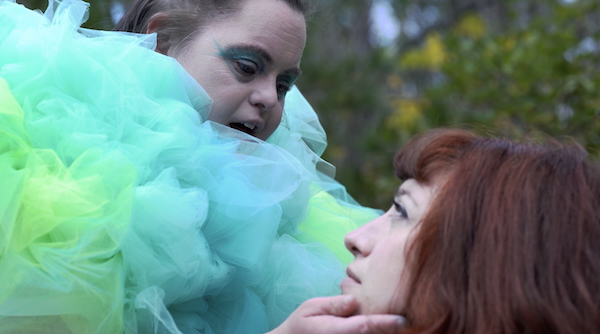
Still from Dreamscapes
Within Ghost Rooster Collective, we’ve had many conversations about what healing means to us. As artists and persons with disabilities, we have come to understand healing as a cycle. It has its own seasons or waves, rising, cresting and falling, then repeating. Healing for us is not a “one and done” event, but rather a process that continues again and again. It has its own rhythm, and it can be accepted or surrendered to, or resisted, depending on where, what, and how you are.
In my own experience, healing has never been something simple or linear. Healing has taught me a lot about myself, about patience, humility, adaptability, pain, anger, connection, and about how to keep creating even when things are uncertain or difficult. It has also taught me about how to accept what can’t be healed.
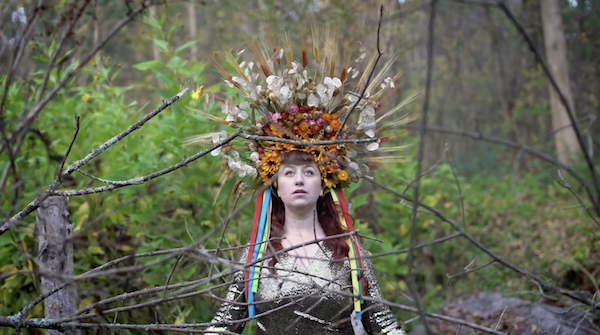
Still from Dreamscapes
In making this film, accessibility was something we approached relationally. It was about asking each other what we needed, paying attention, and trying to imagine the process not just from our own perspective, but from the perspective of everyone involved. We thought about access in how we communicated, how we structured our filming days, how we approached post-production, and how we are now sharing the work with the world.
There were successes and failures, and we learned a lot. One of the big things we’ve taken from this experience is that building in more time is essential. Slowing things down made our process more flexible, more open to input, and ultimately more creative. Shorter days allowed us to show up more fully and to adapt as we went. It also made the work more fun. Traditional film sets often rely on long, intense days that are simply not accessible for many disabled artists. Our process was different, and it showed us what is possible when access is built in from the start.
At the same time, this kind of work is still rare. There are still very few films made by teams of disabled artists, telling disability-centered stories, in ways that reflect disability culture. Many films are still not accessible to blind audiences, for example. There is so much more to do.
What I would like to see is more support for disability-led work and more recognition that accessibility can drive innovation. I want to see funding structures and timelines shift to allow for different ways of working. I want to see access taken seriously, not just as a checklist, but as something that can transform how we make and share art.
Dreamscapes is screening at Tangled Art + Disability in Toronto on July 26 at noon.
Subsequent screenings include:
> Kingston on October 7–9 at the DA Creative Cities Conference (via H’art Centre)
> Calgary on November 6–7 at the National Access Arts Centre
> Montreal in November with more details coming soon
At select tour stops, screenings will be followed by an Accessible Film Masterclass.