Oxygen Art Centre, Nelson, BC
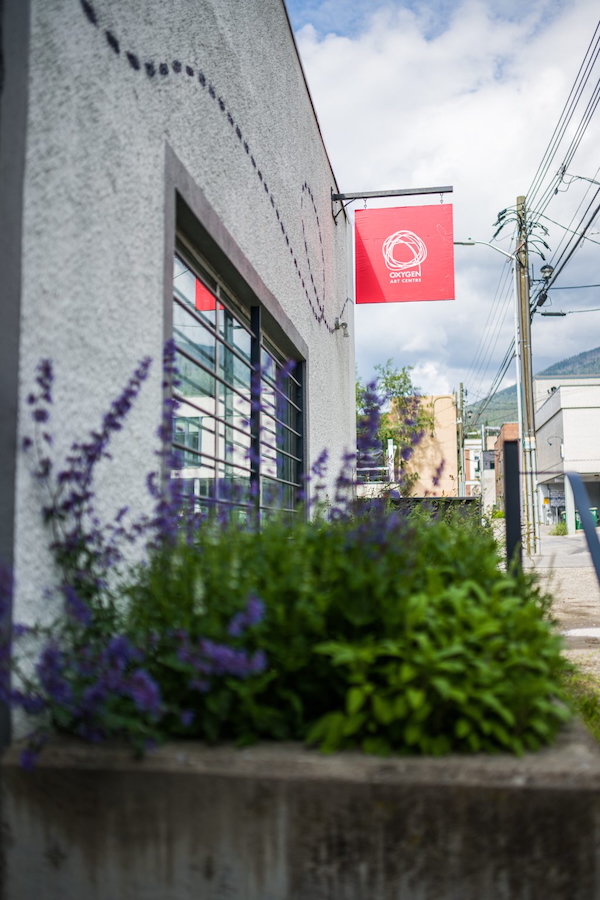
Oxygen Art Centre (photo: ThomasNowaczsynki)
The Canadian art landscape is ever-changing. Akimbo keeps you apprised of the standard-bearers as well as the upstarts in our monthly series on exhibition spaces from across the country. This month, we hear from Julia Prudhomme, Executive Director of Oxygen Art Centre, an artist-run centre based in Nelson, BC.
What is the history and mandate of your gallery?
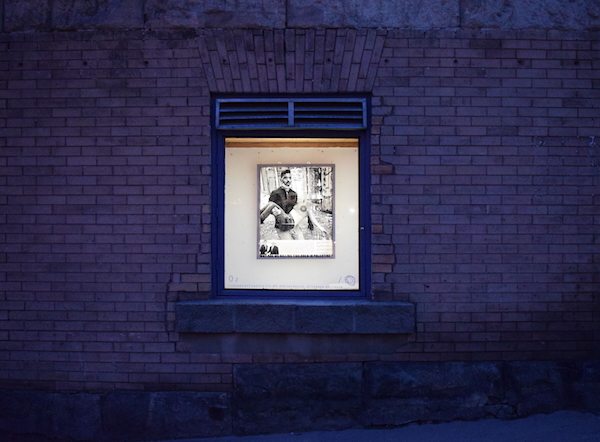
Marcus Dénommé, Why?, 2024, mixed media, in the Oxygen Art Centre’s window exhibition space
Oxygen Art Centre was founded as the Nelson Fine Arts Centre Society in 2002 by former writing and visual arts faculty at the Kootenay School of the Arts. The NFACS spent its first two years establishing its educational focus before opening the Oxygen Art Centre in downtown Nelson in January 2005. The gallery is housed in a renovated warehouse space and includes a studio, an exhibition space, a residency centre, and our offices. Over the past nineteen years we have presented fifty-nine exhibitions and hosted forty-two artist residencies.
The goals of the centre are to stimulate the creation, exhibition and discussion of contemporary art in all disciplines, to stimulate rural cultural development and professional practices in rural artists, to engage in community development through art-based projects, to achieve diversity in all programming, and to pay nationally recognized fees to all artists.
What’s a highlight of the neighbourhood where the gallery is located?
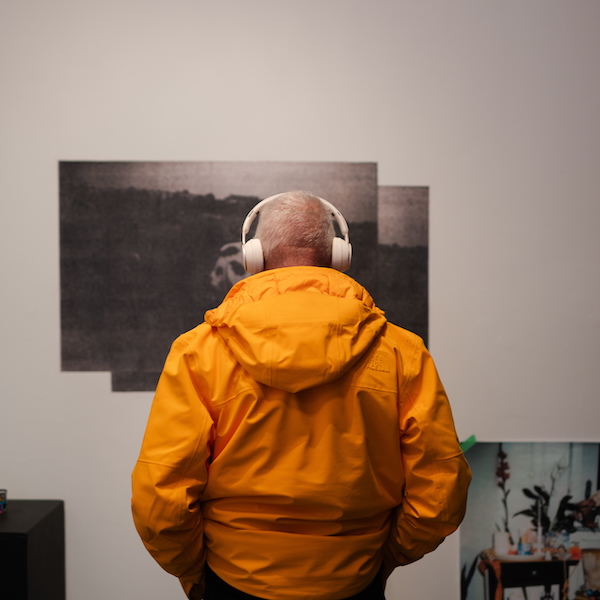
Gallery visitor in The Hungry Mist (A Névoa Faminta) group exhibition, 2023
We are located on the tum xula7xw of the sn̓ʕay̓ckstx (otherwise known as Nelson, B.C.), in the Columbia Basin or West Kootenay region in South Eastern British Columbia, which situates us uniquely within a rural context. Oxygen serves the immediate communities of Nelson, a city of over ten thousand people, and the outlying remote regional district defined by the Columbia Basin Trust of over eighty thousand people.
Oxygen’s facility is located along an alleyway behind the main street, Baker Street, which feels like a special little hideaway among the city’s cafés and shops. In one direction is Kootenay Lake, and in the other, up the steep mountain, a sea of trees. Nelson prides itself on its commitment to arts and culture, and boasts a unique legacy of countercultural movements like the back-to-the-land movement, which continues through active co-operatives like the Kootenay Co-op Radio station and the Kootenay Co-op grocery store, among others. This situates Oxygen among DIY, environmental activist, collectivist, feminist, and queer communities in the Kootenays. However, even with these socially engaged local politics, West Kootenay relies on resource extraction and tourism economies, and faces the same issues (like a housing crisis) as urban centres, which complicate and contradict these movements. Immersed in these contradictions, Oxygen’s programming attempts to respond to and provide space to grapple with these tensions as they occur on multiple scales – within our immediate communities and globally.
What’s your favourite part of running an art gallery?
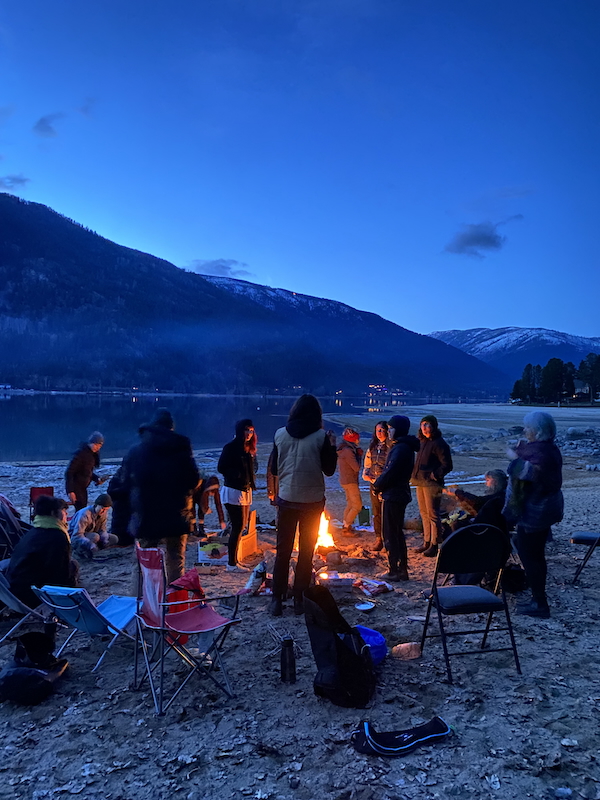
Chris Dufour & Alexis Hogan, Charcoal Making Workshop, 2024
Not to be corny, but I love working with artists. This work is so multifaceted that I am interchangeably a janitor, carpenter, painter, artist, administrator, organizer, host, friend, feminist, ally, interpreter, presenter, archivist, librarian, comforter, connector, entrepreneur, accountant, designer, and communicator – the list goes on! Yet, with all these responsibilities, my favourite part is the opportunity to work with artists and creatives.
How do you find out about new artists?
Pals and friends and colleagues. Social media accounts like Contemporary Art Daily. Art magazines like C Magazine, Esse, and Momus. Arts-focused news outlets like e-flux, Hyperallergic, Akimbo, and Pilot Art List. Podcasts. Academic periodicals like the Journal for Curatorial Studies and RACAR. Newsletters from art galleries and artist-run centres. Attending online talks. Digital/print publications, arts writing, books, zines and printed matter.
Where do you see yourself in five years?
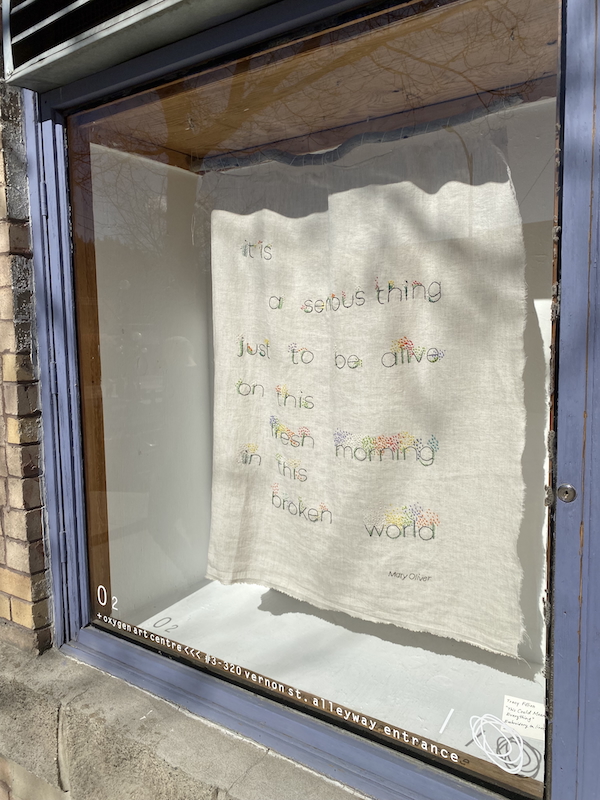
Tracey Fillion, It Could Mean Everything, 2024, embroidery on linen
I’d love to see Oxygen’s residency, exhibition, and education programs cross-pollinate and engage in more interdisciplinary experimentation. Our experiments over the last five years have created compelling threads of critical art thought and practice that continue to weave into new and upcoming projects. Creating the conditions for this work to continue steadily feels essential for the next five years. The “conditions” are very much in line with intersectional feminist curatorial practices of slowness and radical care, but the material in securing an economic foundation and space to facilitate this work from within our rural context is necessary, if not a little lofty, at this moment. Creating long-term relationships with artists and their practices is crucial to this work. I’m not particularly interested in the organization’s growth per se (though I understand the speculative and absolute necessity of increasing funding sources!), but to continue improving upon how to contribute to our communities and how we support artists and cultural workers is truly my aspiration for Oxygen.
What excites you about your upcoming exhibitions?
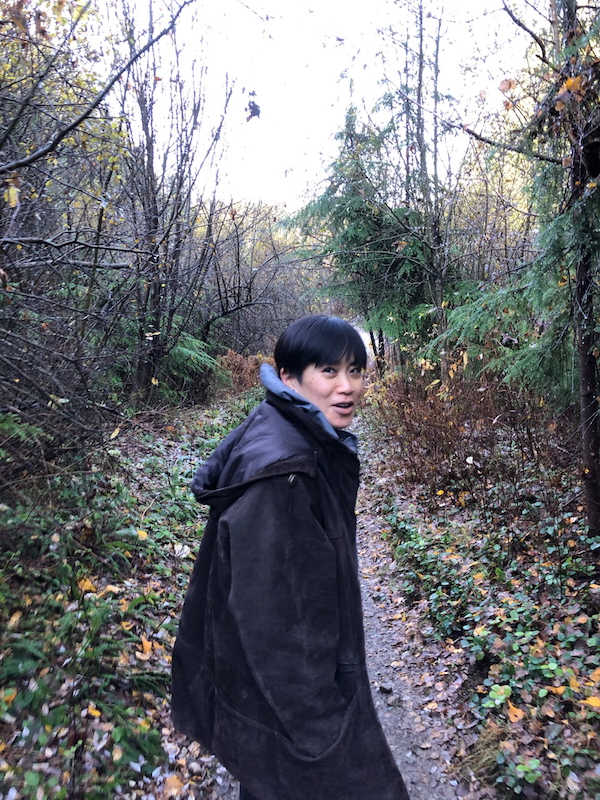
SF Ho
SF Ho is currently an artist-in-residence at Oxygen. They are working on their forthcoming exhibition, TRIPLE BURNER FLOWER FIELD (January – March 2025), which has been developing for over a year. We’ve had the privilege to work with Ho previously through an online workshop series, Sacrificial Cabbage (2021), and in the reading group and publication for the exhibition, dig a hole in the garden (2022), which included a new text by Ho, Milk Medicine. During their residency, Ho has been working with yarrow and tea-dyed large silk banners, which will be silk screened with pictographs for the word “no,” said to represent a calyx, a root, or a bird flying into the sky. This new/old fluidity underlies the linguistic, therapeutic, and ecological frameworks that run through Ho’s residency and forthcoming exhibition. In addition, the artist is working with Traditional Chinese Medicine techniques that bring together scent, acupuncture, and clay materially in the space, including Sichuan peppercorn paste wall installations and yarrow perfumes, among other components. The work is rooted in Ho’s research-based practice on colonial dichotomies of plants such as the poppy, tea, and yarrow. I am deeply excited to spend time with Ho in this generative space and support their work this way. Many of these threads continue from Chris Dufour‘s 2024 summer residency and forthcoming publication, no monetary value (November 2024), and continue with next summer’s residency and exhibition with Manny Axel-Strain and our autumn residency with local artist Genevieve Robertson. Each practice and project draws on contradictions and nuances in the more-than-human realms of plants and ecology through decolonial lenses.