Orchid Contemporary, Hamilton
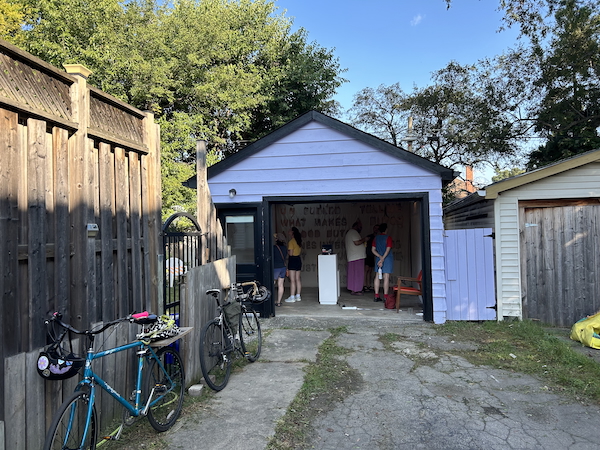
Orchid Contemporary exterior, elided text reception, 2024
The Canadian art landscape is ever-changing. Our Akimblog editorial series Places + Spaces keeps you informed of established and new exhibition spaces throughout the country, including museums, galleries, artist-run centres and more.
This month, we hear from Adrien Crossman, founder of Orchid Contemporary, a DIY gallery and art space in Hamilton.
What is the history and mandate of your gallery?
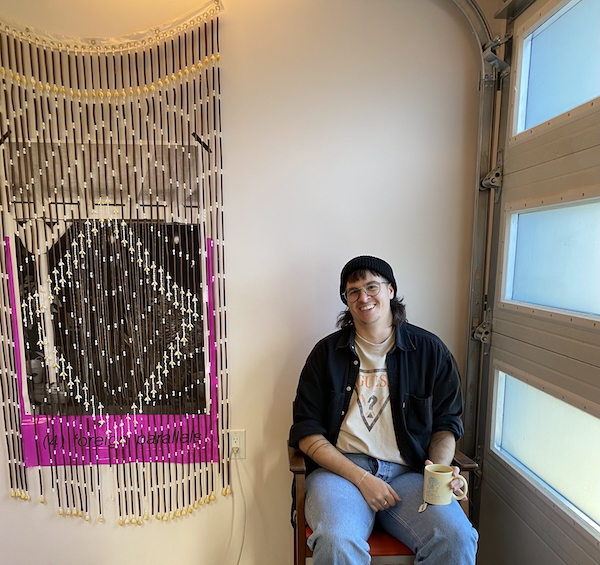
Adrien Crossman at Orchid Contemporary (photo: Dani Hagel)
Orchid Contemporary is an independently run garage gallery in Hamilton’s Crown Point East Neighbourhood. The mandate is to highlight and support under-represented practices in the Hamilton region and beyond, with a focus on work by Queer and Trans artists. Orchid encourages experimentation, anti-capitalist modes of production, and is partial to works that are kinky, weird, and often illegible within the realm of traditional art institutions.
I launched the project in 2022, and have since hosted eleven exhibitions, eight of which have been funded, providing CARFAC fees to artists. Having been largely inspired by projects such as Videofag and the Feminist Art Gallery in Toronto, and LEFT contemporary in Windsor, I wanted to continue this ethos of DIY Queer curatorial practice. These spaces are often ephemeral – not being designed to make a profit means they prove difficult to sustain under capitalism – yet their impact is invaluable and lasts far beyond the run of the physical project. That is the energy and vision I bring to Orchid. I’m unsure how long it will run in its current iteration, but I plan to make the most out the space, time, and resources I have access to while I can.
What’s a highlight of the neighbourhood where the gallery is located?
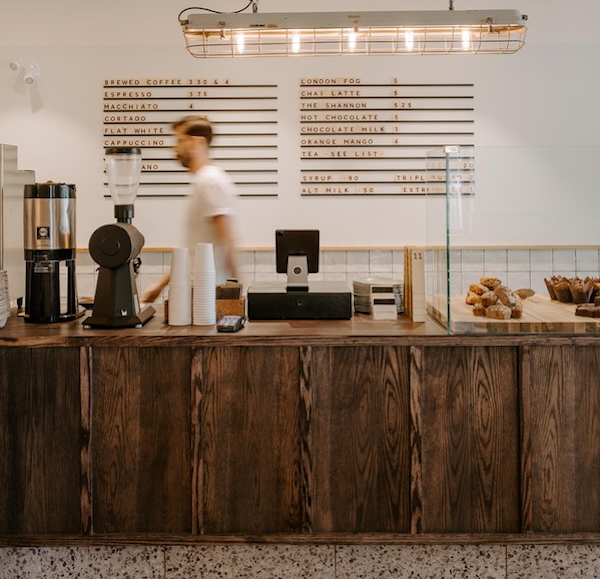
The Cannon is my go-to coffee shop. They moved into a beautiful new space across the street from their old location a couple of years ago, and it’s my favourite place in the neighbourhood to grab a warm drink or to stay and work. I love the people there, and, as someone who does a lot of work on the computer, I find it to be a cozy and motivating environment. I also want to give a shout out to The City and City Books, a great independently run book store that features the writing of local authors like Steacy Easton, an Orchid alum!
What’s your favourite part of running an art gallery?
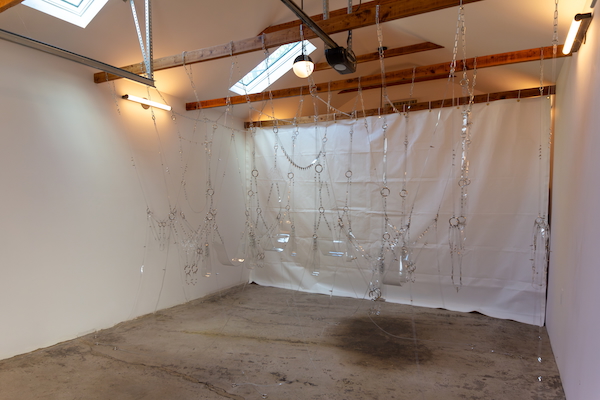
Dana Buzzee, 𝖆 𝖙𝖊𝖒𝖕𝖑𝖊, 𝖆 𝖍𝖔𝖘𝖕𝖎𝖙𝖆𝖑, 𝖆 𝖉𝖚𝖓𝖌𝖊𝖔𝖓, 2023 (photo: Eli Nolet)
Relationship building. The gallery gives me a structured way to foster community here in Hamilton by inviting artists who I admire to exhibit, and by having a home base for gathering. I have hosted out-of-town artists in my home on multiple occasions while they develop and install their works, and each time it has been an incredible bonding experience, leading to deeper relationships. I also really appreciate the opportunities for Queer intergenerational mentorship through working with students and emerging artists. Finally, the gallery is located in my backyard, so the ability to set my own hours and not have to adhere to any kind of censorship or red tape around what kind of work I am able to support feels more and more urgent in a time when Trans folks are under increasing threat.
How do you find out about new artists?
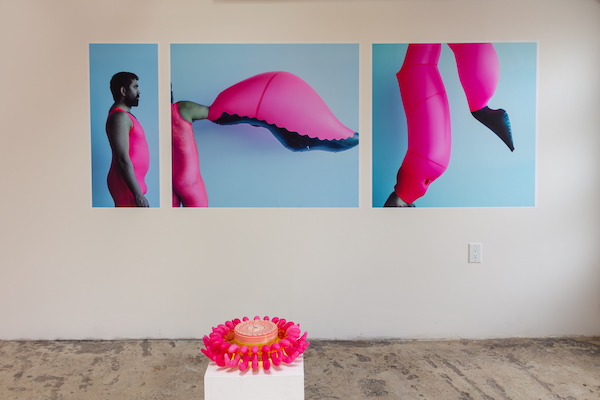
Arjun Lal, To be a flamingo, 2024 (photo: Eli Nolet)
Friends, seeing art, being tapped into a robust network of Queer and Trans artists across Turtle Island through professional and personal networks (often overlapping). My primary resource is my social life. Queer folks often need to build their own familial support systems outside of blood relations. So many of the opportunities I have gotten and the opportunities I have been able to provide stem from these networks of Queer kin and mentorship. I am part of an art collective called Queer Soft Orange consisting of Queer and Trans artists living across Canada and the US. In addition to supporting each other through impromptu studio visits, proofreading, and collaborative projects, we share readings as well as the work of past and present Queer artists and cultural producers. A number of the members of this collective have either shown at Orchid or in other projects that I have curated.
Where do you see yourself in five years?
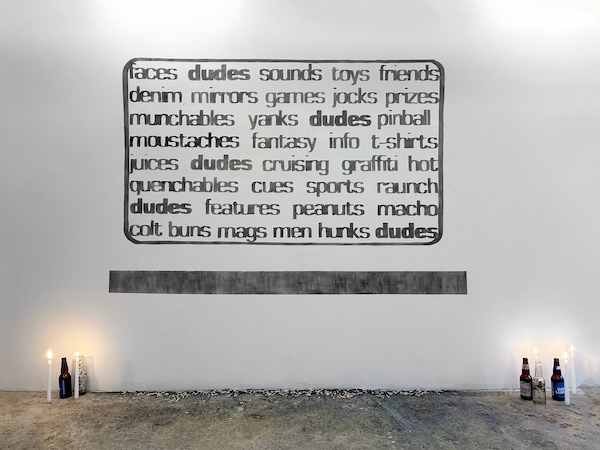
Tyler Matheson, 𝓘𝓷𝓬𝓮𝓷𝓭𝓲𝓪𝓻𝔂 𝓞𝓫𝓳𝓮𝓬𝓽, 2024 (photo: Tyler Matheson)
I would love to continue running Orchid out of its current location for the next three or four years, with an eventual goal of relocating to a more rural area within the region. The dream would be to continue supporting artists through exhibitions in addition to creating a residency program for both rest and creation. In the short term, I hope to keep building community around the gallery through collaborations with other local arts organization and by fostering greater relationships with artists in the region whose practices don’t get nearly enough attention – specifically those of BIPOC, disabled, lower income, Queer, and Trans artists.
What excites you about your upcoming exhibitions?
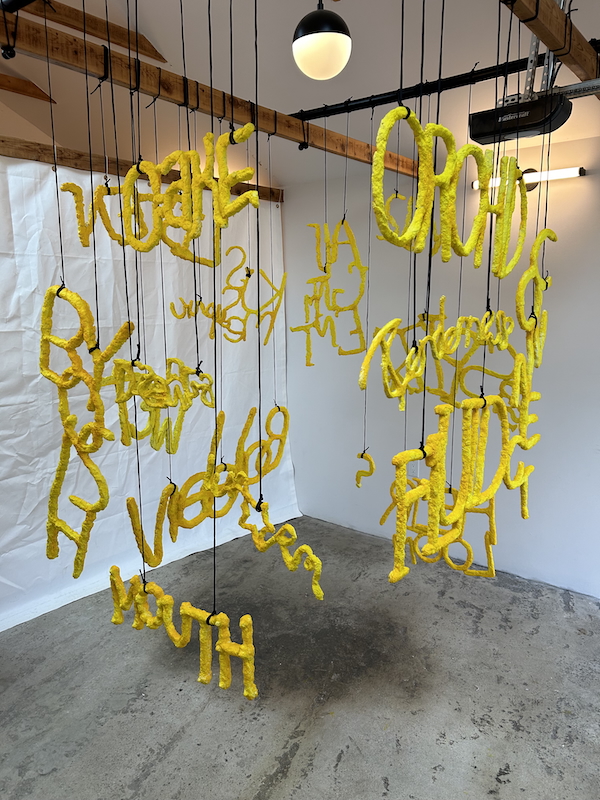
Hazel Meyer and McMaster students, FISTFULS, 2024 (photo: Adrien Crossman)
2024 was a very busy year including a series of exhibitions featuring some incredible established and mid-career artists like Shellie Zhang and Hazel Meyer. As we move into spring, I am excited to be able to offer the space to students in my upper year curatorial course at McMaster. They will be undertaking the planning and installation of a series of curated exhibitions with Orchid as one of the venues. I am also looking forward to partnering with Factory Media Centre on two programs later this year in which we will be supporting some local and international Queer and Trans artists. Details to be announced this spring, so follow the Instagram (@orchidcontemporary) if you’d like to be updated.