ODD Gallery, Dawson City
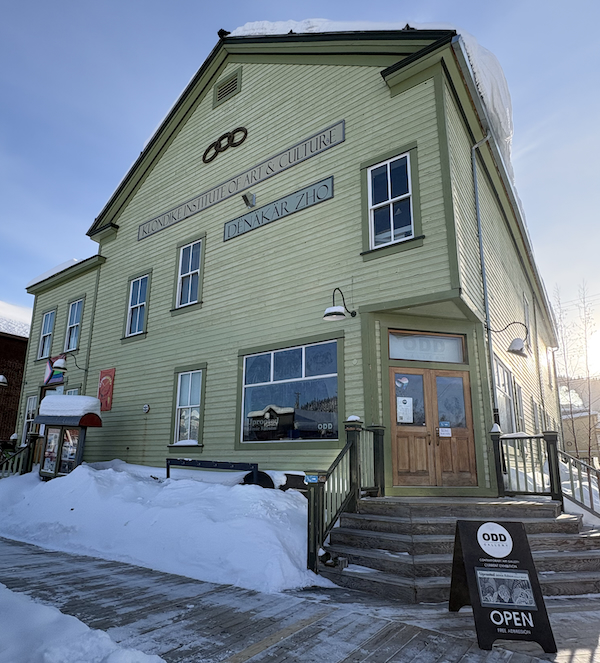
ODD Gallery on a frosty winter morning in March 2026 (photo: Karen Murray; courtesy: KIAC)
The Canadian art landscape is ever-changing. Places + Spaces keeps you informed of established and up-and-coming exhibition venues across the country including museums, galleries, artist-run centres, and more. This month, we hear from Jessica Svenningson, Manager of the ODD Gallery in Dawson City.
What is the history and mandate of your gallery?
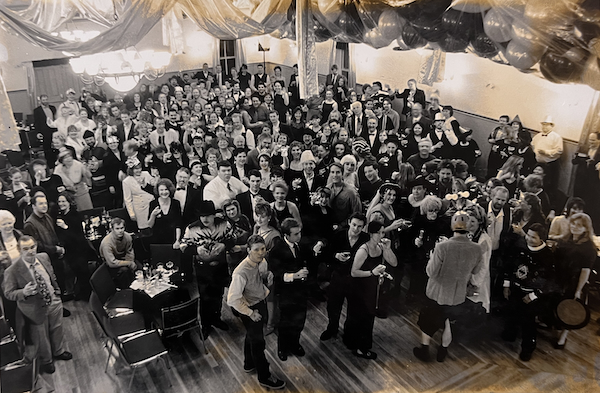
The 1st ODD Ball on December 31, 1999 at the new Klondike Institute of Art & Culture inaugural event (photo: KIAC)
Situated on Tr’ondëk Hwëch’in Traditional Territory, the ODD Gallery is part of the Klondike Institute of Art & Culture (KIAC). In the spring of 1998, a group of local artists formed the Dawson City Arts Society (DCAS), a non-profit organization with the goal of enriching the quality of life and creating an art-based economy in the Yukon. The Society envisioned the opening of an art centre for the teaching, performance, and exhibition of visual, performing, media, and literary arts. KIAC opened its doors in 2000 in a neglected historic building known as Odd Fellows Hall that had undergone major renovations. The ODD Gallery was established that same year by local artist Michael Yuhasz and the founding KIAC team, with the inaugural exhibition attended by Canada’s Governor General.
Started as a contemporary visual arts venue in a region where professional exhibition spaces were rare, the ODD Gallery is one of the only year-round non-profit contemporary art spaces operating north of the 60th parallel that pays CARFAC exhibition fees and presents professional exhibitions. The gallery exhibits artists from the Yukon, across Canada, and occasionally internationally, while also supporting the KIAC Artist in Residence Program.
In 2019, the Tr’ondëk Hwëch’in Elders Council gifted the current building a new name, Dënäkär Zho, meaning “house of mixed colours,” to reflect the building and ODD Gallery’s role as an inclusive cultural gathering space.
What’s a highlight of the neighbourhood where the gallery is located?
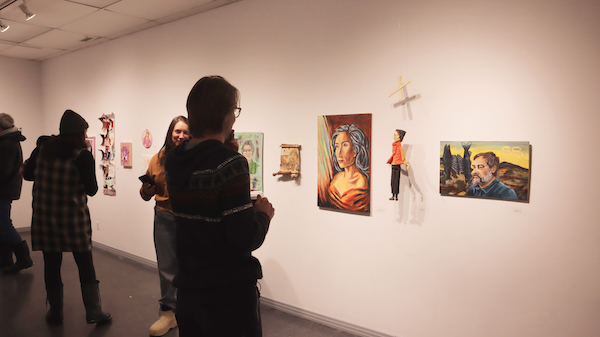
Drawlidays VI, a Secret Santa portrait exchange, 2025, installation view (photo: Lacey Leforte)
The ODD Gallery sits a short walk from the Yukon River in Dawson City’s historic downtown, surrounded by false-front buildings from the Klondike Gold Rush. No structures rise above three storeys, and wooden boardwalks line dirt roads lit by the midnight sun in summer and the northern lights in winter. What makes the neighbourhood special isn’t just the unique architecture, but the high density of cultural activity in such a small place. Within a few blocks, you’ll find the Dänojà Zho Cultural Centre, Dawson City Music Festival, Goldensides Recording Studio, Yukon School of Visual Arts, the historic Palace Grand theatre, and numerous storefronts selling the varied work of local artists.
With a population of 2,400 people, Dawson is small enough that audiences and artists regularly run into each other outside the gallery, which means exhibitions tend to spill naturally into conversations across all demographics within our tight-knit community. Informal gathering spaces include saloons and dance halls where visual artists, musicians, writers, hunters, miners, infrastructure workers, politicians, professors, and everyone in between constantly overlap, and where ideas, stories, and ambitions mingle as freely as the people themselves.
What’s your favourite part of running an art gallery?
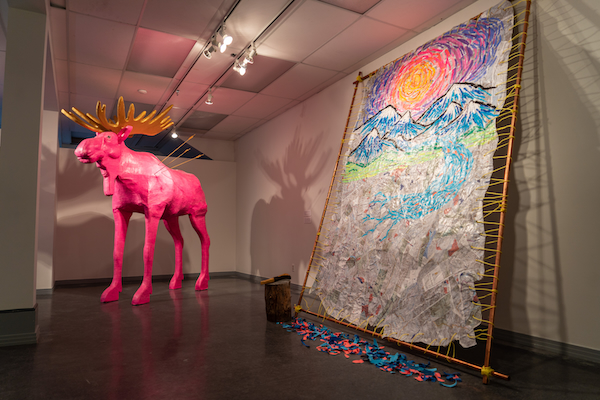
Lianne Charlie, Bull’s Eye and Part of the Land | Baby Belt, part of the 2019 exhibition To Talk With Others (photo: PR Services)
I find one of the most rewarding aspects is witnessing the exchange between visiting artists and the local community. Because Dawson is geographically remote, artists often arrive expecting isolation but discover a plethora of creativity and infrastructure specifically built to support both local artists and the visiting national artistic community. Visiting residency and exhibiting artists frequently talk about the depth of engagement they experience with the community, and the breadth of skills and practices among local artists often exceeds expectations. Conversations tend to be curious, expansive, and often surprisingly interdisciplinary.
I also really enjoy the installation and production phase of exhibitions, where an artist’s vision and curatorial oversight come together to create immersive experiences that are both conceptually rich and accessible to a wide audience.
How do you find out about new artists?
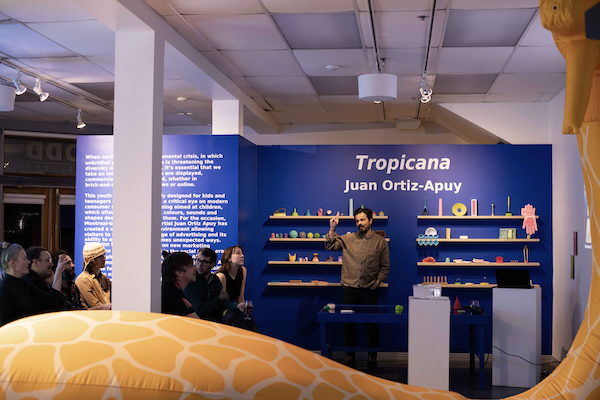
Artist Juan Ortiz-Apuy’s Tropicana exhibition opening reception & artist talk, 2025 (photo: Miriam Behman)
Open calls remain one of the most important ways we discover artists. They allow us to hear from artists across Canada and internationally who might not otherwise have connections to a small northern gallery. Our Artist in Residency Program is also a huge part of how we encounter new work. Visiting artists often bring ideas, collaborations, and introductions that expand the gallery’s programming in unexpected directions.
Finally, as a millennial, social media plays a bigger role in my research than it might have for previous generations of curators. Because of our location, attending openings, fairs, and festivals regularly isn’t always possible, so you’ll often find me scrolling through the profiles of galleries and artists I admire over morning coffee to keep up with new ideas and conversations.
Where do you see yourself in five years?
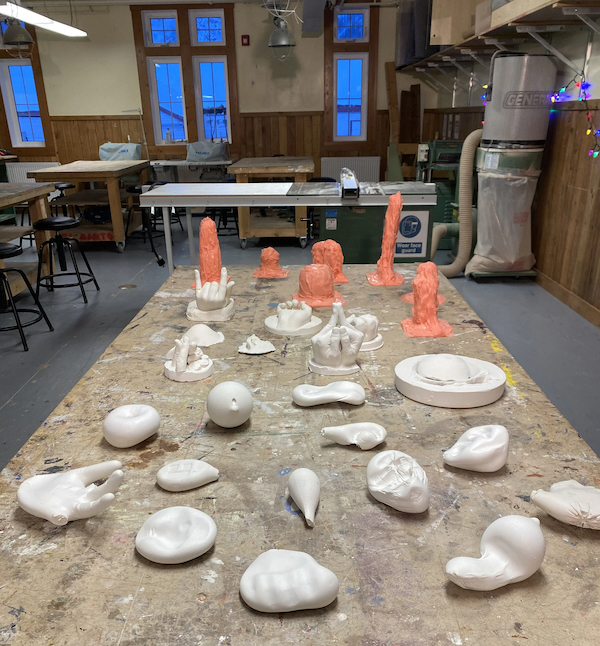
Works from the 3-D Studio at the Yukon School of VisualArt (photo: www.yukonsova.net)
The ODD Gallery plays a multifaceted role in Dawson City, and in the coming years, I hope to continue strengthening the gallery’s connection to the broader community. Some of the work currently underway includes collaborating with the City of Dawson to expand public art opportunities, improving accessibility throughout KIAC for visitors with physical, neurological, and social barriers, and developing a curatorial framework grounded in ethical practice that centres artists and supports Truth and Reconciliation.
I’m also beginning to explore ways to work more closely with the Yukon School of Visual Arts to create hands-on opportunities for students to gain professional gallery experience while contributing to the cultural life of the community.
What excites you about your upcoming exhibitions?
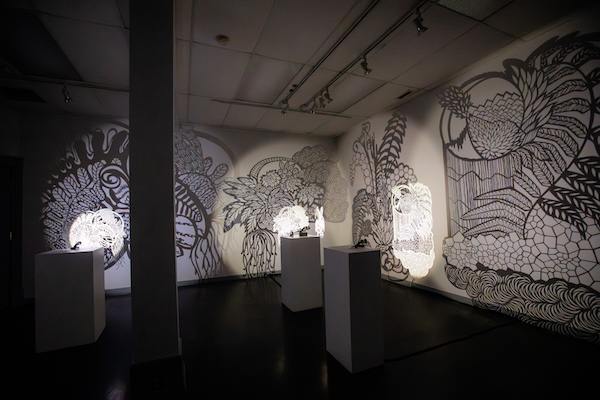
Jaimie Robson, Uprooted, 2026, installation view (photo: John Howland Photography)
This year’s roster of artists brings a wide range of perspectives, including exhibitions exploring Taiwanese diaspora, intercultural ways of relating, and different approaches to presenting the lived experiences of Indigenous artists across Western Canada. We are also entering the second year of a two-year pilot project called Re:Imagine | Re:Create, created in partnership with STEPS Public Art. The program invites an artist to Dawson to create a temporary public artwork using reclaimed, salvaged, and natural materials that will be installed in the city for the summer season.
And after winning the Lacey Prize, KIAC is excited to welcome the National Gallery of Canada during this year’s Yukon Riverside Arts Festival. Their visit will include studio tours with local artists and the production of a short film about KIAC, the ODD Gallery, and our Artist in Residence program, highlighting the role this small northern community plays in Canada’s contemporary art landscape.