Lucas Haneman on Letting the Art Speak for Itself
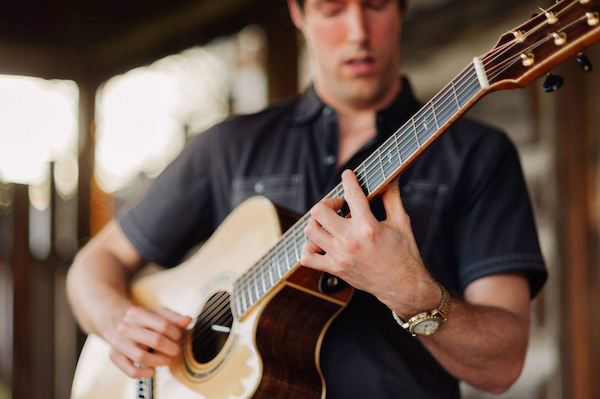
Lucas Haneman is a musician, band leader, and music teacher who will be participating on an artists’ perspectives panel and performing at the Empower Arts 2.0 Summit at the National Arts Centre on June 1. His duo The Blind and The Beautiful plays the Wakefield Mill Hotel on May 30, and his group The LH Express plays Irene’s Pub in Ottawa on June 5. Akimblog recently spoke with him about making music, navigating industry expectations, and using humour to get to the point.
I’ve been playing guitar for as long as I can remember. My dad plays as well, so even when I was a baby, he would play for me and I would be obsessed with his guitar. I started officially playing a real guitar when I was six years old. I got deeply into music and moved quickly through a couple guitar teachers. They would say, “Well, you’re going to have to find somebody else. I’ve taught you what I can.” Throughout high school, I played in a rock band. We wrote original music, released an album, toured together. I also played in a couple of jazz bands for the City of Ottawa. Then I moved to Montreal, studied jazz guitar at Concordia University, and got really busy. I was playing in ten bands at once. Eventually I got to the point where I wanted to have my own band, and in 2014 I created the band that’s now called the LH Express. We’re working on our fifth album now. It’s coming out this October.
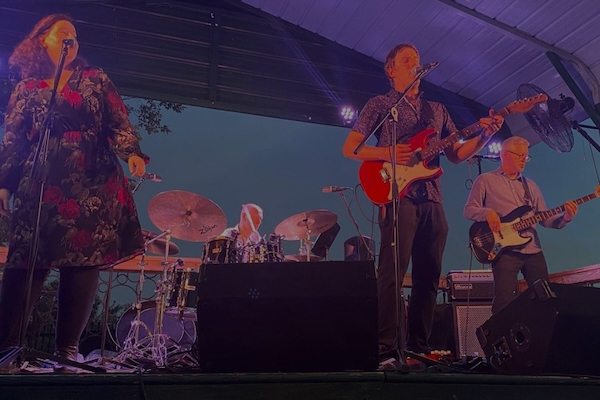
The LH Express live in concert
I have been very lucky, but I’ve always been one to jump at opportunities too. Considering the disability thing, I’ve never been one to let that hold me back. If I could go my whole life without talking about it and without people looking at me strange and being like, “What’s the matter with that guy?”, I would do it. The only time it ever plays a role in my life is if I’m walking into a wall or I’m smacking my face on something. It’s not something I think about a lot. In fact, having a visual impairment has been an asset. It’s made me a stronger musician with a much better ear. Because I’ve never been able to read music, I’ve had to work like crazy on my ear. I use my ear in every place a sighted musician might use their eyes as well as their ears at the same time. I’m trying to combine those two senses into one sense.
In the studio, I use a recording software called Reaper. It has a companion software called OSARA, which makes it compatible with the text-to-speech software I have to use called JAWS. I’ve released a solo album where I play all the instruments. I did a soundtrack for a movie with this setup. I’m almost done the mixing myself for the new LH Express album. I’m also working on an EP with another band I’m in called the Joe Gaspar All Stars. There are limitations in this recording setup that I don’t yet know how to get around. I can’t really edit things. I can’t do any of what we call automation, which changes the volume of things. I’m not a technologically inclined person, so it’s frustrating, but I’m trying to figure it out.
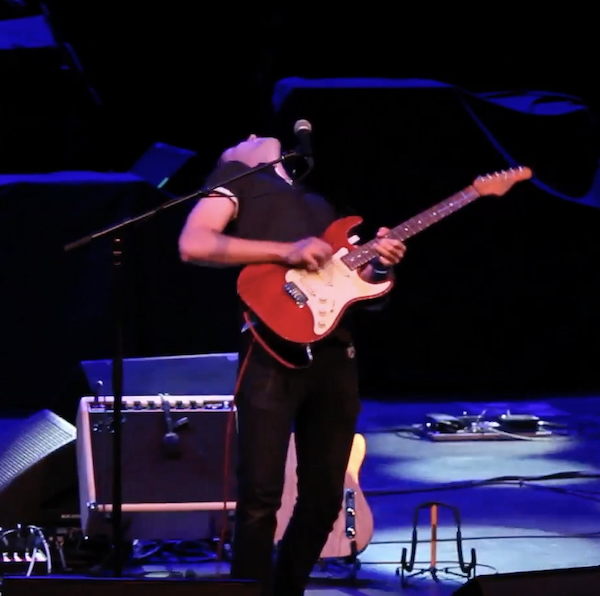
Lucas Haneman
For all the advancements in technology out there right now, I would hope that in the year 2026, we were a little further along with just not looking at people and seeing their disability. If I go out to an industry event and have to network, I have to spend the first two minutes of what’s supposed to be a five-minute speed-pitching session in these business opportunities just explaining my disability because people look at me and they wonder if I’m autistic or they just don’t know. It makes them feel more comfortable if I explain myself, but then I feel like everybody else there has already made their pitch. That’s always driven me a little bit crazy. I am extremely grateful to be doing what I do, but certain aspects of my career would be a lot easier and maybe would be further along if I didn’t have to worry about always explaining myself to people in the industry.
Change needs to start from the ground up. I’ve been trying to pitch something to the CNIB and to other organizations for a while about getting into schools and basically showing kids that even if you’re quote “different” than everybody else, it doesn’t mean that you’re less able than they are to do something and to make a positive difference in the world. It hasn’t gotten off the ground yet, but we’re trying to see who might want to help fund a school tour or that kind of thing. I just think that if kids can get it and if we can change the narrative for children, then for future generations, it’s going to get better.
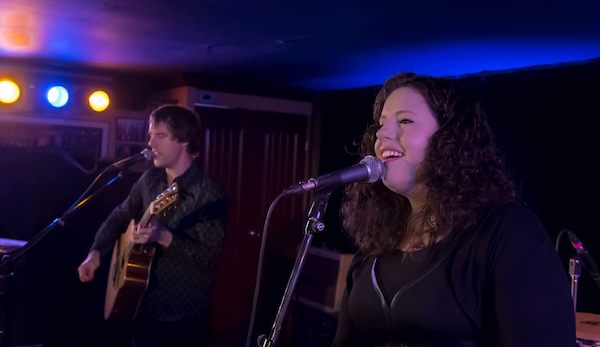
The Blind and The Beautiful (photo: Rick Arbuckle Photography)
For the longest time, I didn’t talk about having a visual impairment, then I went to these industry events and realized people needed to know. Someone said to me, “Well, if you’re on stage, just crack a joke about it.” So now my wife and I have this duo project called The Blind and The Beautiful. It’s meant to be a play on The Young and the Restless. We don’t take ourselves seriously. We’re not offended by this. I felt like I had to do that just to put it out there in a way that makes people know I’m comfortable with myself. But I prefer letting the art speak for itself, if I’m being honest.