Judith & Norman Alix Art Gallery, Sarnia, ON
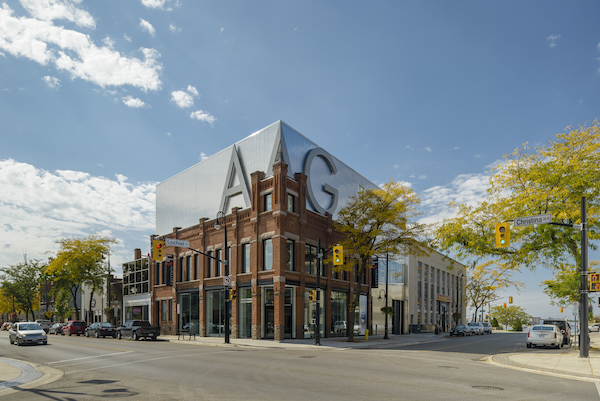
Judith & Norman Alix Art Gallery, located in downtown Sarnia
The Canadian art landscape is ever-changing. Places + Spaces keeps you informed of established and up-and-coming exhibition venues across the country including museums, galleries, artist-run centres, and more. This month, we hear from Sonya Blazek, Curator/Supervisor of the Judith & Norman Alix Art Gallery in Sarnia, ON.
What is the history and mandate of your gallery?
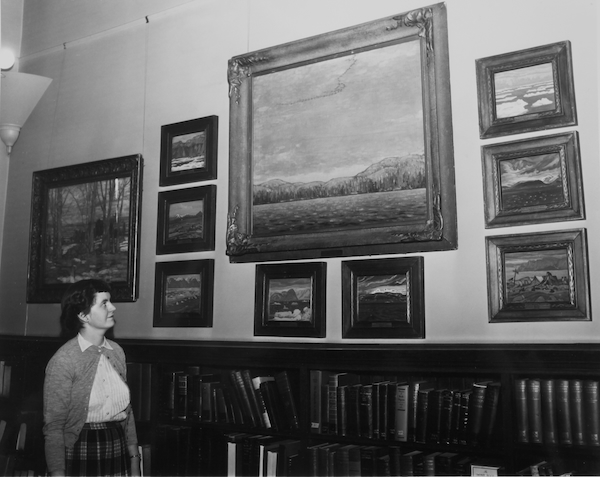
Carnagie Library, Sarnia, Ontario. The first exhibition to be organized by the SWCAA took place in March of 1920 and included paintings by members of the Group of Seven. Exhibitions were installed above library stacks from the 1920s to 1950s. This photograph features paintings by Tom Thomson and A.Y. Jackson.
Before the formal existence of the gallery or a properly identified permanent collection, the Sarnia Women’s Conservation Art Association (SWCAA) thought it important to purchase contemporary Canadian artwork that reflected their strong sense of community. The first paintings purchased by the group in 1920 included H.S. Palmer’s Sawing Logs (1919), J.W. Beatty’s Winter Scene (Near Toronto) (1918), and A.Y. Jackson’s Spring in Lower Canada (Maples, Early Spring) (1915). These are now seen as the first three works of what became our permanent collection. In 1956 the SWCAA donated 26 works by well-known Canadian artists including Tom Thomson, and members of the Group of Seven and their contemporaries to the Sarnia Library, where chief Librarian Reg Bradley allowed the collection to grow and flourish. The Gallery’s collection is now composed primarily of Canadian historical and contemporary works of both local and national significance.
After several relocations, a rigorous fundraising campaign, and a generous donation from local philanthropists Judith and Norman Alix, a complete renovation of the historic Thom Building took place. In 2012, the Judith & Norman Alix Art Gallery (JNAAG) opened its doors to the community as a Category A facility in the downtown core of Sarnia. Today, JNAAG is a free public art gallery with more than 180 members, over 1,400 works of Canadian art in the permanent collection, and the support of a keen volunteer team.
What’s a highlight of the neighbourhood where the gallery is located?
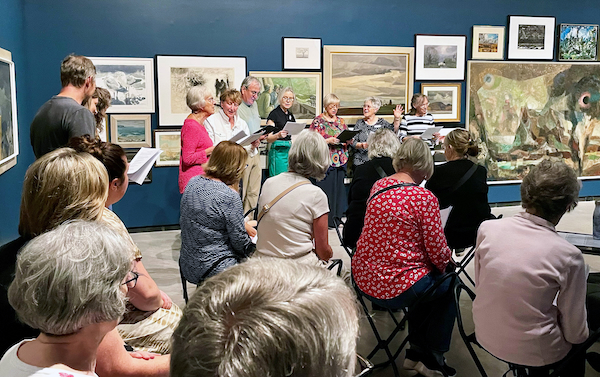
Docents lead a free singing tour inspired by the exhibition Storm Watch (2025)
Located just steps away from St. Clair River, the waterfront has proven to be an inspiration for local and exhibiting artists. A waterfront trail along the downtown attracts tourists and walk-in traffic. Through four exhibition spaces, an active schedule of public programs, and participation in downtown events, the gallery contributes to the area’s vibrant cultural scene alongside local restaurants, a theatre, artist studios, and independent shops. JNAAG is fortunate to have an incredible team of staff and volunteers whose dedication to delivering positive gallery experiences deeply enriches the community.
What’s your favourite part of running an art gallery?
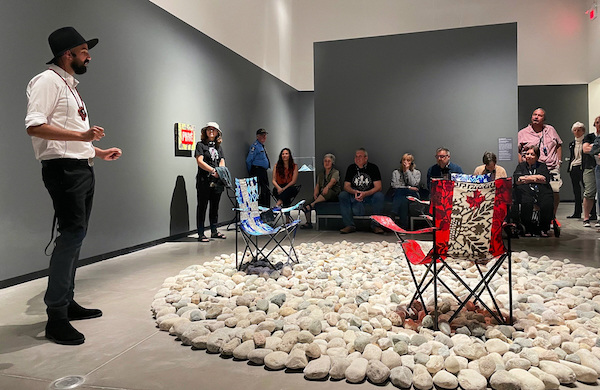
Artist talk, Nico Williams, Biskaabiiyang | Returning to Ourselves, 2023
My favourite part is creating a welcoming and inclusive space where people can connect through art. It’s vital to support the community by offering creative opportunities to share stories, spark conversations, and discover new perspectives together. The relationships that form from these experiences – with artists and visitors – are deeply fulfilling.
How do you find out about new artists?
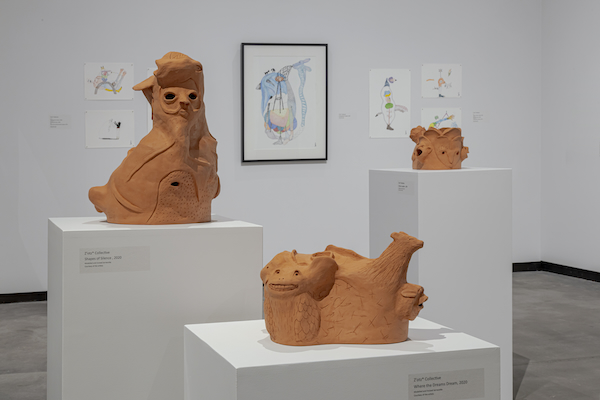
Z’otz* Collective: Nahúm Flores, Erik Jerezano and Ilyana Martínez, Ode to the Inside Out Questions, 2020, installation view
I try to step away from the desk and see exhibitions taking place at other galleries. I make a point to visit spots in southwestern Ontario – the art scene is vibrant! JNAAG also has subscriptions to art magazines and is part of a catalogue exchange program with galleries across Canada, and these resources spark potential for writers, collaborators, or artists. I always welcome expressions of interest from artists and keep an eye on gallery newsletters.
Where do you see yourself in five years?
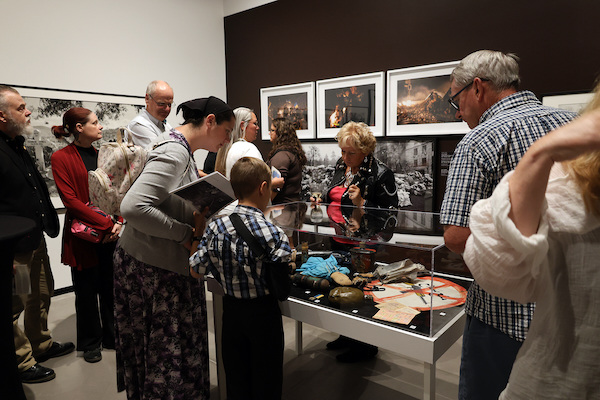
Larry Towell, Boundaries, 2025-2026, installation view
Over the next five years, I hope to continue to bring a dynamic range of exhibitions, tours, lectures, and public programs that inspire creativity and deepen engagement with the visual arts. I aim to further strengthen connections with schools and community organizations while creating opportunities that support artists at all stages of their careers. Equally crucial is expanding accessibility and encouraging folks to see how art can enrich everyday life and contribute positively to personal and community well-being.
What excites you about your upcoming exhibitions?
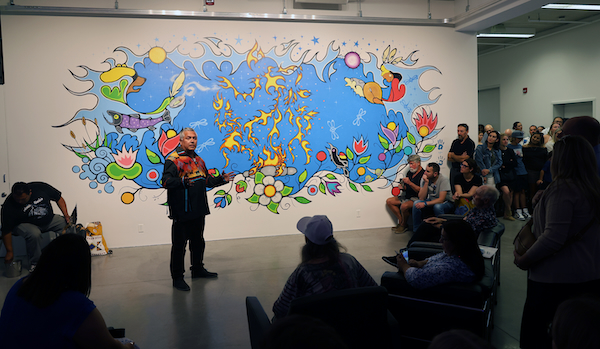
Opening celebrations, John Williams, Debwewe Giizhik | (sound in the distance) from the sky, 2026
Our current and upcoming exhibitions bring together a range of perspectives, and we always look forward to seeing how audiences engage with the work. The most exciting aspects are meeting new artists and redesigning the exhibition spaces to best support the artwork and enhance the viewing experience. Currently on view until May 31 is Debwewe Giizhik | (sound in the distance) from the sky, an elaborate mural by John Williams, whose work portrays daily Ojibway life while incorporating cultural teachings, legends, spiritual symbolism, and traditional beliefs. Until August 30, we are presenting The Lingering Instant, a solo exhibition of incredibly detailed and deeply conceptual paintings by Mark Stebbins. Also, on view is Together Apart Under One Roof, which brings together Winnipeg artists Aganetha Dyck, Reva Stone, and Diana Thorneycroft.
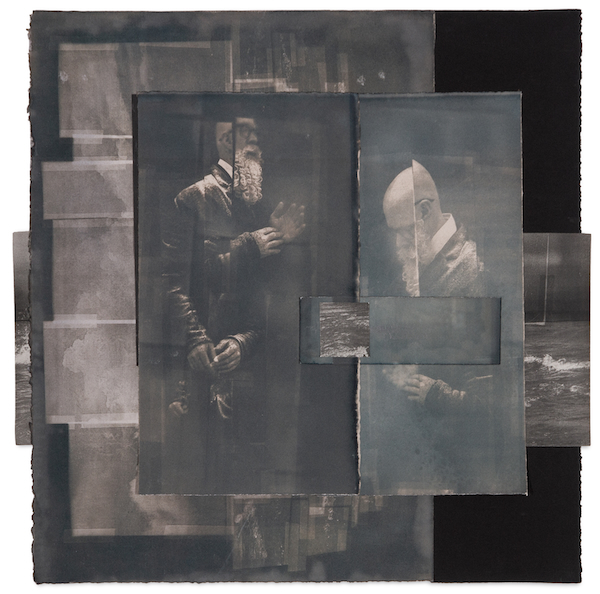
Grahame Lynch, Lost Signals, 2024, collage with oxidized cyanotypes, silver-gelatin prints, ink and graphite
On October 2, we open three new exhibitions. Breathing Spaces, featuring Grahame Lynch and Colleen Schindler, explores how art can preserve fleeting experiences and emotions in forms that resonate beyond the moment. In Homme, Liana Russwurm presents oil paintings that appear grounded in artistic tradition, but contemporary details disrupt that reading, creating a compelling interplay between past and present. The exhibition reflects Russwurm’s ongoing interest in beauty, vulnerability, and portraiture as a means of constructing personal narratives. Lastly, Memento revisits the still life genre through a selection of historic paintings from the permanent collection.