How Not to Be Seen at Remai Modern, Saskatoon
By Lindsay Sorell
A social media trend that became popular with influencers in the last couple years is to post a photo dump of blurry and random images — an out of focus sandwich, a sparkling glass, the back of a friend’s head, a crooked picture of the ocean. Snapshot that show, yes, I do have a life, but I am too busy and having too much authentic fun to represent it in the manicured and sterile visual language of marketing platforms. It’s a funny thing to post a blurry picture, to represent the motion in your life that can’t quite be understood.
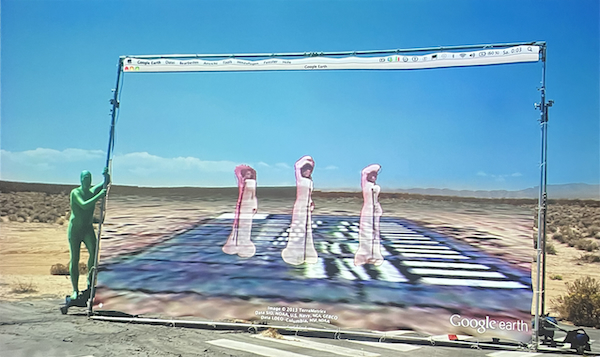
Hito Steyerl, How Not to be Seen: A Fucking Didactic Educational .MOV File, 2013, single channel high-definition video file and sound in an architectural environment
This photo dump trend finds parallels in How Not to Be Seen, a far-sweeping group exhibition currently on display at Remai Modern. Comprised of artworks made by artists of many nations between 2010 and 2024, this show is a tour of reactions to colonial systems of surveillance and control through developments in technology and social justice movements in the last decade and a half. It is the coming together of diverse and long histories of tragedy, uprising, strength, independence, local resistance, self-defence and protection, and ultimately the proposal to collaborate better together.
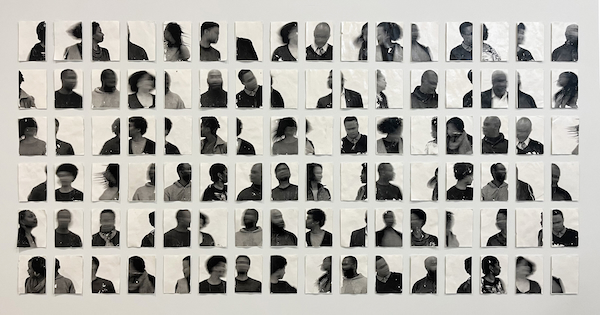
Sandra Brewster, Blur Grid, 2016-19, photo-based gel transfer on archival paper
Being unseen is protection itself, hiding is independence, opacity is freedom. Obfuscation is the choice to live opposite of an increasingly virtualized and surveilled experience of life. Hito Steyerl’s five-part instructional video How Not to be Seen: A Fucking Didactic Educational .MOV File from 2013 gives a variety of both striking and ludicrous pointers on how to disappear from sight. Perhaps unknowingly utilizing one of these tips, Toronto-based artist Sandra Brewster’s Blur Grid is a collection of blurry black and white photographs taken after she asked her subjects to move around. Impression of a face, a collared shirt, a profile, always in motion, free to elude, existing beyond the frame of what we can categorize. Likewise, Nick Cave’s obfuscating Soundsuit, made in response to the beating of Rodney King by four white LA policemen, protects its wearer from being identified, profiled, and attacked.
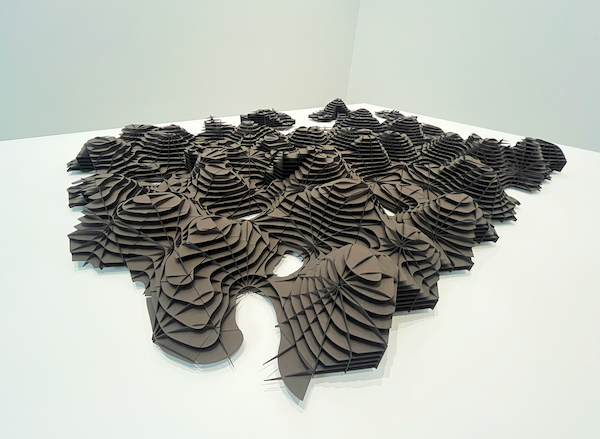
Charles Campbell, Maroonscape 1: Cockpit Archipelago, 2019, matboard and wood
Édouard Glissant, the Martiniquais philosopher quoted in the exhibition text, says colonial powers often demand that the colonized be transparent and culturally surveilled. Where the colonized are free to be opaque, there is independence and power. Charles Campbell’s abstract matboard landscape Maroonscape 1: Cockpit Archipelago recreates a mountainous region of the Jamaican landscape, Cockpit Country, from where escaped slaves, known as Jamaican Maroons, fled to create their own free existence and conduct guerrilla warfare. Protected by the anonymity of the impenetrable landscape, they led a resistance that resulted in treaties granting autonomy fifty years before the Haitian Revolution. Campbell’s recreation of the landscape inspires future imaginings of what is possible in the anonymous crevices of the world.
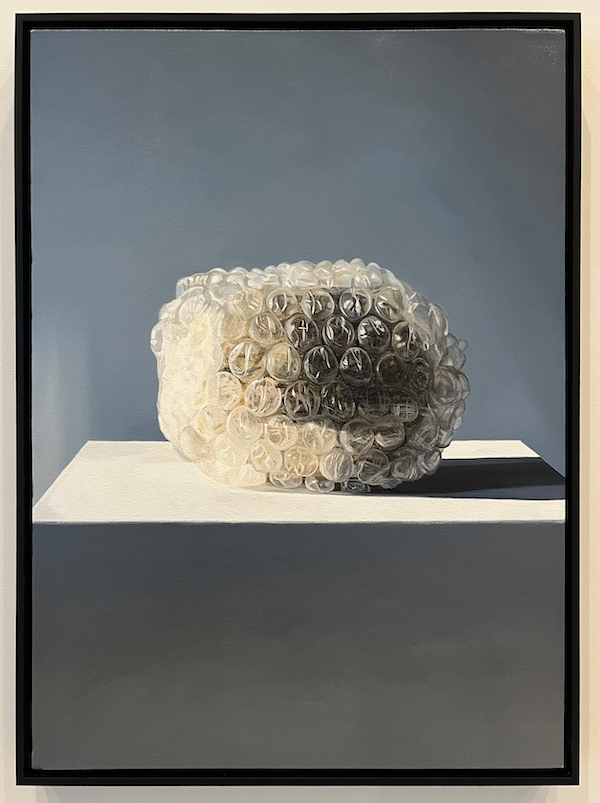
David Garneau, Suffocating Grandfather, 2022, acrylic on canvas
Glissant asserts that a person has a right to be opaque, to not explain themselves, to protect the sacred, the personal, the unknowable. Métis artist David Garneau applies this to Indigenous knowledge, objects, and individuals. His lifelike acrylic paintings show Indigenous artefacts and the bones of ancestors wrapped in bubble wrap and held within a glass display. His works demonstrate the complexity of both cultural preservation and wrongful display, and the need for consultation with Indigenous peoples when it comes to repatriation and the treatment of artefacts, histories, and individuals. To obscure oneself is to protect, and when obscured communities come to respect the mutual protection of not-understanding one another, collaboration in real-time can begin.
How Not to Be See continues until September 8.
Remai Modern: https://remaimodern.org/
The gallery is accessible.
Lindsay Sorell is an artist and researcher based in Waskesiu, Saskatchewan.