Gallery Gachet, Vancouver
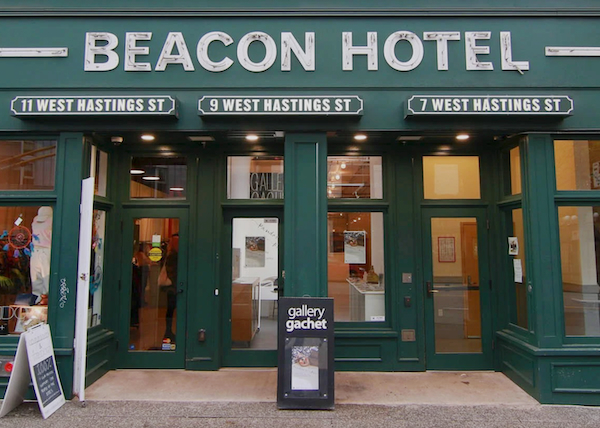
The Canadian art landscape is ever-changing. Places + Spaces keeps you informed of established and up-and-coming exhibition venues across the country including museums, galleries, artist-run centres, and more. This month, we hear from Sol Hashemi, Operations Director/Associate Curator, and Moroti George, Director/Curator of Gallery Gachet in Vancouver.
What is the history and mandate of your gallery?
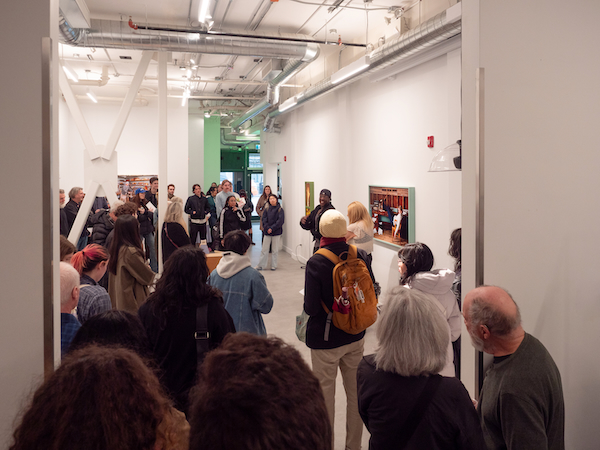
Opening of Settle Down, Not There at Gallery Gachet, 2026
Gallery Gachet was founded in 1992 by a collective of artists connected to the mental health consumer and psychiatric survivor movement who sought to educate the public about these experiences and the systems surrounding them. Located on the unceded territories of the xʷməθkʷəy̓əm (Musqueam), Sḵwx̱wú7mesh (Squamish), and səl̓ilwətaɁɬ (Tsleil-Waututh) Nations, Gachet was originally funded by Vancouver Coastal Health following the deinstitutionalization of patients from Riverview Hospital, a psychiatric institution, and has since grown into an independent artist-run centre.
Our mandate is to support artists and cultural workers, particularly those marginalized by mental health experiences, systemic inequities, and socio-political conditions, while advancing art as a means of survival, self-expression, and cultural participation. We are deeply committed to accessibility, equity, and care-based practices, prioritizing the voices and work of artists of colour, Indigenous artists, and those whose practices emerge from lived experience and critical engagement with identity, history, and power. Alongside our exhibition program, Gachet functions as a vital community-facing space, offering accessible and low-barrier programming for Downtown Eastside residents through workshops, drop-in creative initiatives, and collaborative projects.
What’s a highlight of the neighbourhood where the gallery is located?
The nearby Carnegie Community Centre and the Carnegie Newsletter are fixtures of the Downtown Eastside community, with copies of the newsletter available at Gachet. We are fortunate to be located at the intersection of the Downtown Eastside, Chinatown, and Gastown, where these distinct histories, communities, and cultural traditions meet and overlap. Just next door is Community Thrift & Vintage, a non-profit social enterprise and beloved neighbourhood institution. Nearby, Artspeak is only a short walk away. We often grab buns from New Town Bakery and pick up bread from local favourites such as Nelson the Seagull or Kozak Ukrainian Eatery. In recent years, the neighbourhood has also seen a vibrant and growing Mexican food scene emerge, adding to the area’s rich cultural landscape. What makes this part of the city special is the way long-standing community institutions, small businesses, artists, and residents continually shape and care for the neighbourhood together.
What’s your favourite part of running an art gallery?
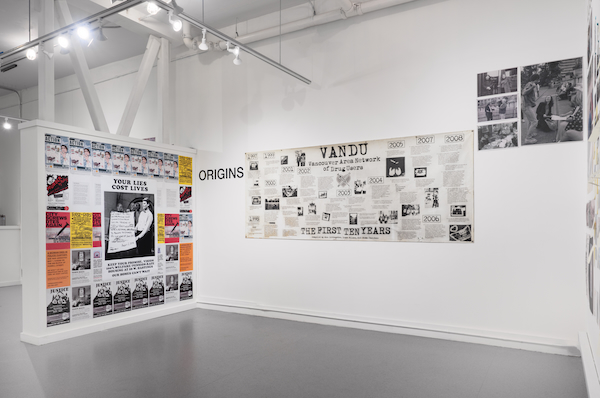
Vancouver Area Network of Drug Users (VANDU), installation view of To Be Belligerent//To Commit To Memory//To Live Without Fear: 25 Years of VANDU at Gallery Gachet, 2024
It’s been particularly meaningful for me (Sol) to find my way to Gachet after my own lived experience with mental health and disability. Last year we completed a major renovation of the space, a tough but rewarding process that’s allowed us to better support artists and hold programming with improved accessibility and the addition of HVAC.
Some highlights: receiving an image request for Mad Matters, 2nd Edition; contributing archival materials for a timeline on disability activism in an upcoming exhibition at the Museum of Vancouver; having artists stop by who mention the exhibition they held at Gachet fifteen years ago; publishing two collections of short writings by Gachet Writers Group members; hearing a story by a longtime expressive arts participant who said Gachet was the kind of place you would meet your wife, husband, partner; being gifted a printed copy of an ink drawing celebrating the Year of the Horse after helping a frequent Oppenheimer Park Art Show participant make a couple copies. (It’s hanging on our bulletin board.)
How do you find out about new artists?
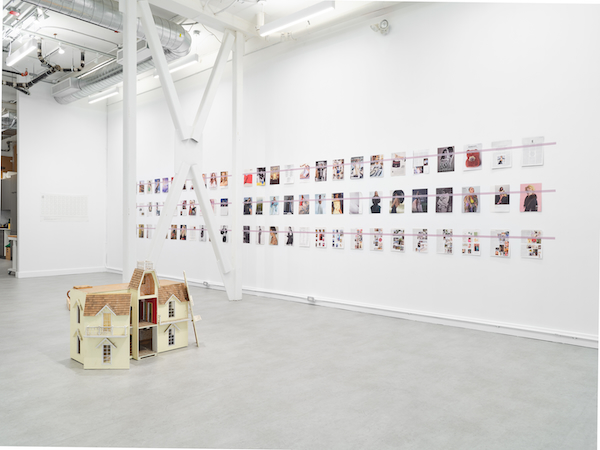
Vanessa Mercedes Figueroa and Ian Wallace, installation view from Settle Down, Not There at Gallery Gachet, 2026 (photo: Dennis Ha)
We attend exhibitions, do studio visits, attend events, and follow artists and spaces online. Attending our events and programming is a great way to meet us. Our current exhibition, curated by Maya Rodrigo-Abdi, has an upcoming talk on June 19th at 6pm with Vanessa Mercedes Figueroa and Phillip McCrum, and moderated by Gareth James. We also host weekly drop-in art sessions for the community on Tuesdays from 2 to 4pm, where we met Cameron Carr, whose drawings and watercolours will be featured this fall in a two-person exhibition alongside Jeff Hallbauer’s image transfer work exploring pareidolia. This will be Carr’s first show outside a group format. It opens this November.
Where do you see yourself in five years?
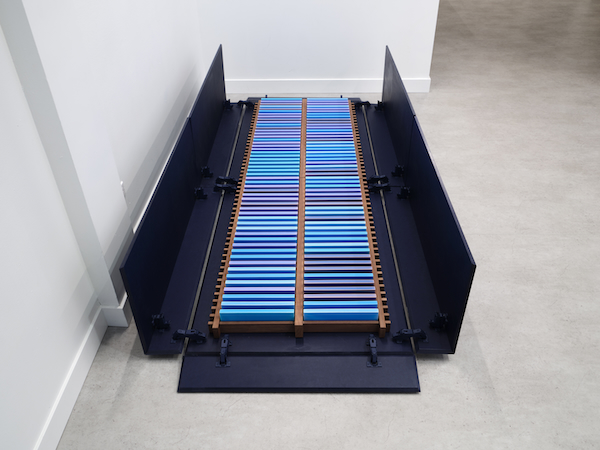
Von Coffin, Case, 2025, installation view (photo: Dennis Ha)
We’ve recently been expanding our publication program. We have a forthcoming book by musician, rapper, and writer Andrew Mbaruk, and a chapbook by poet and neuroscientist Suparna Choudhury on the way. Our curatorial program continues to be shaped by Director/Curator Olumoroti Soji-George’s practice, which centres Blackness as a point of departure for examining broader structures of marginalization across visual culture, with a particular interest in how images shape understandings of identity, memory, labour, and belonging. Alongside this, Associate Curator Sol Hashemi’s curatorial interest in neurodiversity, cognition, and the Ecological-Enactive model of disability was at the heart of last year’s Picnic For a N(n)ervous System with Von Coffin and Warren Neidich.
Looking ahead, we’re working toward charitable status for the gallery (if there are any lawyers reading this interested in joining our board, let us know!) and refreshing Gachet’s identity and website – including building out an archive from our three-decade-plus history. In five years, we’d love for that archive to be a living resource for the DTES, disability arts, and mad arts communities we’re part of, and for anyone researching this history going forward.
What excites you about your upcoming exhibitions?
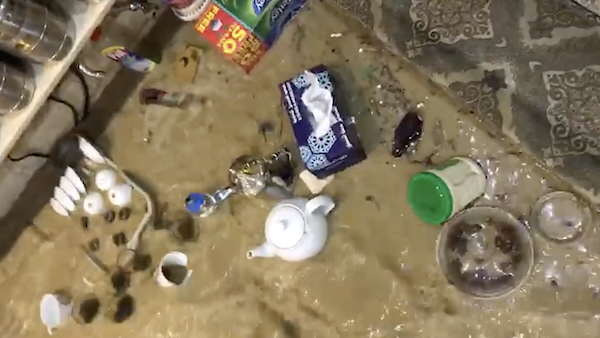
Dana Qaddah, Hawqala, 2022, still from video installation
We’re excited for the upcoming exhibition by Troy Johnson, one of our 2025/2026 Curators-in-Residence. The exhibition, opening July 10th from 6 to 8pm, features artists Christian Vistan and Dana Qaddah, who are both working with and alongside images and ideas that circulate in the wake of disaster. Vistan will be showing new paintings as well as a reinterpretation of Sunset Table, a 2016 publication about a flood that came to the artist’s grandmother’s baryo in 1962. Qaddah will be showing Hawqala, a media work composed during a 2022 residency at Vivo Media Arts. The eight-channel installation assembles collected recordings from the artist’s personal archive of storms in the Arab world.
After that, we have the annual Oppenheimer Park Community Art Show that we hold at Gachet, a community-based show featuring artists connected to Oppenheimer Park and the Downtown Eastside. We hold free outdoor summer art workshops in preparation, led by our Special Programs Coordinator Amelia Rodriguez and guest artist Jess MacCormack in Pigeon Park, with Rodriguez also leading the Oppenheimer Park events. (Her own art installation is currently up just down the street at Artspeak Off-site, 320 Carrall St.) It’s always exciting to see how these workshops translate into the show each year, with a mix of new and returning artists. Catch us weekly in Pigeon Park on Tuesdays from July 14 to September 15, 11am to 1pm, and in Oppenheimer Park on Tuesdays from July 21 to August 11, 3 to 5pm.