Angelo Muredda Interviews Director Reid Davenport
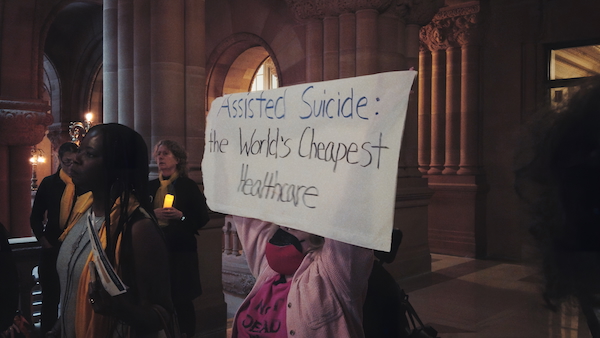
Still from Life After depicting Not Yet Dead protest (courtest: Multitude Films)
“Disabled people aren’t threatened by their bodies,” Reid Davenport says early in his evocative new documentary Life After, but by other people’s bodies. Davenport’s follow-up to his experimental feature debut, I Didn’t See You There (where he strapped his camera to his wheelchair in a guerrilla first-person essay on the simultaneous hyper-visibility and invisibility of disabled people, and the dark cultural history of the freak show) is a more accessible affair and a timely statement about how disabled people deserve to live lives of their own design. But it’s no less bold in its repudiation of the recent expansion of assisted dying legislation in places like Canada to disabled people whose death is not reasonably foreseeable.
That political argument is couched in an enticing archival detective story about the mysterious life of Elizabeth Bouvia, a young disabled woman whose unsuccessful legal fight for a medically assisted death captivated the mainstream media in the early 1980s, before she abruptly disappeared. What became of this forgotten disabled historical figure who moved through the world much like him, Davenport wonders, and what might he learn about disability and assisted dying if he were to find her alive today?
I spoke to Davenport by Zoom in a conversation that spanned the cinematic potential of disability history, the dangers of Canada’s recent Track 2 expansion of medically assisted dying (MAID), and the dark nature of disability humour. This is a condensed version of that conversation.
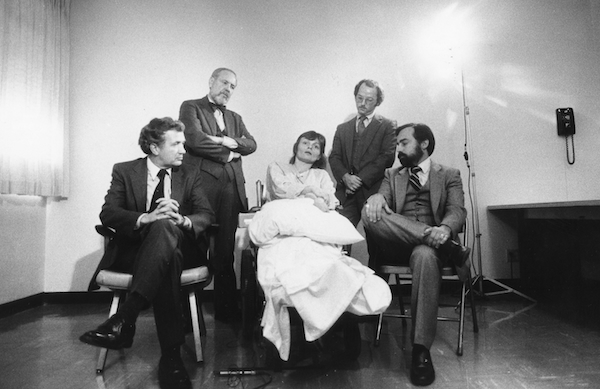
Still from Life After depicting Elizabeth Bouvia and her legal team (courtesy: LA Times)
The central question of the film is what happened to Elizabeth Bouvia following her time as the face of the assisted dying movement in the 1980s. Why uncover Elizabeth’s life after her moment in the limelight?
I’ve never seen somebody with cerebral palsy be a facet of the nightly news. That was really interesting and exciting, for lack of a better word. The record of her was just so incomplete. I felt it needed to be followed up on.
Your search reminded me of a number of cinematic and literary texts where artists from marginalized communities are looking for ancestors. Why is it critical as a disabled filmmaker to have an archive of historical disabled figures?
I’m a bit of a disability studies nerd. Even today, stories are being expanded upon that transform the way we talk about and see disability history. I just finished this great book by Marta Russell, a disabled woman who joined the civil rights movement then used that experience to advocate for disabled people as a marginalized group. She was this powerful voice, yet this is the first time I’m learning about her. I think of another disability movement I learned about a few years ago, this protest following the Great Depression against unemployment and barriers to the workplace. That’s in the 1940s, decades before the 504 Sit-in. It’s almost like cheating as a filmmaker who’s interested in disability history, because there are so many of these bold relics of the past that are still being dug up.
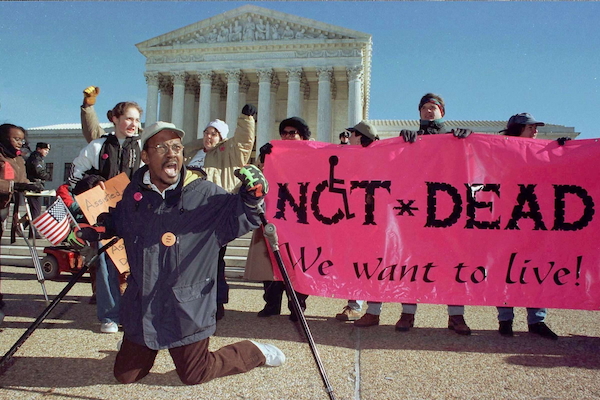
Still from Life After depicting Gregory Dugan at the Not Yet Dead Protest (courtesy: Reuters)
Your film centres a disability-informed perspective on medically assisted dying. When we meet you, you’re walking over to what you call your “disability propaganda” bookshelf where you read Paul K. Longmore. You speak to Michal Kaliszan, a software developer with spinal muscular atrophy who is applying for MAID. You speak to disability studies scholar Catherine Frazee about the history of eugenics. You interview former member of provincial parliament Sarah Jama, a wheelchair user, about the disability activist opposition to the Track 2 expansion of MAID. You interview the widow of Michael Hickson, a disabled man denied care for COVID-19 in the summer of 2020. Why focus on these perspectives?
I don’t think it was like, oh, I’m going to do a work of disability studies and bring in these academics and members of provincial parliament. [Laughs] It was that they were the ones who could tell this story better than anyone else. I saw a clip of Sarah on the nightly news and I thought, I need to talk to her. Catherine showed up in some of the archival work and I thought, I need to talk to her. Then, there was this amazing article about Michal that made me think I needed to talk to him. The Michael Hickson story was squashed in the mainstream media, but was very prominent within the disability community, so that was another no-brainer: this tragedy contained the point we were trying to make.
The debate around the legal expansion of assisted dying for disabled people whose death is not reasonably foreseeable has scrambled some traditional political alignments on the left. Pro-MAID arguments from some nondisabled leftists focus on critical illness cases and suggest that criticism of its expansion to folks with disabilities is raising a “false alarm,” as you put it in the film. Your film shows that schism between disabled and nondisabled perspectives on MAID in terms of material experiences. For disabled people who are considering or are being offered MAID, they’re out of funding and time for dealing with the bureaucracy around securing in-home care. They don’t want to be warehoused in care homes and lose their independence. For nondisabled politicians and lobbyists advocating for the expansion of MAID, the argument is a bit hazier — vague conversations about pain and quality of life. How do you see your film fitting into these debates?
I think we were reticent to explore the other side because it has been done over and over again. I don’t see how you can’t understand the perspective of the other side, intellectually. It was a matter of making our argument without equivocating. The argument was based on showing the material well-being of disabled people, so that’s what we did. The other side’s position has been captured, and this hasn’t. We really wanted to dive into the nuances of these myriad points that we feel make our argument valid.
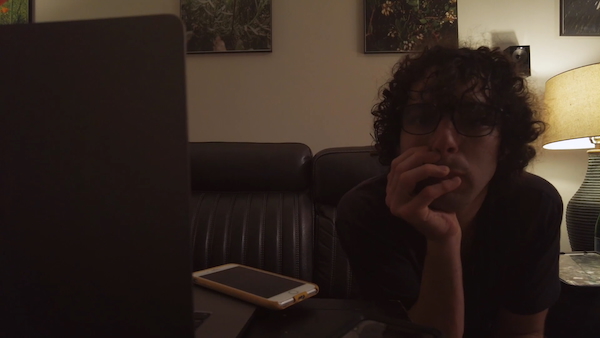
Still from Life After depicting director Reid Davenport (courtesy: Multitude Films)
You focus on Canada as a dystopian example of assisted dying laws encroaching on the lives of disabled people. As far back as the early 2000s, and even more so since 2016, there’s been a smugness around Canada as a bastion of progressive values compared to the United States. That’s not true when it comes to MAID. What do you think other countries can take away from the largely liberal-led expansion of MAID in Canada?
About that Canadian smugness, I think some progressives in the United States complement it well by looking to Canada as this beacon of hope. [Laughs] So it’s not one-sided. What makes this Track 2 legislation so dangerous compared to any other law in any other country is Canada has fewer social supports than, let’s say, the Nordic countries. There is this lack of a safety net. The U.S. and Canada are similar in that regard. Canada supposedly has socialized healthcare, but as you see in the film, and as Dr. Ramona Coelho explains, there are major voids in that healthcare system. Assisted dying legislation in the context of the U.S. and Canada is completely different than in the context of Europe. I’m not saying that Europe is more righteous, but I do think this is a different animal.
There’s a grimly funny moment in the film when you start filling out the MAID application as a kind of thought experiment, making self-deprecating jokes about it, then you turn sombre as you realize you’d pass the requirements “with flying colours.” That’s relatable, I think, for disabled people who might be stable now but who realize there’s not much of a safety net keeping them from falling through the cracks if anything happens to their health, their employment status, their care network. Disabled people looking at MAID now are one variable removed from disabled people who aren’t. Could you speak to that dark disability humour in the film, and how it comes out of precariousness?
It’s going to sound cliche, but it’s a defence mechanism. It’s a way to compartmentalize what’s going on. It’s a way to make it abstract – to remove yourself from it to make it better. I mean, it’s so hard to be disabled in this world. How else are you going to survive? You have to go out of your way to contextualize what you’re experiencing.
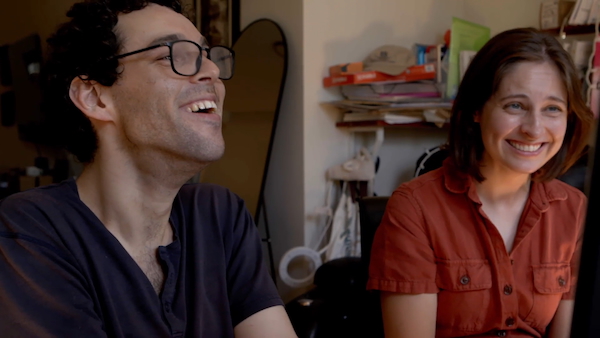
Still from Life After depicting director Reid Davenport and producer Colleen Cassingham (courtesy: Multitude Films)
I want to think about your place within the range of documentary materials you’re working with here: archival media footage, home movies, primary interviews, guerrilla street video of you in your wheelchair that’s a bit like your previous film, I Didn’t See You There. You’re onscreen a lot more here compared to there — off to the side in the interviews, but out in front when you’re doing research. How do you work out the balance of how much Reid is going to be in this film?
If I had my way, there would be no Reid in this film, but it was an element that we needed. We needed a bit of a guide, a person who could process what was being presented. I wanted people to remember that this is a film by a disabled person. And people needed a break. It’s kind of a reprieve from the other stories and commentary. It allowed me to connect the dots while also providing a sense of levity.
The film ends with home movies of Elizabeth from a time when she had in-home care. You linger on details from her life – collecting Beanie Babies, reading Stephen King novels, using her computer. You even have her sister Teresa read excerpts from her unpublished memoir where she talks about striving for independence. Why did you want to give Elizabeth the last word?
It completely re-contextualizes her life. Everything you’ve seen up to that point is her in the media, either fighting to die or talking about how she wants to die. And then, for the first time, we see her kind of relaxed. We had been working on this film for years before Teresa read that passage from Liz’s memoir. That was the thesis that we had constructed throughout the making of the film. She had written down what we had wanted to prove. We were trying to prove it without that, and then we got it. We knew that was the ending.
What’s next for you?
I’m working on a film about telethons. [Laughs] It’s going to be a dark comedy.