This Town is Small, Charlottetown
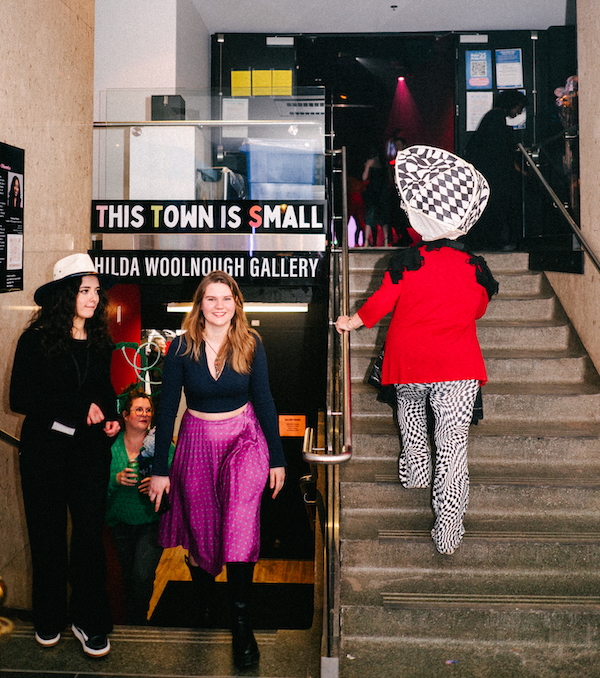
Photo: Andrew Lewis
The Canadian art landscape is ever-changing. Places + Spaces keeps you informed of established and up-and-coming exhibition venues across the country including museums, galleries, artist-run centres, and more. This month, we hear from Lisa Theriault, Executive Director of This Town is Small in Charlottetown.
What is the history and mandate of your gallery?
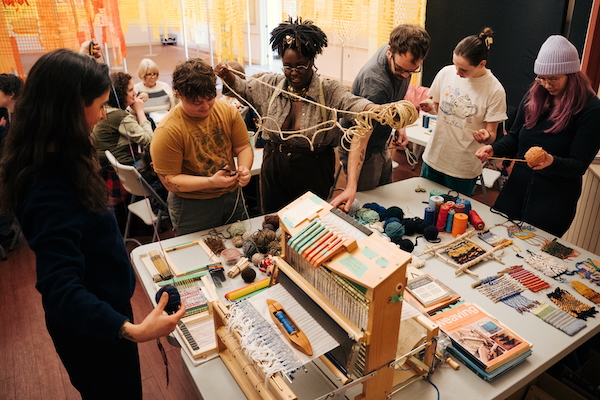
Rilla Marshall Weaving Workshop for Radiant Rural Halls
This Town Is Small (TTIS) was established in 2010 as a non-profit artist-run centre on Prince Edward Island by founding members Becka Viau, Leonard MacPherson, Drew Heggie, and Jennifer White. It emerged from a series of conversations between Island artists who identified a critical lack of infrastructure, opportunities, and professional support for visual artists on PEI, especially for early to mid-career artists and those working in experimental or non-commercial practices.
At the time of its founding, TTIS was the only artist-run centre in the province and remains so today. Its early years were defined by a spaceless, volunteer-run model that prioritized site-specific programming, community partnerships, and artist-led initiatives across PEI. Without access to a dedicated exhibition venue, TTIS built its identity around adaptability, resourcefulness, and a commitment to contemporary artistic practices outside of traditional gallery models.
One of the organization’s most impactful early projects was Art in the Open, a large-scale outdoor contemporary art festival presented in partnership with the City of Charlottetown and the Confederation Centre Art Gallery. The festival has an incredible energy and transforms spaces across downtown Charlottetown, particularly green spaces and the wooded areas of Victoria Park, into temporary public art sites. Although it now operates as an independent organization, TTIS continues to contribute programming to the festival each year.
What’s a highlight of the neighbourhood where the gallery is located?
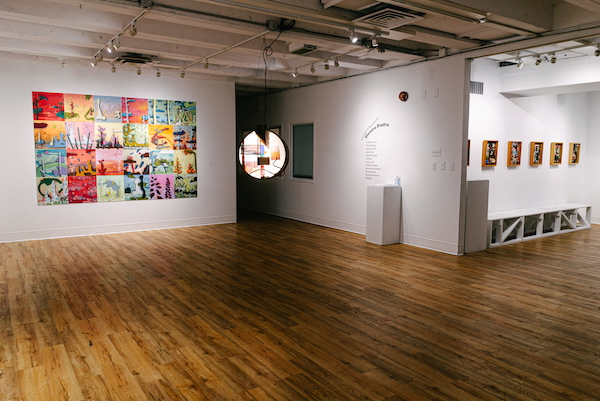
Desire Paths, 2024, group exhibition installation view. Photo: Andrew Lewis
The centre has been operating a gallery in The Guild, a cultural building in downtown Charlottetown, for just over a year. The Guild is home to a black box theatre, gallery spaces, and offices and studios used by artists and cultural organizations. The building used to be a bank until local artist Hilda Woolnough successfully advocated for it to be sold to the arts community for one dollar – it’s a pretty incredible story! The Guild is within walking distance of the waterfront and is surrounded by local businesses. It sits across from the Confederation Centre of the Arts, a brutalist landmark in the downtown core, and from Victoria Row, a cobblestone pedestrian street lined with patios and shops. Downtown Charlottetown is especially lively and tourist-driven in the summer, but it quiets down significantly during the winter months.
What’s your favourite part of running an art gallery?
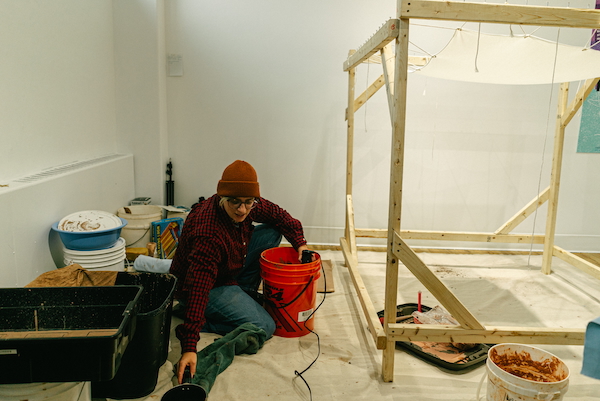
Kirstie MacCallum, Test Press, 2024. Photo: Andrew Lewis
We get to be a space that can push boundaries and expectations, and that feels especially important in a place like P.E.I.. I love seeing an exhibition or a program come together, knowing it’s a bit surprising or different, and seeing how people react to it. I know how much a centre like This Town Is Small means to local artists here as well, as a place where they can really push their work and do the weird or ambitious thing they can’t do anywhere else locally.
How do you find out about new artists?
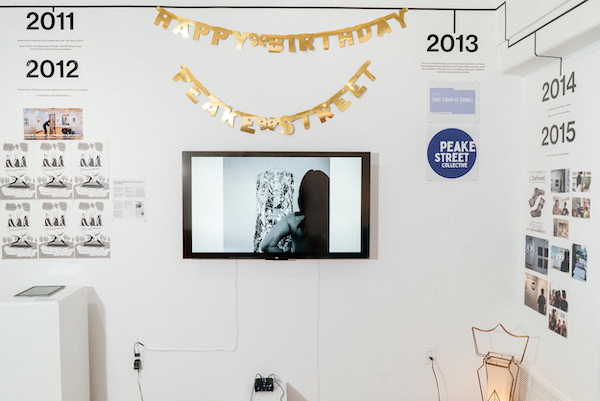
Collective/Collection: Twenty Years of Peake Street, 2025, installation view
As a small centre in a relatively isolated province, we work in a very local and relational way. Our community of artists is consistent but growing, and we’re always excited to learn about artists we haven’t met yet. We are increasingly working on building relationships over time, rather than relying solely on application-based models.
We put out open calls for artist profiles and studio visits, which have become a great way to learn about new practices in a lower-barrier, ongoing format. Rather than asking artists to constantly submit new proposals, we’ve found that conversations, visits, and organic connections are a more meaningful way to stay in touch with what artists are working on.
We also stay connected through relationships with other like-minded centres, especially those in small, rural, or isolated communities like ours, or that have similar interests. We’ve been in touch with Struts Gallery, Pumice Raft, and the Yellowknife Artist Run Community Centre in recent years. These connections help us share knowledge and stay aware of artists working in similar contexts across the country. Part of our approach is recognizing that artists on P.E.I. are doing important work, and that the rest of the art world could benefit from paying more attention to what’s happening here.
Where do you see yourself in five years?
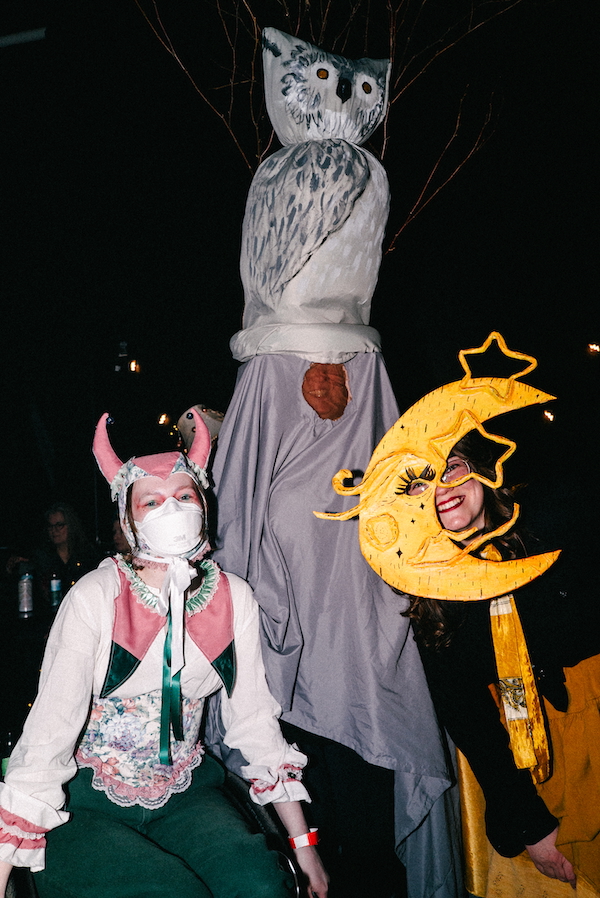
Wearable Art Party. Photo: Andrew Lewis
We’re new to our space and still finding our footing, so I hope we can establish some real stability with consistent funding and solid programming that feels sustainable and meaningful. Having a dedicated space has opened up so many possibilities that we’re eagerly exploring all the ideas that have accumulated over the years. I hope we can find a sustainable rhythm with what works while maintaining that spirit of energy and experimentation that defines us.
There’s a particular feeling I get at some of our events, when a lot of people come out and there’s genuine excitement about what’s happening, this certain electric energy in the room, and it makes me feel so lucky to be part of this community. I want to keep creating those moments.
What excites you about your upcoming exhibitions?
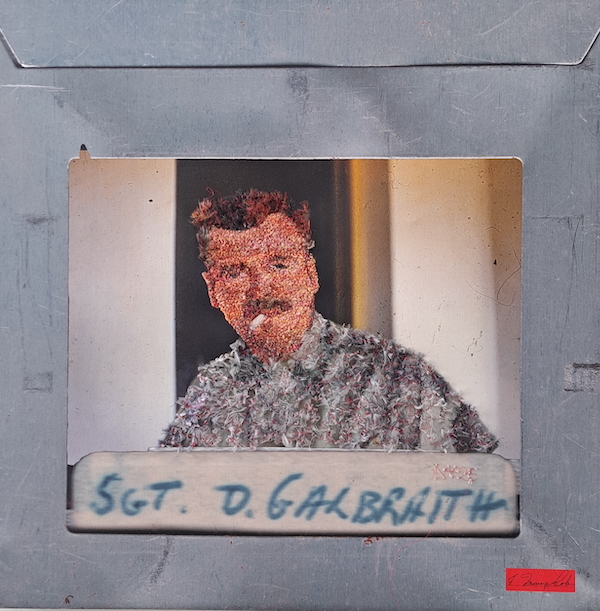
Nancy Cole, Collaboration With the Dead, Sgt D. Galbraith, 2025, mixed media
We have a show opening tonight called Collaboration With the Dead by artist Nancy Cole, and we’re planning a blacklight opening. Nancy even had us pick up tonic water and ripe bananas, because they’ll glow under the lights, so we’re excited to see how people experience the atmosphere.
The exhibition itself is quite stunning. There are over thirty artworks featuring scans of photographic slides that have been enlarged and printed on canvas, then transformed with hand-embroidered interventions. The original photographs were taken by the artist’s late father, Murray Cole, a Royal Canadian Air Force aviator stationed at RCAF Station Grostenquin in northeastern France during the early 1950s. He documented his time abroad with a 35mm camera, capturing everyday life during a complex moment in Cold War history, with scenes from post-war France, Morocco, and Algeria shaped by military service and fleeting personal moments of connection.
After this exhibition, we’ll change it up with a program called Test Press, where our members can apply to use the gallery as a space to test ideas and experiment. We started this program last year, and it was great to have artists working on ideas in a shared space, seeing how they bounce off each other and with whoever comes to visit.