Dawit L. Petros at Bradley Ertaskiran, Montreal
By oualie frost
On October 3rd, 1935, fascist Italy invaded Ethiopia in an act of aggression. This began the second Italo-Ethiopian war, and led to the short-lived colonial state of Italian East Africa (current day Somalia, Eritrea, and Ethiopia). Italy quickly faced great economic consequences in the form of sanctions. In response, Benito Mussolini began Date Oro alla Patria (“Give Gold for the Fatherland”), a campaign that urged Italians to send donations of gold in order to continue to fund their colonial projects. This history is the thematic basis for Dawit L. Petros’ exhibition Black, Gold, Afterlives, currently on display at Bradley Ertaskiran.
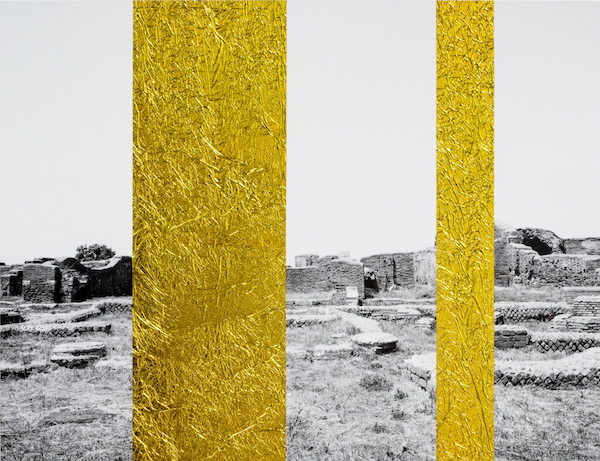
Dawit L. Petros, Untitled (Itineraries of Dispersal, Ostia Antica, Rome, IV), 2025, archival pigment print, Mylar (photo: Paul Litherland)
Gold glimmers at you from every direction upon entering the wide and unoccupied gallery. Petros’ works are hung on stark white walls. Untitled (Itineraries of Dispersal, Ostia Antica, Rome, III and IV) are prints of Roman ruins with strips of gold Mylar laid over them. They provide the clearest reference to the Date Oro Alla Patria demand, Italy’s effort to expand and strengthen its modern-day empire, and Mussolini’s desire to bring back a semblance of its former ancient glory.
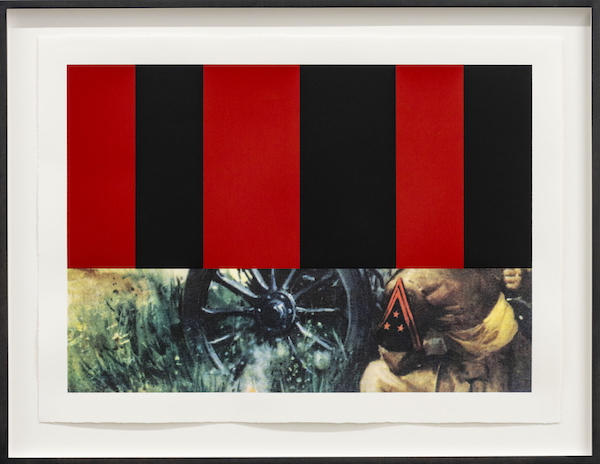
Dawit L. Petros, Recollections (Contrasting Notions), Battalion 18, 2025, serigraph on Arnhem paper (photo: Paul Litherland)
Recollections (Contrasting Notions) are a series of screenprints, each with an image interrupted by bold, loud color bars. The partial pictures look like they come from old “safari fever” books, the kind you would find in the early 20th Century that promote colonial ideas and romanticize the adventure of the “expedition”. Most of the found images and all the faces within them are cropped out, obscuring any real narrative and preventing the true reality of colonization from being shown.
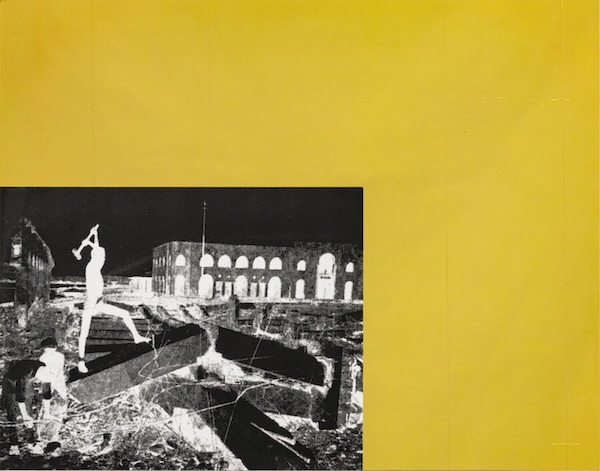
Dawit L. Petros, Werki V, 2025, serigraph on Mylar (photo: Paul Litherland)
Screen-printed images of Italian occupation laid against gold backgrounds make up Werki: the Italian army, the infrastructure they built, the privilege they lived in, and the damage they did. They “frame” some of the luxury Italy enjoys now, if you will. In fact, many of the works in the exhibition are reflective, especially the Spectral Fragments series of CNC etchings, which include depictions of cable cars (one in Italy and one in Italian-occupied Eritrea). You can’t help but look back at yourself whilst staring at the works, which implicates the viewer as an ongoing participant in colonization, whether willingly or not. That said, Petros’ works often felt, at the same time, just out of reach, despite the exhibition text being pretty thorough. I felt like I needed to know more context about the history of Italy’s occupation of Ethiopia to appreciate what I was seeing in the way they were intended.
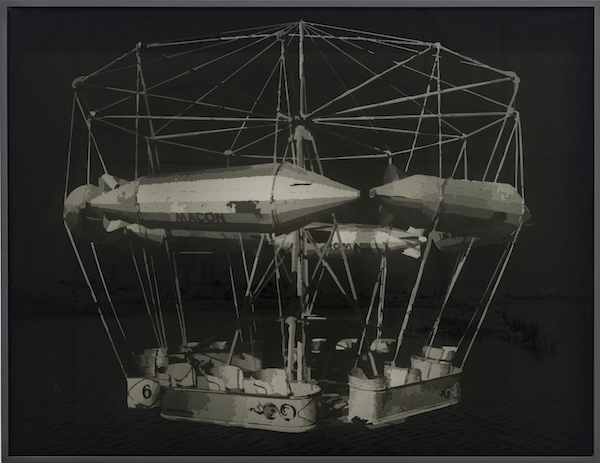
Dawit L. Petros, Spectral Fragment, VI (Enchanted Island), 2025, archival pigment print, CNC etching on smoked grey plexiglass (photo: Paul Litherland)
This made me muse about the intent of exhibitions like this, the kind that make me feel both dumb (despite it not being a particularly condescending exhibition) and impressed. Clearly it is not intended to be merely an aesthetic experience, but if the subject matter is on a topic many people know woefully little about, is the goal to encourage self-education? In the end, I concluded that Black, Gold, Afterlives doesn’t just present an aesthetically solid visual experience – it challenges viewers to confront the gaps in their historical knowledge and consider how colonial legacies continue to shimmer beneath the surface of contemporary power and privilege.
Dawit L. Petros: Black, Gold, Afterlives continues until July 5.
Bradley Ertaskiran: https://bradleyertaskiran.com/en/
The gallery is not accessible.
oualie frost is a casual artist, writer, and activist currently based in Tiohti:áke/Mooniyang (Montréal) whose writing centers primarily around the art and experiences of Black, mixed-Black, and other racialized people, as well as loose cultural critique. They are a former founding member of the Afros in the City media collective, with writing published on various platforms, including Akimblog, the Rozsa Foundation, and Canadian Art.