Shay Erlich on Making Spaces for Disability Joy
During the final moments of my workshop Honoring Embodied Wisdom for the Toronto Biennial of Art, we took time to go around the circle and reflect on what we had experienced together. One participant shared that this had been a space where they felt safe to follow their own impulses about what they needed and desired to navigate the space and the workshop. They said, that as a disabled person, this was something that they had rarely had access to and the opportunity to be present with that experience was profound.
Moments of self-discovery and self-reflection like this are the reason that I wholeheartedly believe in the power of community arts for disabled people. I hold artistic spaces so that I can be myself, as a proud disabled person, and meet my own needs while encouraging others that their needs are valid. These spaces get to be a counterpoint to what disabled people experience in mainstream spaces and prove that there can be spaces where disabled people are not penalized for having needs – where those needs can be held with care, love, and curiosity; where we can be together in the messy muck and do the work of wrestling with our experiences to create new possibilities for an interconnected future that honours our complexities. I truly believe that these kinds of spaces are where the work of undoing ableism and building solidarity and community happens. By building spaces that hold and honour our collective need for humanity and care, we build a world that can be more humane and caring – where disabled people are seen as valued members of our community who always deserve the basic conditions to belong and fully participate.
Even while I advocate for this type of inclusion, I know how rare these spaces can be. Outside of intentional disability spaces, there can be severe consequences for honouring the ways that you need to exist in the world. As a consultant I am often in conversation with disabled people who are all too aware that the organizations and sectors that they work in are not places where it is safe to be an identifiably disabled person. Their stories mirror my own frequent experiences within the sector where expressing my accommodation needs and preferences can be met with hostility and incredulity. Where holding firm to my own understanding of what I need and what spaces I can be successful in has often led to me losing opportunities I have earned in rooms that weren’t prepared to support me. It has taken a lot of commitment to loving myself and believing that what I do is worthy to keep going in the face of an industry that isn’t yet used to disability arts leadership.
Despite these challenges, slowly and precariously, islands of disability joy are emerging within our arts sector. Increasingly festivals are including disabled artists and ensuring that they are part of industry conversations, while simultaneously learning what is necessary to welcome disabled audiences and hold disability space for them. It’s a marked shift from merely presenting disability work, but truly honouring what it means to be a good host to disabled artists, organizations, audience members and outreach programming patrons alike.
This work is in progress. It’s not perfect.
There is a distinction between presenting disability art, presenting art accessibly, and creating disability spaces in the arts. It is rare within disability arts to have programming in mainstream spaces that consider all three simultaneously despite how central each one is to disabled people’s experiences. This fall I had the opportunity to moderate a panel convened by The Disability Collective as part of Fall For Dance North’s presenter showcase on touring considerations for disabled dancers, where much of the conversation focused on the delicate dance that disabled artists and collectives do to prepare festivals and touring opportunities to be good hosts for them as artists and the disabled audiences that they attract. We are all still learning how to navigate these new in-between spaces, with a common theme between artists, disabled presenters, and mainstream festivals alike feeling overwhelmed by the amount of work required, and the financial and time pressures that surround it, even in situations where there is dedication, commitment, and resources allocated for this work.
And it’s clear that the conversation needs to be held in community between disabled artists, disabled/integrated arts collectives, and festivals. Disabled artists can’t be the only ones advocating for the needs of themselves and their audiences. Creating space for our disabled selves within our own work that can work within a festival or touring context can be daunting enough. After this fall’s four day run of performances with Propeller, where I was unable to perform in all the shows because of the physical demands of the festival schedule, I dream of futures where we have disability-resilient festivals that can be flexible enough to embrace the ways that disability can challenge the intensiveness of festivals.
I also dream of a day where festivals believe in the importance and power of disability joy, seeing disability joy become a central curatorial and presentation concern. Where artistic and programming directors take the time to see their central programming through disabled people’s eyes and recognize that we don’t have to be in a solely disabled space to inspire the kinds of love and acceptance that move us past an ableist understanding of what it means to be disabled. That if our purpose in programming art is to inspire a public to make sense of the world and who we are within it, we must also recognize that disabled people can have that understanding at any point in time through any work, if we set an accessible stage for that to occur. That our experience in public spaces (and thus our identities and personhood) matter. That we too are worthy of non-precarious joy – just as we are.
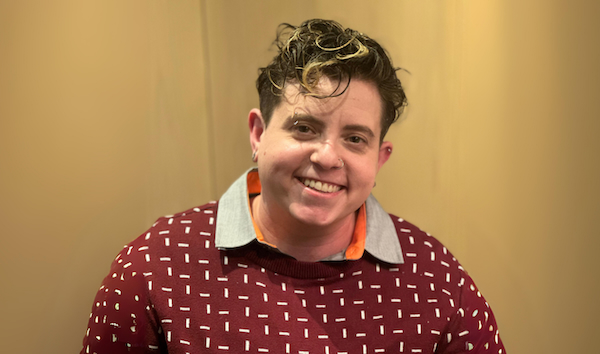
Shay Erlich (they/them) is a disability justice world builder living in T:karanto. Their work both creatively and professionally reimagines a disability-centered world where disabled people are empowered to love themselves and live free from stigma, shame, and ableism.