Reflections: C Magazine
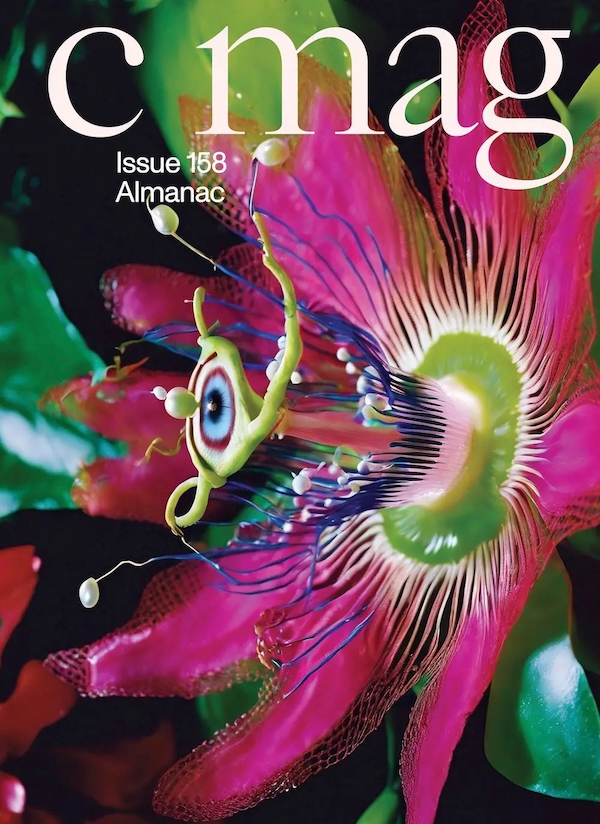
C158 (Autumn 2024), cover image: Kira Xonorika, Superbloom (detail), from the series cycles, 2024
Akimbo is celebrating its 25th anniversary with a monthly series that draws on our rich archive of clients and contributors to reflect on the accomplishments of the past and look toward future possibilities. This month features one of our longstanding clients, C Magazine, which also happens to be celebrating its 40th anniversary this year.
C’s Editor Joy Xiang answered our questions.
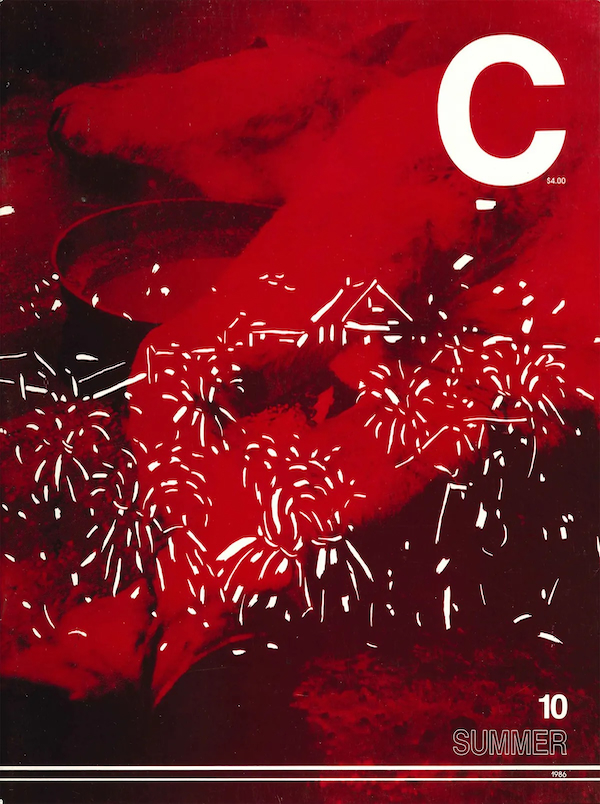
C10 (Summer 1986), cover image: Janice Gurney, Harvest, 1985
What are some of C Magazine’s highlights from the past forty years?
It’s a feat for an art publication to last forty years, and C Magazine is indebted to the labour and passion of staff (editors, publishers, designers, assistants, fellows, interns, and more), more than a thousand contributors and featured artists (if you were to tally it up across 158 issues), and board and advisory members who have believed in furthering and complicating dialogues about contemporary art at each point in those decades. This has come with ingenuity and a scrappy flexibility to sustain the magazine, like various changes to the publishing cycle and major issue redesigns in 2006, 2014, and 2018. C’s new website, launched in 2022, also has a readable archive of all past issues and has allowed us to publish more timely online texts for the first time.
As just one voice in this inheritance, it’s hard to pick highlights. These conversations on the page exist in both tangible and invisible webs of meaning-making and relationships across the Canadian art world and among relationships to other publications – some no longer extant. You could ask a number of people and they would pick different moments in their connection to C. Some issue themes that still ring relevant, perhaps politically and otherwise, include Subverting Language (C17, 1988), Reeling into the Future (the feminist anti-hero) (C49, 1996), Real Existing Capitalism (C96, 2007), Citizenship (C128, 2016), Site/ation (edited by BUSH Gallery, Peter Morin and Tania Willard, C136, 2018), and Ownership, Deja Vu, and Criticism, Again (edited by Merray Gerges, C143-145, 2019-2020).
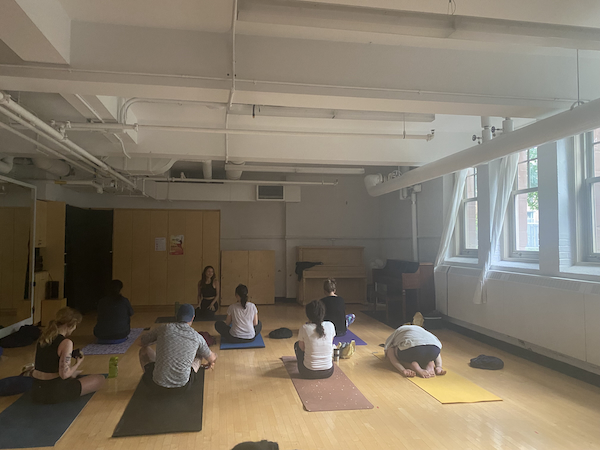
Lodoe Laura, Movement Workshop, C Magazine x SKETCH Working Arts, 2024
C has held robust, weird, challenging, and critical programs to support these living conversations over the years, as well as workshops in different cities for emerging arts writers, in partnership with many artists, critics, and so many of our peer orgs. This includes the Atlantic Symposium: New Directions for Art Writing (with Visual Arts News, 2013), and Curious Criticism (2021), as well as our running two writing awards: the New Critics (since 2009) and the Indigenous Art Writing Award (with ICCA, since 2022). Last year, we also started an experimental program called Vitamin C, an amorphous series that engages language and ideas off the page so as to be interpersonal and healing in form – for the world we’re in.
What has changed for C over that time and what is your current editorial philosophy?
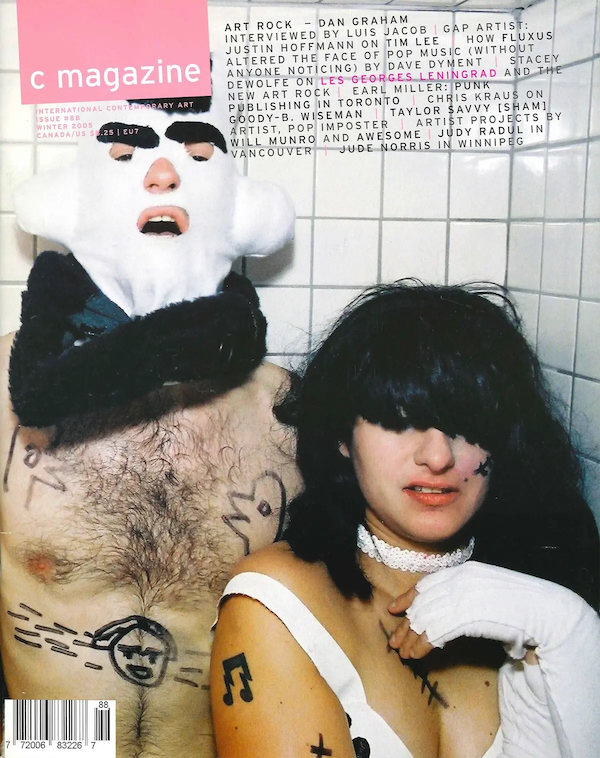
C88 (Winter 2005), cover image: Les Georges Leningrad (photo: Shawn Brackbill)
I’ve thought about what it means to inherit an institution that has seen changes to its spirit and mandate through forty years, different publics, and a carryover of generations. The word “diverse” is sticky and imperfect, but by now we know who has been historically under-published and under-covered, and how to dismantle a Western European canon of art. Concerning internal labour and staff, C has, in the past five years, formalized EDI policies and anti-oppression into its mandate. But this, and its practice in particular, could always go further. Initiatives like the “living style guide,” implemented under former editor Jac Bruneau, recognize that language itself is in motion (and, I would say, the way of language itself is political), and that many dominant conventions can perpetuate colonial ways of knowing.
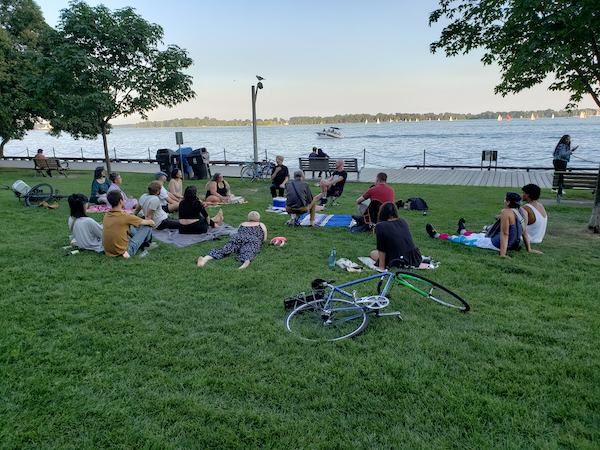
Jamie Ross, Gay Day Picnic, program for C149 (Summer 2021)
Associate Editor Maandeeq Mohamed and I often talk about how to build anti-colonial and anti-oppressive methods into the very structure of how we work and commission – within the limits, realities, and challenges of the non-profit art world and publishing. This includes not silo-ing “representation” and questioning how to write (and commission) from the place you are already at, not always against something or against a dominant status quo. We believe in untranslatability too, or that not all narratives are meant for everyone in a text. Especially in this time of continuing colonial and violent regimes, we see the importance of language to narrative formation. It is not a neutral ground. We continually ask: Who does the magazine serve? What are its communities? Who should those communities include? What is missing? Who and what was always here and continues to be?
Describe a couple of your upcoming events that you’re particularly excited about.
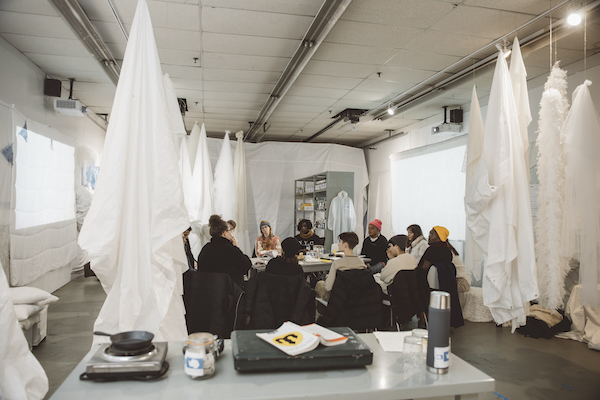
Syrus Marcus Ware (workshop leader), Preparing for the End of Times and the Beginnings of Our Collective Freedom, C Magazine x Toronto Biennial of Art, 2019
C Magazine’s annual auction is coming up – launching with a 40th anniversary celebration on October 26 in Toronto. The auction has been a major contributor to C’s financial stability over the years thanks to the generosity of numerous supporters, and this year has forty works for forty years by past artists in and connected to the magazine.
We’re also excited about our program in November with the Toronto Biennial of Art: Words echo and gather strength. It focuses on the very influence of language and your voice on your surroundings, and will feature workshops with Aisha Sasha John, Ivetta Sunyoung Kang and Kii (Wonki) Kang, and Pardis Pahlavanlu!
What is your vision for the future?
To build more solidarity across arts orgs toward weathering risk: financial, political, censorship, and otherwise. To see anti-oppressive principles through in all the ways it matters.